Skip to main contentEngineering Courses, Mentoring & Jobs | EveryEng
Recent Advances in Transmission Insulators banner
Preview this course

Recent Advances in Transmission Insulators

Recent Advances in Transmission Insulators banner
Preview this course
Self-paced Advanced

Recent Advances in Transmission Insulators

3(115)
157 views
FREE
617 min
Anytime
English
157 views

Engineering Academy
Engineering AcademyLearn Without Limits: Free Engineering Courses
  • Lifetime access
  • Certificate of completion
  • Anytime Learning
  • Learn from Industry Expert

Why enroll

Participants should join this course to gain updated knowledge on UHV transmission insulation design.It is ideal for students, engineers, and professionals who want strong fundamentals with practical insights.The course helps in understanding real-world challenges and prepares learners for advanced power system work.

Is this course for you?

You should take this if

  • You work in Automotive
  • You're a Electrical Engineering professional
  • You have 3+ years of hands-on experience in this field
  • You want to build skills in Engineering & Design, Project Management

You should skip if

  • You're new to this field with no prior experience
  • You need a different specialisation outside Electrical Engineering
  • You need live interaction with an instructor

Course details

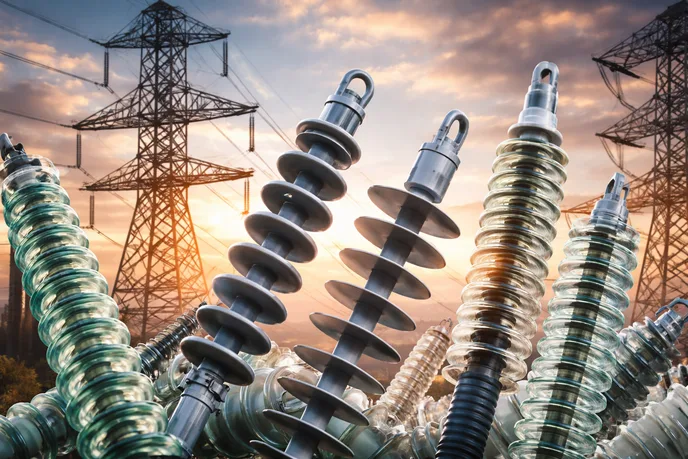
This course explains the latest developments in EHV and UHV transmission insulators in a clear and simple manner. It begins by introducing the importance of EHV/UHV transmission in modern power systems and highlights its present role as well as future growth. Learners gain an understanding of UHV transmission networks and the need for advanced insulation techniques. The course covers various types of insulators used in EHV/UHV systems along with their applications. Special emphasis is given to newer design criteria and insulation requirements for UHV transmission lines. Participants learn about key electrical, mechanical, and environmental design considerations. Practical challenges such as pollution effects, weather conditions, and aging of insulators are discussed in detail. The concepts are reinforced through real-life examples and practical video demonstrations. Assignment exercises help learners apply theoretical knowledge to practical design problems. Overall, the course builds strong fundamentals while providing insight into modern industry practices.

Source: NPTEL - Indian Institute of Science , Bangaluru [Youtube Channel]

Course suitable for

Key topics covered

  • Recent Advances in Transmission Insulators – Introduction

  • Introduction to Transmission and Distribution Insulators

  • Manufacturing Process for Ceramic and Glass Insulators

  • Manufacturing Process for Polymeric Insulators

  • Design Considerations of Transmission Insulators

  • Field Experience of Ceramic, Glass, and Polymeric Insulators

  • Comparison of Different Types of Transmission Insulators

  • Environmental Issues Related to Transmission Insulators

  • Reliability Aspects and Philosophy of Testing

  • Testing of Ceramic, Glass, and Composite Insulators

  • Cleaning Methods Adopted for Insulators

  • Cleaning Methods Adopted for Insulators (Continued)

  • Coating Techniques for Transmission Insulators

  • Introduction to Hybrid Insulators

Course content

The course is readily available, allowing learners to start and complete it at their own pace.

14 lectures10 hr 17 min
  1. Recent Advances in Transmission Insulators Intro
    12 min
  2. Introduction to Transmission and distribution Insulators
    24 min
  3. Manufacturing process for Ceramic/glass Insulators
    42 min
  4. Manufacturing process for Polymeric Insulators
    45 min
  5. Design Considerations of Transmission Insulators
    43 min
  6. Field experience of Ceramic/ Glass and Polymeric Insulators
    44 min
  7. Comparison of Transmission Insulators
    40 min
  8. Environmental issues with transmission Insulators
    43 min
  9. Reliability and philosophy of testing
    41 min
  10. Testing of Ceramic, Glass and Composite Insulators
    94 min
  11. Cleaning methods adopted for Insulators
    60 min
  12. Cleaning methods adopted for Insulators (Cont)
    43 min
  13. Coating techniques for Insulators
    51 min
  14. Introduction to Hybrid Insulators
    35 min

Opportunities that await you!

Skills & tools you'll gain

Engineering & DesignProject ManagementResearch & Developmnet

Career opportunities

Why people choose EveryEng

Industry-aligned courses, expert training, hands-on learning, recognized certifications, and job opportunities-all in a flexible and supportive environment.

FREE

Access anytime

Questions and Answers

A: A: Dry bands form, not a benign increase in resistance. Waiting ignores dry-band arcing risk. B: That's the known silicone behavior; monitoring plus coating is the least-risk move. C: Rings don't cause bulk leakage current steps; pulling them worsens field stress. D: Corrosion doesn't show up as a sudden current step after a storm.

A: A: Wrong pollution class; 25 mm/kV maps to light conditions. B: Uses line-to-ground and undercounts length. C: Heavy pollution per IEC uses Um and 40 mm/kV; the math closes. D: Nominal voltage sneaks in and trims margin you don't have.

A: A: The dashed toroid with a note reference is a required component; the note locks it. B: Altitude condition would be explicit in the title block. C: Transport hardware is boxed and clearly tagged 'remove'. D: Arcing horns have a different symbol and clear gap callout.

A: A: RTV ages; there's no infinite self-heal. B: That's the known aging path; adhesion checks matter before recoating. C: Glaze failure is rare and not fog-coupled like this. D: Field current spikes during fog are real, not noise.