Skip to main contentEngineering Courses, Mentoring & Jobs | EveryEng
Safety Relief Valve- Selection, Operation and Maintenance banner

Safety Relief Valve- Selection, Operation and Maintenance

Safety Relief Valve- Selection, Operation and Maintenance banner
Live online Beginner

Safety Relief Valve- Selection, Operation and Maintenance

4(14)
57 views
₹ 14000
30 hrs
Next month
English
57 views
Enggenious (SAN Techno Mentors)
  • 7-day money-back guarantee
  • Session recordings included
  • Certificate of completion

Why enroll

To familiarize participants to the concept and basic functioning of safety relief valve using day-to-day example.

 To explain participants the various terminologies associated with safety relief valve.

 To explain to participants the basic difference between safety valve, relief valve and safety relief valve.

 To introduce participants to the selection and sizing of safety relief valve for various media.

 To explain to participants the standard for design, manufacturing, material selection, inspection and testing.

 To provide participants with the does and don’ts, good engineering practices of safety valve installation and operation.

 To explain participants the good engineering practices in preventive and brake down maintenance of safety valve.

 To provide participants with trouble shooting tips.

 To introduce participants to Rupture disc.

Is this course for you?

You should take this if

  • You work in Oil & Gas Upstream or Energy & Utilities
  • You're a Mechanical Engineering / Piping & Layout Engineering professional
  • You want to build skills in Electrical Maintenance, Mechanical Maintenance
  • You prefer live, instructor-led training with Q&A

You should skip if

  • You need a different specialisation outside Mechanical Engineering
  • You need fully self-paced, on-demand content

Course details

This training course is designed with a total balance between theory and practical examples and will help the participants in better understanding of safety relief valves. It helps the participants to understand the concept, functioning, terminology related to safety relief valves. The course will enable participants in correct sizing and selection of safety valves.

The course covers various standards for design, manufacture, inspection, construction and in-service inspection of safety valves. It provides participants with useful tips, Does and Don’ts in carrying out installation, maintenance and trouble shooting of safety relief valves. Emphasis is given on good engineering practices and relevant practical examples.

Upon successful completion of this course, participants will be able to:

Understand the exact terminology used in safety relief valves and it’s relevance with correct sizing and selection of safety valves.

Do engineering calculations related to sizing / capacity of safety relief valve, pressure loss in inlet and outlet piping to safety valve.

Follow the correct installation practices.

Draw a plan of routine and periodic inspection of safety valves.

Carry out maintenance work correctly and more effectively

Analyse the root cause of the problem and attend trouble shooting.

Course suitable for

Key topics covered

1. Introduction - Safety valve, relief valve and safety relief valve, Function of a safety valve, Terminology

2. Types of safety valves - Standard spring loaded, Dead weight type, Lever and weight type, Pilot operated safety valve, Balanced bellow spring loaded safety valve, Accessories to safety valve

3. Construction- Manufacturing Material of construction Standards

4. Sizing and selection

5. Inspection of safety valves - Standard for inspection and testing, In service inspection

6. Code requirements

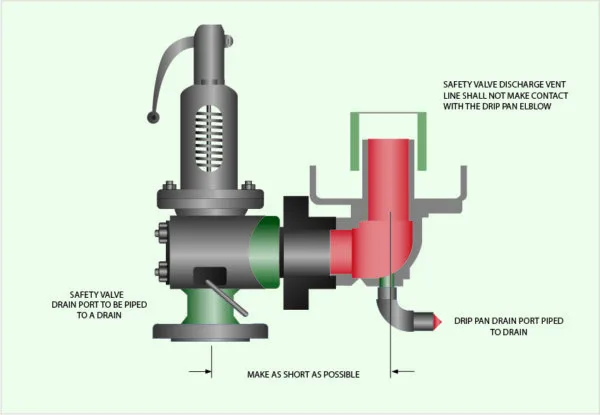
7. Good installation practices - Inlet line consideration, Outlet line consideration, Reaction forces and support

8. Maintenance and trouble shooting

9. Introduction to Various Standards - Introduction to ASME B 16.34, Introduction to API 576, API 527, ASTM material standards

10. Introduction to Rupture disc

11. Quiz

12. Feedback and concluding Session.

Opportunities that await you!

Skills & tools you'll gain

Electrical MaintenanceMechanical MaintenancePiping LayoutSafety system development

Career opportunities

Training details

This is a live course that has a scheduled start date.

Why people choose EveryEng

Industry-aligned courses, expert training, hands-on learning, recognized certifications, and job opportunities-all in a flexible and supportive environment.

What learners say about this course

Yogendra Sagar Mishra
May 3, 2026

The first lab tripped me up a bit: the data ingest assumes you’ve already got a sensor stream cleaned and timestamped, which wasn’t spelled out. After that, it stayed grounded in real constraints, not toy math. The section on envelope analysis stuck, especially the bearing fault example where they compared raw FFT vs filtered bands and showed how false positives creep in at low RPS. I liked the framing around arch tradeoffs—where CBM logic lives vs infra—and the quick nod to wiring it into CI without overthinking prod. It’s beginner-friendly without talking down, and I’ve already caught myself rethinking how we flag drift in obs for our k8s workloads. Feels like I’m past a small plateau now.

ANU VARGHESE
ANU VARGHESE Fresher
Feb 25, 2026

Initially, I wasn’t sure what to expect from this course. The material stayed fairly grounded, especially when walking through open-loop versus closed-loop control beyond the textbook definitions. Examples tied well to things seen in chemical and pharmaceutical plants, like temperature control on a batch reactor and level control on a distillation column, rather than abstract blocks alone. There was also enough overlap with oil & gas and energy utilities to be useful, such as discussing pressure control on separators and basic boiler control logic. One challenge was mentally translating the simplified examples to real systems with dead time, sensor drift, and valve stiction. That gap is where junior engineers usually struggle, and it would have helped to explicitly call out those edge cases earlier. Still, the discussion on why open-loop control occasionally makes sense (maintenance modes, analyzer-based control) matched actual industry practice better than most courses. A practical takeaway was being more systematic about identifying the true process variable and disturbance before defaulting to a PID loop. Thinking at the system level—how one loop affects upstream and downstream units—was reinforced throughout. The content felt aligned with practical engineering demands.

Avatar icon
Muhammad Hussain
Feb 25, 2026

Initially, I wasn’t sure what to expect from this course. Process control is something that shows up everywhere on site, but the theory behind it had always been a bit fragmented for me. The sections on open-loop vs. closed-loop control helped close that gap, especially when tied to real examples like distillation column temperature control in chemical/pharmaceutical plants and boiler drum level control in energy utilities. One area that stood out was how feedback control behaves under disturbances. That directly connects to issues seen on an oil & gas separator pressure loop I’ve worked on, where load changes kept throwing the controller off. A challenge during the course was translating the block diagrams into what actually happens in the DCS screens, especially when multiple control objectives conflict. It took a bit of effort to map theory to noisy plant data. A practical takeaway was learning a more structured way to decide whether a loop even needs tight closed-loop control or if a simpler approach is acceptable. That alone will save time during commissioning and troubleshooting. The content feels immediately usable, and I can see this being useful in long-term project work.

Enggenious (SAN Techno Mentors)
Enggenious (SAN Techno Mentors) People Transformation
Feb 25, 2026

Initially, I wasn’t sure what to expect from this course. Coming from oil & gas and energy utilities, QC tools are often mentioned but rarely taught in a structured way. The walkthrough of the seven basic tools—especially Pareto charts, cause-and-effect diagrams, and control charts—lined up well with issues seen in gas compression reliability and power plant outage analysis. One challenge was translating the examples into messy, real field data. In utilities, process data from SCADA systems isn’t always clean or normally distributed, which makes classic SPC limits tricky. The course touched on this only lightly, so some judgment is still needed when applying control charts to transient conditions like startups or load changes. A practical takeaway was how to combine a Pareto analysis with a fishbone diagram to avoid jumping straight to conclusions. That approach is useful when dealing with recurring pipeline maintenance defects or transformer failures, where multiple contributing factors interact at the system level. Compared with typical industry practice, which often jumps straight to formal RCA templates, this course reinforced the fundamentals first. Overall, it felt grounded in real engineering practice.

₹14000

₹0 Early bird

Coming in Next Month

Questions and Answers

A: Principle: Spring-loaded PSV lift is driven by inlet pressure exceeding set pressure plus allowable overpressure. Here the failed-open valve causes a fast inlet pressure rise; the PSV will lift as designed and stay open until pressure falls. Reducing inflow addresses the cause without adding instability. Option A traps engineers who know chatter exists but forget inlet throttling violates API 520 guidance and can worsen instability.

A: Principle: PSV type selection hinges on allowable backpressure as a fraction of set pressure. With variable backpressure approaching 35%, a balanced bellows valve maintains set pressure accuracy without overcomplicating control. Option C attracts engineers familiar with pilots but ignores higher maintenance risk and sensitivity during dirty flare service.

A: Principle: PSVs limit pressure, not composition or material compatibility effects. During tube rupture, the PSV can relieve pressure but cannot prevent ingress of aggressive fluids into the shell system. Option A tempts those who conflate phase change hazards with contamination effects, but pressure relief still functions there.

A: Principle: Wet H2S environments drive sulfide stress cracking per NACE requirements. High-strength springs and trim are vulnerable even if general corrosion rates look low. Option A catches engineers thinking bulk corrosion controls govern, overlooking cracking susceptibility.