Skip to main contentEngineering Courses, Mentoring & Jobs | EveryEng
Spirit of Teamwork banner

Spirit of Teamwork

Spirit of Teamwork banner
Live online Beginner

Spirit of Teamwork

4(53)
1003 views
COMPLETED

Tell us and we’ll notify you when the next batch is scheduled.

2 hrs
-
English
1003 views
Chaitanya Purohit
Chaitanya PurohitConsultant
  • 7-day money-back guarantee
  • Session recordings included
  • Certificate of completion

Why enroll

Embodying the Spirit of Teamwork can greatly boost your career across industries, opening doors to roles like Team Lead, Project Manager, and other leadership positions. By developing strong communication, adaptability, and collaboration skills, you become a valuable contributor to any organization. This mindset helps you build strong relationships, resolve conflicts, and drive team success. Ultimately, it positions you for leadership opportunities and long-term professional growth.

Is this course for you?

You should take this if

  • You work in Oil & Gas Upstream or Aerospace
  • You're a Mechanical Engineering professional
  • You prefer live, instructor-led training with Q&A

You should skip if

  • You need a different specialisation outside Mechanical Engineering
  • You need fully self-paced, on-demand content

Course details

The Spirit of Teamwork course is designed to develop the essential skills required to collaborate effectively in today’s dynamic work environment. It focuses on building trust, communication, and mutual respect among team members to achieve shared goals. Participants will learn how to understand team roles, leverage individual strengths, and foster a positive team culture. The course explores key concepts such as active listening, conflict resolution, and collaborative problem-solving. It also emphasizes the importance of accountability, adaptability, and emotional intelligence in teamwork. Through practical examples and interactive activities, learners will gain insights into managing diverse perspectives and enhancing team performance. The program highlights strategies to overcome common team challenges and improve coordination. Participants will also learn how to motivate team members and contribute to a high-performing team environment. By the end of the course, individuals will be equipped to work more efficiently within teams, build stronger professional relationships, and drive collective success. This training is ideal for professionals across all industries who want to enhance their teamwork and interpersonal skills.

Course suitable for

Key topics covered

  • Introduction to Teamwork and Collaboration

  • The Building Blocks of a High-Performing Team

  • Effective Communication within Teams

  • Building Trust and Rapport

  • Team Roles and Responsibilities

  • Conflict Resolution and Managing Differences

  • Collaboration vs. Competition in Teams

  • Team Motivation and Engagement

  • Effective Decision-Making in Teams

  • Leadership and Teamwork

  • Developing Team Goals and Accountability

Opportunities that await you!

Career opportunities

Training details

This is a live course that has a scheduled start date.

Why people choose EveryEng

Industry-aligned courses, expert training, hands-on learning, recognized certifications, and job opportunities-all in a flexible and supportive environment.

What learners say about this course

vineeth nair
vineeth nair
May 3, 2026

The no‑frills handling of the tougher concepts helped keep things moving without fluff. As a TeamLead, I’m thinking about how this lands with juniors, and the section on FFT windowing where they contrast Hanning vs rectangular using a 30 RPS pump trace stuck; seeing leakage in the spectrum made the tradeoff click. The bearing fault frequency example (BPFO vs BPFI) tied back to obs in prod equipment, which matters if you’re supporting oilgas or basic automotive NVH. it's mostly pitched right for beginner, though I wasn’t sold on how quickly sensor mounting was brushed past; a bit more on stud vs magnet effects would help teams avoid bad data. I’ve already pointed one engineer to the ISO 10816 chart walkthrough when reviewing a PR on alarm thresholds. This ended up being the baseline reference I’ve been missing the last couple years—useful between meetings, not academic.

Avatar icon
Charu Humane
May 3, 2026

Short, practical reps—like the Chapter 2 'Status Update Rewrite' where you cut a rambling Slack into a 5-bullet PR summary, kept it useful between meetings. It's beginner-level, mostly, but I've already used the 'ask-back' checklist in a prod incident review; wished there was more on async comms across infra/k8s teams.

Viresh Kamthekar
Viresh Kamthekar
May 3, 2026

Maps pretty cleanly to the checklists I’m scanning before signing off shop work orders, not fluff. Small gripe first: the safety module skims PPE fit; the glove sizing bit felt rushed. After that, it’s practical. The MIG polarity section in Module 2 stuck, especially the quick chart comparing DCEP vs DCEN and the short demo where the bead washed out at ~110A. That’s the stuff you mess up in the shop. I’ve already copied the pre-weld setup list into our repo notes. The examples translate to real weld prep on automotive brackets. pacing stays consistent across modules, which isn’t common.

Avatar icon
Bhavesh Suthar
May 3, 2026

Helped me map the process flow in my head, from arc strike to bead cooling, similar to tracing data through an arch. The bead-on-plate demo in the SMAW section, where they pause on travel speed vs amperage and show undercut on camera, stuck. I wasn't sold on the safety chapter’s pace; wished there was more on fumes and ventilation, not just PPE. Still, it's tightened the gap between what I knew and what I thought I knew, and I've already applied it without overthinking.

COMPLETED

-

Questions and Answers

A: Principle: Residence time equals effective phase volume divided by that phase’s volumetric flow. Here, teamwork means everyone uses the same basis; 18 m³ divided by 360 m³/h gives 0.05 h, or 3 minutes, but that’s wrong because 360 m³/h is total liquid feed before level control effects. The design basis already assumes steady-state draw-off at half that rate, yielding 6 minutes. Option A traps engineers who know the formula but grab the wrong volume basis from the GA instead of the process datasheet.

A: Principle: Loop checks proceed from sensor to final element with process isolated. In this scenario, coordinated work avoids rework; simulating DP proves transmitter and DCS scaling before any mechanical movement, then manual stroking confirms output action. Option A catches engineers who know valve action matters but jump ahead, masking a scaling or polarity error.

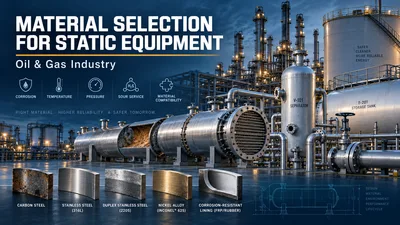
A: Principle: Wet sour service drives sulfide stress cracking risk, governed by hardness limits. At 65°C with free water, NACE requirements apply; B7M controls hardness and aligns with sour service practice, which the whole team can defend during audit. Option A tempts those who know B7 is common but overlook hardness as the failure trigger rather than uniform corrosion.

A: Principle: Gas capacity checks use operating volumetric flow over allowable superficial velocity. Aligning units across the team avoids churn; converting 1.2 MMSCFD to operating m³/s and dividing by 0.1 m/s yields about 1.16 m². Option A attracts engineers who know standard flow rates but forget the separator sees operating conditions.