Skip to main contentEngineering Courses, Mentoring & Jobs | EveryEng
Transducers For Instrumentation banner
Preview this course

Transducers For Instrumentation

Transducers For Instrumentation banner
Preview this course
Self-paced Advanced

Transducers For Instrumentation

3(115)
4 enrolled
198 views
FREE
1446 min
Anytime
English
198 views
Engineering Academy
Engineering AcademyLearn Without Limits: Free Engineering Courses
  • Lifetime access
  • Certificate of completion
  • Anytime Learning
  • Learn from Industry Expert

Why enroll

Participants join this course to learn how sensors and transducers work and how to use them in real-world applications. It helps them gain practical skills in generating and processing sensor data for electronics and microcontroller projects.

Is this course for you?

You should take this if

  • You work in Electronics & Instrumentation
  • You're a Instrumentation Engineering / Electronics & Telecommunication professional
  • You have 3+ years of hands-on experience in this field
  • You want to build skills in Engineering & Design, Project Management

You should skip if

  • You're new to this field with no prior experience
  • You need a different specialisation outside Instrumentation Engineering
  • You need live interaction with an instructor

Course details

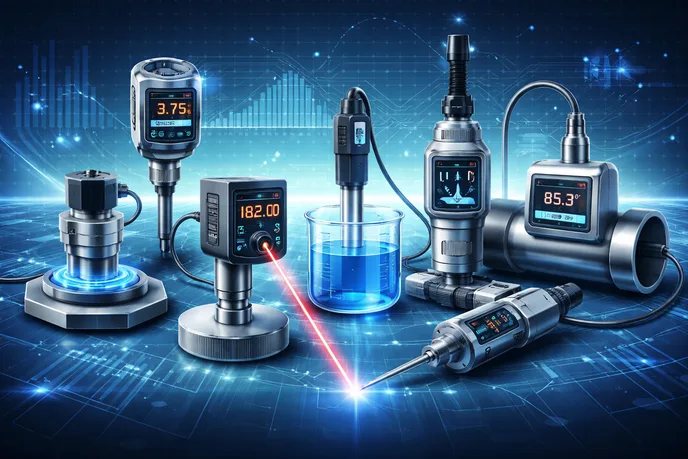
This course is designed to help students understand how different types of sensors and transducers work. Students will learn the basic physics behind these devices and why they are important in real-world applications. The course will also cover the structure and working of some common sensors, giving students practical insight into their operation. Modern sensors and recent technological advancements will be introduced to help students stay up to date with current trends. Students will learn how to generate data from sensors and process it to make it suitable for electronic signal processing. The course focuses on three main objectives: understanding the physics and operating principles of transducers, learning different types of transduction techniques with practical examples, and interfacing transducers with electronic microcontrollers to process sensor signals. By the end of the course, students will gain both theoretical knowledge and practical skills for using sensors in various engineering applications.

Source: NPTEL IIT Delhi [Youtube Channel]

Course suitable for

Key topics covered

  • Intro

  • Introduction to Transducers, Sensors and Actuators; Transduction Principles and Classification

  • Static and Dynamic Characteristics of Transducers; Accuracy vs Precision

  • Errors in Measurement and Instrumentation; Propagation of Errors

  • Thermal Sensors: Equilibrium and Predictive Measurements

  • Thermal Sensors: Thermocouples, RTDs and Thermistors

  • Thermal Sensors: Electrical vs Thermal Networks

  • Thermal Sensors: Thermal RC Networks

  • Thermal Sensors: Novel Thermal Sensors

  • Optical Sensors: Basic Principles and Operations

  • Optical Sensors: Interferometric Sensors

  • Optical Sensors: Distributed and Bragg Grating-Based Sensors

  • Optical Sensors: Working Principles of Optical Detectors

  • Optical Sensors: Working Principles of Optical Sources

  • Acoustic Sensors: Piezoelectricity and Propagation Modes

  • Acoustic Sensors: Surface Acoustic Wave (SAW) Sensors

  • Acoustic Sensors: Bulk Acoustic Wave (BAW) Sensors

  • Magnetic Sensors: Magnetostriction and Magnetic‑Elastic Sensors

  • Magnetic Sensors: Magneto‑resistive Sensors

  • Magnetic Sensors: Hall Sensors

  • Magnetic Sensors: Linear Amplifier and Schmitt Trigger

  • Radiation Sensors: Introduction to Radiation Sensing and Spectroscopy

  • Radiation Sensors: Gas Filled and Solid‑State Detectors

  • Radiation Sensors: Organic and Inorganic Scintillators

  • Smart Sensors: Introduction

Course content

The course is readily available, allowing learners to start and complete it at their own pace.

25 lectures24 hr 6 min
  1. Intro
    3 min
  2. Introduction to Transducers, Sensors and Actuators; Transduction Principles and Classification
    52 min
  3. Static and Dynamic Characteristics of Transducers; Accuracy vs Precision
    52 min
  4. Errors in Measurement and Instrumentation; Propagation of Errors
    40 min
  5. Thermal Sensors: Equilibrium and Predictive Measurements
    61 min
  6. Thermal Sensors: Thermocouples, RTDs and Thermistors
    58 min
  7. Thermal Sensors: Electrical vs Thermal Networks
    57 min
  8. Thermal Sensors: Thermal RC Networks
    52 min
  9. Thermal Sensors: Novel Thermal Sensors
    60 min
  10. Optical Sensors: Basic Principles and Operations
    67 min
  11. Optical Sensors: Interferometric Sensors
    67 min
  12. Optical Sensors: Distributed and Bragg Grating-Based Sensors
    73 min
  13. Optical Sensors: Working Principles of Optical Detectors
    55 min
  14. Optical Sensors: Working Principles of Optical Sources
    62 min
  15. Acoustic Sensors: Piezoelectricity and Propagation Modes
    64 min
  16. Acoustic Sensors: Surface Acoustic Wave (SAW) Sensors
    66 min
  17. Acoustic Sensors: Bulk Acoustic Wave (BAW) Sensors
    63 min
  18. Magnetic Sensors: Magnetostriction and Magnetic‑Elastic Sensors
    64 min
  19. Magnetic Sensors: Magneto‑resistive Sensors
    67 min
  20. Magnetic Sensors: Hall Sensors
    62 min
  21. Magnetic Sensors: Linear Amplifier and Schmitt Trigger
    61 min
  22. Radiation Sensors: Introduction to Radiation Sensing and Spectroscopy
    61 min
  23. Radiation Sensors: Gas Filled and Solid‑State Detectors
    52 min
  24. Radiation Sensors: Organic and Inorganic Scintillators
    63 min
  25. Smart Sensors: Introduction
    64 min

Opportunities that await you!

Skills & tools you'll gain

Engineering & DesignProject ManagementResearch & Developmnet

Career opportunities

Why people choose EveryEng

Industry-aligned courses, expert training, hands-on learning, recognized certifications, and job opportunities-all in a flexible and supportive environment.

What learners say about this course

Boora Mahesh
Boora Mahesh civil engineer
Mar 14, 2026

drtudfjygfygughihj

Hemanth TK
Hemanth TK
Feb 27, 2026

Fhjfkgc

Bhavani S
Bhavani S Student
Feb 22, 2026

Nice

Engineering Academy
Engineering Academy Engineer
May 3, 2026

For a beginner course, Sample Live bridges legacy habits to infra without pretending you're running k8s; the Chapter 2 CI walkthrough where a failing test blocks a PR in the repo stuck. mostly useful for day-to-day—mapping arch decisions to prod obs—but I wasn't sold on RPS and wished there was an aside on migrating CI.

FREE

Access anytime

Questions and Answers

A: Principle: Chloride-laden moisture in tight gaps drives localized corrosion long before bulk material loss. Applied here: The air gap and salt slurry create a classic crevice, attacking the pole piece surface and dulling flux transfer, so the signal decays while continuity stays intact. Trap: Option D catches people thinking in vibration terms, but fatigue would trend to intermittent opens, not smooth amplitude fade.

A: Principle: De-risk energy first, then verify signal chain from source to sink with known stimuli. Applied here: Power and polarity prevent latent damage, PLC simulation proves the input path, and only then does controlled pressure touch the transducer. Trap: Option B tempts controls engineers, but it exposes hardware to pressure before you know the electrical side is sane.

A: Principle: Full-bridge output ≈ (GF × strain × Vexcitation). Applied here: 2 × 500e-6 × 5 V gives 0.005 V, squarely in the millivolt range that demands clean amplification. Trap: Option D snags people who remember 'bridge doubles sensitivity' but forget the strain term is still micro-scale.

A: Principle: High-temperature alloys with nickel content handle both oxidation and acidic condensates. Applied here: Inconel maintains grain stability at heat and shrugs off sulfuric acid films that pit common stainless during cold soak. Trap: Option B catches exhaust veterans who overlook acid dew point corrosion during short-trip duty cycles.