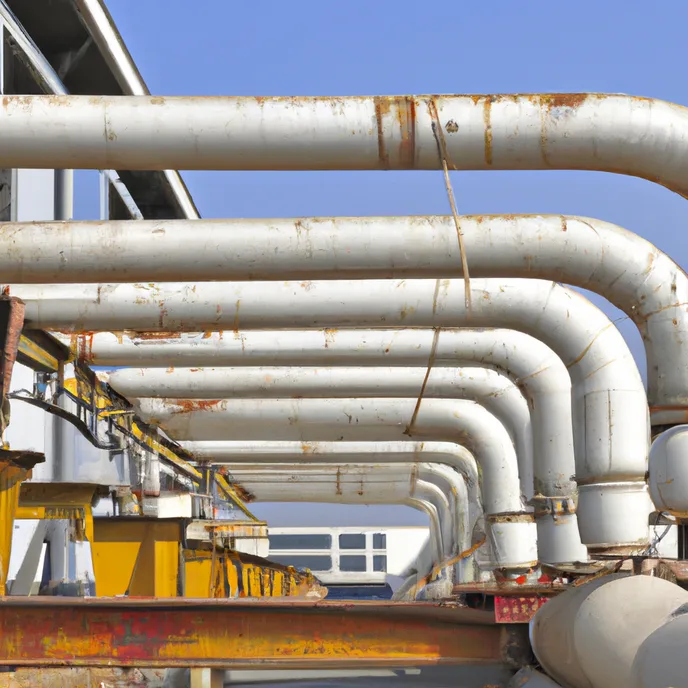
Types of Piping Supports and Design Engineering Rules (Pipe Support Engineering)
Types of Piping Supports and Design Engineering Rules (Pipe Support Engineering)

- 7-day money-back guarantee
- Lifetime access
- Certificate of completion
Why enroll
What enrolled engineers say
This course turned out to be more technical than I anticipated. Even though it’s tagged as beginner, it covered the core logic behind pipe support selection in a way that maps well to real oil & gas and energy utilities projects. The sections on support spacing and the difference between standard versus special supports were especially relevant when thinking about long refinery pipe racks and power plant steam lines. What stood out was the emphasis on load paths and system behavior, not just placing supports by span tables. Thermal expansion, weight, and restraint philosophy (anchor, guide, line stop) were explained clearly, including edge cases like vertical lines and equipment nozzles. In industry, these decisions usually get buried in stress reports, so it was useful to see the fundamentals laid out. One challenge was mentally translating the simplified examples to congested layouts where structural steel, cable trays, and maintenance access all compete for space. Real projects also have conflicting standards between EPCs and plant specs, which the course only touched lightly. A practical takeaway was a better checklist for reviewing pipe support layouts early—spotting where spring supports are actually needed versus overused rigid supports. It definitely strengthened my technical clarity.
Initially, I wasn’t sure what to expect from this course, especially given the beginner label. Coming from oil & gas and energy utilities projects, pipe support design is usually learned the hard way—through stress issues during commissioning or surprise loads on pipe racks. The course does a decent job laying out the basics like rigid vs. spring supports, span rules, and how support choices affect overall piping behavior. What stood out was the discussion on support spacing and load transfer. In refineries and power plant steam systems, thermal expansion and occasional two-phase flow are edge cases that often get underestimated, and the course at least flags those risks. It doesn’t go deep into ASME B31.3 or B31.1 stress checks, but it aligns reasonably well with common industry practice for preliminary layout work. One challenge was keeping the content relevant for more complex systems—offshore modules or heavily congested pipe racks need more nuance than shown. Still, a practical takeaway was the structured way of thinking about support optimization early, before loads propagate into structures and civil foundations. The content felt aligned with practical engineering demands.
At first glance, the topics looked familiar, but the depth surprised me. Pipe supports are something dealt with almost daily in oil & gas projects, yet this course forced a closer look at why certain choices are made, not just how. The sections on pipe support spacing and standard vs special supports helped close a gap that often gets glossed over in design offices. One challenge was mentally mapping the rules to real layouts from energy utilities work, especially when dealing with thermal expansion and mixed line sizes on racks. The examples helped, but it still took some effort to relate the spacing guidelines to congested refinery piping where ideal spans aren’t always possible. A practical takeaway was a clearer method for selecting support types based on load, direction of movement, and service conditions. That’s already being applied on a brownfield modification where support optimization matters more than adding steel. The discussion around engineering considerations, like avoiding over-constraining lines, was particularly relevant to power plant auxiliary systems. The course didn’t overpromise, but it filled a real knowledge gap between codes and day-to-day design decisions. Overall, it felt grounded in real engineering practice.
Your instructor
Anup Kumar Dey
Senior Piping Engineer
Owner of https://whatispiping.com/
Is this course for you?
You should take this if
- You work in Oil & Gas Upstream
- You're a Piping & Layout Engineering / Mechanical Engineering professional
- You prefer self-paced learning you can revisit
You should skip if
- You need a different specialisation outside Piping & Layout Engineering
- You need live interaction with an instructor
Course details
Course suitable for
Key topics covered
Course content
The course is readily available, allowing learners to start and complete it at their own pace.
- Introduction5 min
- Why Support Pipes17 min
- Classification of Pipe Supports15 min
- Pipe Support Lists29 min
- Piping support span12 min
- How to Support a Pipe17 min
- Pipe Support Optimization Rules8 min
- Pipe Support Standard8 min
- Support Engineering Considerations16 min
- Bonus 1: Types of Pipe Supports21 min
- Bonus 2: Pipe Support drawing5 min
- Bonus 3: Critical Pipe Support designing decisions in piping design engineering10 min
Opportunities that await you!
Career opportunities
Why people choose EveryEng
Industry-aligned courses, expert training, hands-on learning, recognized certifications, and job opportunities-all in a flexible and supportive environment.


 Aug 29, 2026