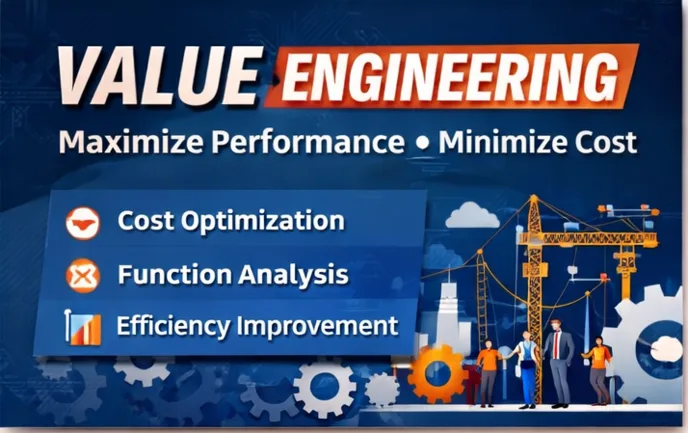
Value Engineering Unlocked: Maximizing Performance, Minimizing Cost
Value Engineering Unlocked: Maximizing Performance, Minimizing Cost
Tell us and we’ll notify you when the next batch is scheduled.

- Session recordings included
- Certificate of completion
- Foundational Learning
- Access to Study Materials
Why enroll
What enrolled engineers say
The material stays anchored to real constraints from day one: budgets, schedules, and the stuff that actually breaks in prod when RPS spikes. The Section 2.4 walk-through on the Function–Cost Matrix using the ticketing service example stuck with me, especially the moment where a “nice” feature gets cut because it bloats obs and CI time. That mapped cleanly to how we argue arch tradeoffs in PRs, not as taste but as costed functions. It's pitched for beginners, but it doesn't talk down; you can feel the system-level framing even when the math is light. Mostly worked, though I wasn't sold on the brief infra segment—k8s and cloud pricing were waved at, and I wished there was one concrete calc instead of slides. Still, the checklist near the end about design notes aging over time felt practical. That bias toward keeping things maintainable should compound later, when teams change and context leaks away.
Gets past the Hello World phase quickly and into tradeoffs that show up at work. The FAST diagram walkthrough in Chapter 3, where you map functions to cost drivers and then prune, stuck with me; it mirrors how we review arch changes before a PR hits the repo. it's beginner-friendly, but I wasn't sold on the spreadsheet-heavy segment and wished there was a bit more on tying decisions back to prod metrics like infra cost per RPS. I've been around long enough in prod to spot fluff, and this mostly avoided it.
the FAST diagram walkthrough in Module 2 stuck; it's practical for arch tradeoffs, though I wasn't sold on the shallow LCC spreadsheet in Chapter 4.
Is this course for you?
You should take this if
- You work in Automotive
- You're a Civil & Structural / Mechanical Engineering professional
- You want to build skills in Value Engineering
- You prefer live, instructor-led training with Q&A
You should skip if
- You need a different specialisation outside Civil & Structural
- You need fully self-paced, on-demand content
Course details
Course suitable for
Key topics covered
Opportunities that await you!
Skills & tools you'll gain
Career opportunities
Training details
This is a live course that has a scheduled start date.
Live session
Starts
Sun, May 24, 2026
Duration
1 hour per day
Why people choose EveryEng
Industry-aligned courses, expert training, hands-on learning, recognized certifications, and job opportunities-all in a flexible and supportive environment.


 Aug 29, 2026