
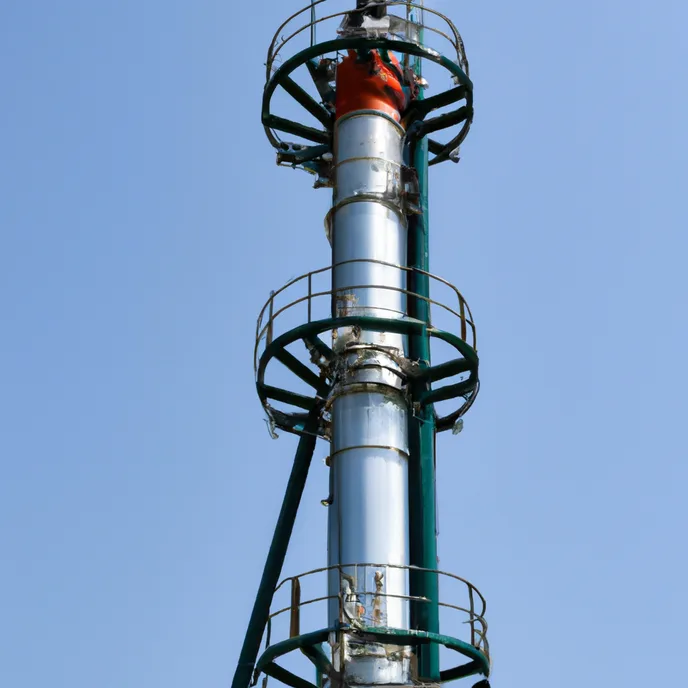
Stress Analysis of Distillation Column Piping/ Tower Piping
Stress Analysis of Distillation Column Piping/ Tower Piping

- 7-day money-back guarantee
- Lifetime access
- Certificate of completion
Why enroll
What enrolled engineers say
Coming into this course, I had some prior exposure to the subject from oil & gas projects, mostly reviewing stress reports rather than building them. The material focused on distillation column piping and tower nozzle interactions, which is often glossed over in beginner content. Coverage of thermal expansion, sustained vs. operating loads, and basic flexibility analysis tied reasonably well to ASME B31.3 expectations used on refinery jobs. One challenge was the simplified treatment of real-world constraints. In practice, routing around trays, platforms, and exchanger bundles drives stress issues, and those edge cases weren’t fully explored. Wind and seismic loads on tall columns were mentioned, but not deeply compared with how we typically handle them during detailed design or late-stage reroutes. A useful takeaway was the step-by-step way nozzle loads were checked and how small layout changes can significantly reduce loads on column skirts. That’s directly applicable when reviewing piping near fractionators or crude units. The course also highlighted how over-constraining lines can shift problems downstream, which is a system-level issue younger engineers often miss. Overall, it aligned fairly well with industry practices for early-stage design and review. It definitely strengthened my technical clarity.
At first glance, the topics looked familiar, but the depth surprised me. The course walks through stress analysis for distillation column piping and tower piping in a way that’s approachable, yet it doesn’t completely shy away from real constraints seen in oil & gas plants. Coverage of thermal expansion effects and nozzle load checks against typical vendor limits was especially relevant, since those are often where designs quietly fail in operating units. The discussion around basic support types and how they influence sustained vs. expansion stresses lined up reasonably well with ASME B31.3 intent. One challenge was mentally bridging the simplified layouts in the examples with congested, brownfield units. In practice, supports aren’t always where the textbook wants them, and edge cases like differential settlement or hot re-rating scenarios can complicate things fast. That gap required some interpretation. A practical takeaway was a clearer step-by-step mindset for screening column piping early, before detailed FEA. Thinking system-level—how piping stiffness feeds back into column nozzle loads—was emphasized more than expected for a beginner course. The content felt aligned with practical engineering demands.
At first glance, the topics looked familiar, but the depth surprised me. The course walked through stress analysis for distillation column piping in a way that actually connects to day‑to‑day oil and gas work. Seeing how thermal expansion drives flexibility requirements around column nozzles filled a gap I’ve had since most jobs just hand over CAESAR models without much explanation. The sections on sustained vs operating loads and how they tie back to ASME B31.3 were especially useful. One challenge was keeping track of load cases early on. As a beginner course, it moves fast when introducing nozzle loads and allowable stresses, and it took a second pass through the examples for things to click. That said, the simplified examples around support spacing and expansion loops helped ground the theory. A practical takeaway was learning a quick way to sanity‑check piping stresses near tall towers before running a full analysis. That’s already helped in a revamp project where wind loads on the column were driving unexpected piping reactions. This feels immediately applicable, and I can see this being useful in long-term project work.
Your instructor
Anup Kumar Dey
Senior Piping Engineer
Owner of https://whatispiping.com/
Is this course for you?
You should take this if
- You work in Oil & Gas Upstream or Pharmaceutical & Healthcare
- You're a Piping & Layout Engineering / Mechanical Engineering professional
- You prefer self-paced learning you can revisit
You should skip if
- You need a different specialisation outside Piping & Layout Engineering
- You need live interaction with an instructor
Course details
Course suitable for
Key topics covered
Course content
The course is readily available, allowing learners to start and complete it at their own pace.
- Introduction14 min
- Creating Temperature Profile7 min
- Modeling the Equipment8 min
- Modeling the clip-cleats supports7 min
- Skirt Temperature Calculation3 min
- Nozzle Load Qualification4 min
- Column Modeling Case Study54 min
- Displacement of a Pressure Vessel - Behavior of Pressure Vessel2 min
- Gas Outlet Piping Stress Analysis8 min
- Gas Outlet and Drain Outlet Piping Stress Analysis3 min
- Distillation Column Piping Layout | Nozzle Orientation17 min
- Tall vessel & column piping philosophy9 min
Opportunities that await you!
Career opportunities
Why people choose EveryEng
Industry-aligned courses, expert training, hands-on learning, recognized certifications, and job opportunities-all in a flexible and supportive environment.

 Oct 2, 2026