<link href="https://fonts.googleapis.com/css2?family=Caveat:wght@500;700&family=JetBrains+Mono:wght@400;500;600&family=Plus+Jakarta+Sans:wght@600;700;800&display=swap" rel="stylesheet" /> Skip to main contentEngineering Courses, Mentoring & Jobs | EveryEng
Drilling Rig Components banner
Preview this course

Drilling Rig Components

Drilling Rig Components banner
Preview this course
Self-paced Beginner

Drilling Rig Components

4(6)
32 enrolled
3355 views
FREE
49 min
Anytime
English
3355 views
Muhammad Enjari
Muhammad EnjariPetroleum Engineer with more than 15 years of experience in Oil and Gas industry
  • Lifetime access
  • Certificate of completion
  • Foundational Learning
  • Access to Study Materials
Volume pricing for groups of 5+

Is this course for you?

You should take this if

  • You work in Oil & Gas Upstream
  • You're a Petroleum Technology professional
  • You prefer self-paced learning you can revisit

You should skip if

  • You need a different specialisation outside Petroleum Technology
  • You need live interaction with an instructor

Course details

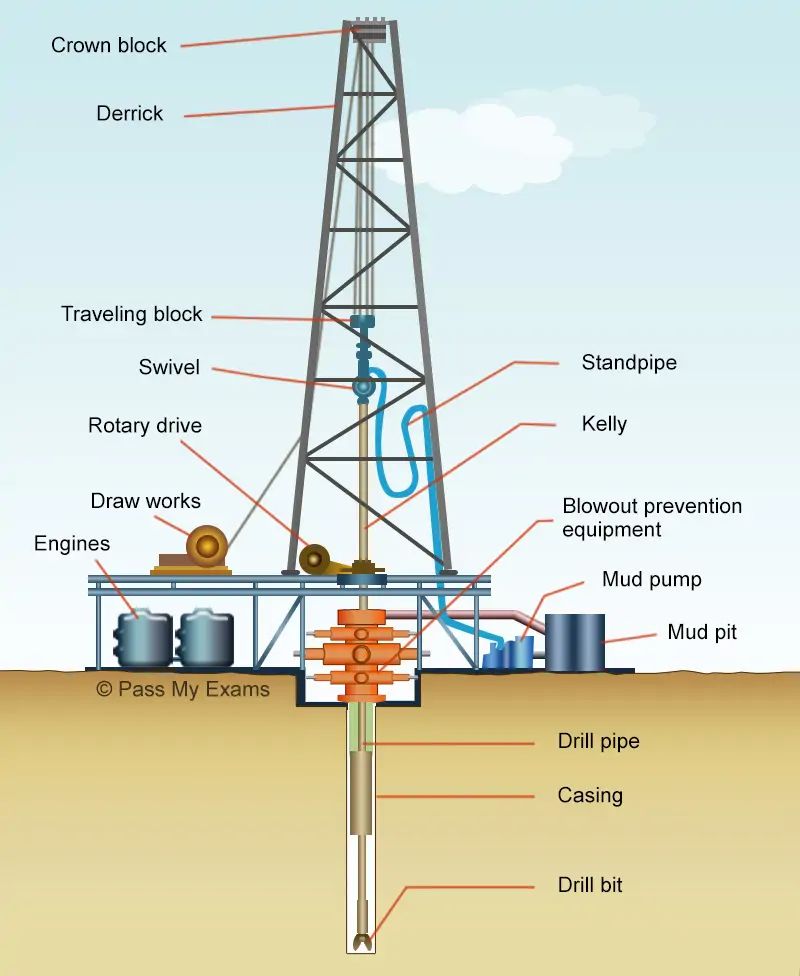
this training course explains about the components of rotary drilling rig

Course suitable for

Key topics covered

rig components

Course content

The course is readily available, allowing learners to start and complete it at their own pace.

2 lectures49 min
  1. lecture one
    33 min
  2. lecture 2
    16 min

Opportunities that await you!

Career opportunities

FREE

Access anytime

Questions and Answers

A: That's the most common mistake — assuming a superseded standard silently updates the contract. It doesn't. Under audit, you’re bound to the editions explicitly invoked, unless an MOC formally adopts newer ones. The load path still matters, so the hook can’t be used beyond what the derrick is contractually rated to carry, but you don’t get to cherry-pick higher ratings from later API editions just because they exist.

A: That’s the trap — trying to ‘engineer around’ a document clash. Sheave count directly sets mechanical advantage and line tension, so you can’t massage assumptions. Under inspection, unresolved GA versus equipment list conflicts are indefensible. You stop, raise it, and force a single source of truth before any load numbers are relied on.

A: That’s the most common mistake — dropping the block and hook weight from the suspended load. The drawworks doesn’t care what’s steel-on-steel versus pipe; it sees total hanging weight. Add everything, then divide by the number of supporting lines when friction is neglected. Getting this wrong cascades straight into line selection and fatigue life.

A: That’s the usual slip — treating the pump in isolation. API 7K ties overpressure protection to the weakest pressure-retaining component in the connected system. A relief set above standpipe MAWP leaves you with a credible burst scenario, and under COMAH that’s a hard stop.