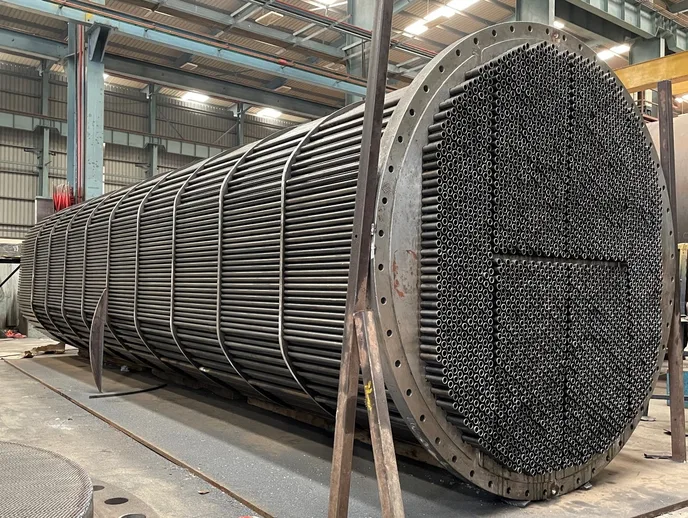
Introduction to Heat Exchangers
Introduction to Heat Exchangers
Tell us and we’ll notify you when the next batch is scheduled.

- Session recordings included
- Certificate of completion
- Foundational Learning
- Access to Study Materials
Why enroll
What enrolled engineers say
Module 4 dragged a bit, and the homework assumes you’re already fluent in Excel Solver. That aside, the selection logic is what pulled me in: the decision trees for choosing shell-and-tube vs plate in Chapter 2, especially the LMTD vs ε‑NTU fork with the fouling factor example at minute ~18. As someone who thinks in arch diagrams and failure modes, mapping thermal constraints the way we map infra tradeoffs clicked. The counterflow vs parallel-flow section tied pressure drop back to maintenance in a way I’ve actually seen in chemicalpharmaceutical plants. it wasn’t fluffy, and it didn’t pretend everyone’s starting from zero. I’ve already bookmarked the pinch-temperature walkthrough for quick reference between meetings.
Needed material that wouldn’t fall apart under a PR-level sanity check, and this mostly held. The LMTD vs ε-NTU section, especially the shell-and-tube example where fouling factors changed sizing, stuck with me and maps well to how I think about legacy arch versus modern constraints. It connects old plant math to how I reason about infra tradeoffs in prod, even if the plate exchanger coverage felt light. still, it trimmed a lot of mental tech debt I’d been carrying from chemicalpharmaceutical work.
Section 3's shell-and-tube LMTD worked example (120→80°C, 2-pass) stuck; the step where fouling factor bumps area made the math click, it's easy to map to a prod calc. Mostly helpful, but I wasn't sold on the brief NTU coverage—wished there was more obs on sizing tradeoffs for chemicalpharmaceutical service.
Is this course for you?
You should take this if
- You work in Pharmaceutical & Healthcare or Energy & Utilities
- You're a Chemical & Process / Mechanical Engineering professional
- You prefer live, instructor-led training with Q&A
You should skip if
- You need a different specialisation outside Chemical & Process
- You need fully self-paced, on-demand content
Course details
Course suitable for
Opportunities that await you!
Career opportunities
Certifications
Training details
This is a live course that has a scheduled start date.
Why people choose EveryEng
Industry-aligned courses, expert training, hands-on learning, recognized certifications, and job opportunities-all in a flexible and supportive environment.


 Aug 29, 2026