Skip to main contentEngineering Courses, Mentoring & Jobs | EveryEng
Hazard Identification and Risk Assessment banner
Live online Basic

Hazard Identification and Risk Assessment

4(1)
2000 views
COMPLETED

Tell us and we’ll notify you when the next batch is scheduled.

-
-
2000 views
Pradeep Bhalla
Pradeep BhallaPrincipal Consultant and Lead Trainer
  • 7-day money-back guarantee
  • Session recordings included
  • Certificate of completion

Why enroll

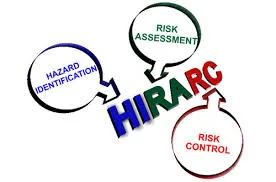
A risk assessment can help you identify potential hazards in the workplace. It also allows you to better assess the severity of the risks these hazard pose to your workers. A thorough risk assessment is essential for implementing a risk management strategy to eliminate or minimize the likelihood of these risks causing harm to your workers.

Is this course for you?

You should take this if

  • You work in Oil & Gas Upstream or Aerospace
  • You're a Chemical & Process / Civil & Structural professional
  • You prefer live, instructor-led training with Q&A

You should skip if

  • You need a different specialisation outside Chemical & Process
  • You need fully self-paced, on-demand content

Opportunities that await you!

Career opportunities

Training details

This is a live course that has a scheduled start date.

Why people choose EveryEng

Industry-aligned courses, expert training, hands-on learning, recognized certifications, and job opportunities-all in a flexible and supportive environment.

COMPLETED

-

Questions and Answers

A: A looks mundane but it ties the whole chain together: fouled internals change hydraulics, the controller runs out of authority, and real liquid carryover appears. B feels comfortable because bad transmitters cause alarms, but it doesn't explain downstream carryover confirmed by ops. C explains high level, yet the trend shows no step change in inlet conditions from test separators. D matches controller saturation, but stiction usually gives cycling, not a slow relentless rise.

A: A is dull but safe: loss of fuel pressure is a classic flame instability precursor and the trip exists for that reason. B sounds intuitive to an operations mindset, yet more air with less fuel pushes lean blowout. C reflects schedule pressure, but disabling protection under inspection is indefensible. D risks starving downstream users and still can't fix an upstream pressure collapse.

A: A is painful under schedule pressure, but conflicting safety intent documents are a hard stop. B feels procedural, yet finishing tests on an undefined fail state can mask a latent hazard. C relies on document hierarchy, but fail action is a safety function, not a drafting preference. D gives misleading comfort; partial movement under power doesn't prove loss-of-utility behavior.

A: A fits the environment: wet H2S plus stress is the textbook trigger, even at moderate temperatures. B tempts because CO2 is common, but the service is sour-dominated and SSC governs material limits. C sounds scary, yet 60°C is far below HTHA regimes. D borrows from stainless steel failures; carbon steel behaves differently here.