

Article details
Introduction
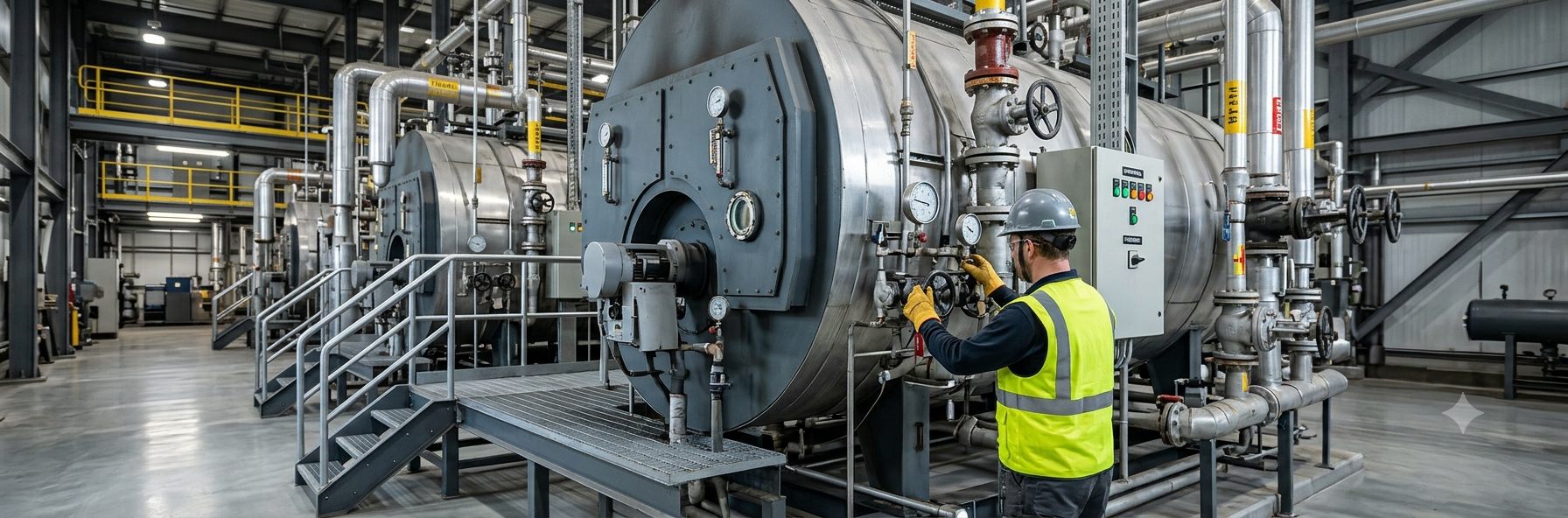
Boilers are essential equipment used in industries to generate steam and hot water for heating, power generation, manufacturing, and various industrial processes. They play an important role in industries such as oil and gas, chemical processing, power plants, marine engineering, food processing, and pharmaceuticals.A boiler works by transferring heat from a fuel source to water inside a closed vessel. The heated water produces steam, which can be used for industrial heating, equipment operation, cleaning, and power generation.However, efficient boiler performance depends on proper operation, regular inspection, water treatment, and preventive maintenance. Poor maintenance can result in equipment failure, reduced efficiency, excessive fuel consumption, and serious safety hazards.Understanding boiler operation and maintenance practices helps engineers maintain reliable performance, extend equipment life, and ensure safe industrial operations.
1. Understanding the Basic Working Principle of a Boiler
A boiler is a closed pressure vessel designed to heat water and generate steam using energy from fuel combustion or another heat source.
The basic working process involves three main stages:
Heat Generation: Fuel such as natural gas, oil, or coal is burned inside the furnace to produce heat.
Heat Transfer: The generated heat passes through boiler tubes and transfers energy to the surrounding water.
Steam Generation: As water absorbs heat, it reaches its boiling point and changes into steam. The steam is collected and supplied to the required equipment or process.
The operating pressure determines the temperature at which water boils. Higher pressure requires a higher boiling temperature.
Boiler performance depends on maintaining the correct balance between fuel supply, combustion air, feedwater supply, and steam demand.
2. Different Types of Industrial Boilers
Boilers are available in different designs depending on their operating pressure, steam capacity, fuel type, and industrial application.
Fire-Tube Boilers
In fire-tube boilers, hot combustion gases pass through tubes surrounded by water. Heat transfers from the gases to the water, producing steam.
These boilers are commonly used in small and medium-sized industrial facilities where moderate steam production is required.
Water-Tube Boilers
In water-tube boilers, water flows through tubes while hot combustion gases circulate around their external surfaces.
These boilers are suitable for high-pressure and high-capacity steam generation. They are widely used in power plants, chemical industries, and large industrial facilities.
Electric Boilers
Electric boilers use electrical energy to heat water and produce steam. They are generally used where electricity is readily available and direct fuel combustion is not preferred.
Selecting the correct boiler depends on process requirements, operating conditions, available fuel, and required steam capacity.
3. Important Boiler Components and Their Functions
Understanding the major boiler components is essential for proper operation and maintenance.
Steam Drum: Separates steam from water and provides temporary storage for steam.
Water Tubes: Carry water and absorb heat from combustion gases.
Burner: Mixes fuel and air to produce controlled combustion.
Feedwater Pump: Supplies water to the boiler at the required pressure.
Economizer: Uses waste heat from flue gases to preheat incoming feedwater.
Superheater: Increases steam temperature above its saturation temperature.
Safety Valve: Releases excess pressure when it exceeds the permitted operating limit.
Pressure Gauge: Indicates the pressure inside the boiler.
Water Level Indicator: Allows operators to monitor the water level inside the boiler.
Blowdown Valve: Removes concentrated impurities and accumulated deposits from boiler water.
Each component must function correctly to maintain safe and reliable boiler operation.
4. Boiler Start-Up and Operating Procedures
Correct start-up procedures help prevent thermal stress, equipment damage, and unsafe operating conditions.
Before starting a boiler, operators should inspect the equipment and confirm that all essential systems are ready.
Pre-Start-Up Inspection
Important checks include:
Inspecting the boiler body, tubes, connections, and external surfaces.
Checking the feedwater supply and pump condition.
Confirming that safety valves and pressure gauges are operational.
Checking water level indicators and low-water protection devices.
Inspecting fuel supply lines and burner equipment.
Ensuring that blowdown and drain connections are properly installed.
Checking combustion air and ventilation arrangements.
Boiler Start-Up
After completing the required inspections, the boiler can be started according to the manufacturer's operating procedure.
The combustion chamber must be properly purged before ignition to remove any accumulated combustible gases.
The burner should initially operate at a low firing rate. The boiler temperature and pressure must increase gradually to avoid excessive thermal stress.
Operators should monitor steam pressure, water level, combustion conditions, and temperature throughout the start-up process.
Normal Boiler Operation
During normal operation, the boiler should maintain stable pressure and water levels according to its design specifications.
Fuel supply, combustion air, and feedwater flow must be adjusted according to steam demand. Operators should also monitor flue gas temperature, unusual noise, vibration, leakage, and abnormal pressure fluctuations.
5. Boiler Water Treatment and Its Importance
Water treatment is one of the most important aspects of boiler maintenance.
Untreated water may contain dissolved minerals, oxygen, suspended particles, and other impurities. These substances can create scale formation, corrosion, foaming, and deposits inside the boiler.
Common Boiler Water Problems
Scale Formation: Dissolved minerals such as calcium and magnesium can form hard deposits on internal heat transfer surfaces. Scale reduces heat transfer efficiency and increases fuel consumption.
Corrosion: Dissolved oxygen and unsuitable water chemistry can cause corrosion of boiler tubes, drums, and connected piping.
Foaming and Carryover: Excessive dissolved solids can create foam, allowing water droplets and impurities to enter the steam system.
Sludge Formation: Suspended solids and chemical deposits can accumulate at the bottom of the boiler.
Water Treatment Practices
Effective water treatment includes feedwater testing, chemical dosing, monitoring dissolved solids, and controlling water chemistry.
Common treatment practices include:
Maintaining suitable feedwater quality.
Removing dissolved oxygen through deaeration.
Applying appropriate chemical treatment.
Monitoring pH and conductivity.
Performing regular boiler blowdown.
Testing water according to the boiler manufacturer's recommendations.
Proper water treatment improves heat transfer efficiency and helps prevent internal equipment damage.
6. Boiler Maintenance and Inspection Practices
Preventive maintenance helps identify potential problems before they develop into major equipment failures.
A planned maintenance schedule should include daily, weekly, monthly, and annual inspection activities.
Daily Maintenance
Check steam pressure and operating temperature.
Monitor boiler water level.
Inspect the burner and combustion flame.
Check feedwater pump operation.
Test boiler water concentration.
Inspect for steam leakage.
Check pressure gauges and water level indicators.
Weekly Maintenance
Inspect safety devices and water level controls.
Check burner condition and fuel supply.
Inspect blowdown arrangements.
Examine pumps, valves, and associated piping.
Review operating records and abnormal readings.
Monthly and Periodic Maintenance
Inspect electrical connections and control systems.
Check alarms and automatic shutdown devices.
Examine boiler tubes and accessible internal surfaces.
Inspect refractory lining for cracks or damage.
Check safety valve condition according to the approved maintenance schedule.
Clean deposits from suitable boiler surfaces.
Periodic internal inspections and cleaning are necessary to identify corrosion, scale formation, tube damage, and other defects.
Maintenance intervals should always be established according to operating conditions, inspection findings, applicable regulations, and manufacturer recommendations.
7. Boiler Shutdown and Storage Procedures
Proper shutdown procedures are important for protecting boiler equipment and maintaining safe operating conditions.
During normal shutdown, the boiler load should be reduced gradually. Fuel supply must be stopped using the approved burner shutdown sequence.
Operators should maintain appropriate water levels and follow the manufacturer's instructions for cooling, isolation, and depressurization.
For boilers that will remain out of service for an extended period, proper storage preparation is necessary.
Two common storage approaches are:
Dry Storage: The boiler is drained, dried, and protected against moisture to reduce internal corrosion.
Wet Storage: The boiler remains filled with appropriately treated water under controlled conditions to minimize exposure to oxygen.
The suitable method depends on boiler design, storage duration, environmental conditions, and manufacturer instructions.
8. Common Boiler Problems and Troubleshooting
Boiler operators should recognize early warning signs to prevent equipment damage and unexpected shutdowns.
Common problem | Possible cause |
|---|---|
Low water level | Feedwater pump failure or insufficient water supply |
High steam pressure | Faulty pressure controls or excessive firing |
Scale formation | Poor water treatment |
Flame failure | Fuel supply or ignition problems |
Tube leakage | Corrosion, overheating, or mechanical damage |
Excessive flue gas temperature | Fouled heat transfer surfaces or inefficient combustion |
Unusual vibration | Pump, fan, or rotating equipment problems |
Low water level is particularly dangerous because it can expose heated surfaces and cause severe overheating.
If an unsafe condition or protective alarm occurs, operators must follow the approved emergency shutdown procedure. Safety devices should never be bypassed to continue operation.
9. Best Practices for Improving Boiler Efficiency
Improving boiler efficiency reduces operating costs and supports reliable industrial production.
Some important practices include:
Maintaining the correct fuel-to-air ratio.
Regularly cleaning heat transfer surfaces.
Preventing steam and heat losses through proper insulation.
Maintaining suitable feedwater temperature.
Monitoring flue gas temperature and combustion performance.
Recovering waste heat through economizers where suitable.
Controlling blowdown to avoid unnecessary heat and water losses.
Maintaining burners, pumps, valves, and automatic control systems.
Continuous monitoring of boiler performance helps engineers identify efficiency losses and take corrective action.
Conclusion
Boiler operation and maintenance are essential for maintaining safe, efficient, and reliable industrial processes. Proper start-up and shutdown procedures, effective water treatment, regular inspections, and preventive maintenance help reduce equipment failures and improve boiler service life.Engineers and operators must understand boiler components, operating parameters, safety systems, and common troubleshooting methods to manage boiler equipment effectively.A well-planned maintenance program combined with continuous performance monitoring helps industries improve energy efficiency, reduce operating costs, and maintain uninterrupted production.
