

Article details
Introduction
Combustion is an important process in thermal engineering, power generation, and industrial heating systems. It converts the chemical energy stored in fuel into useful heat through a reaction with oxygen. This heat is used in boilers, furnaces, kilns, industrial heaters, and power plants.
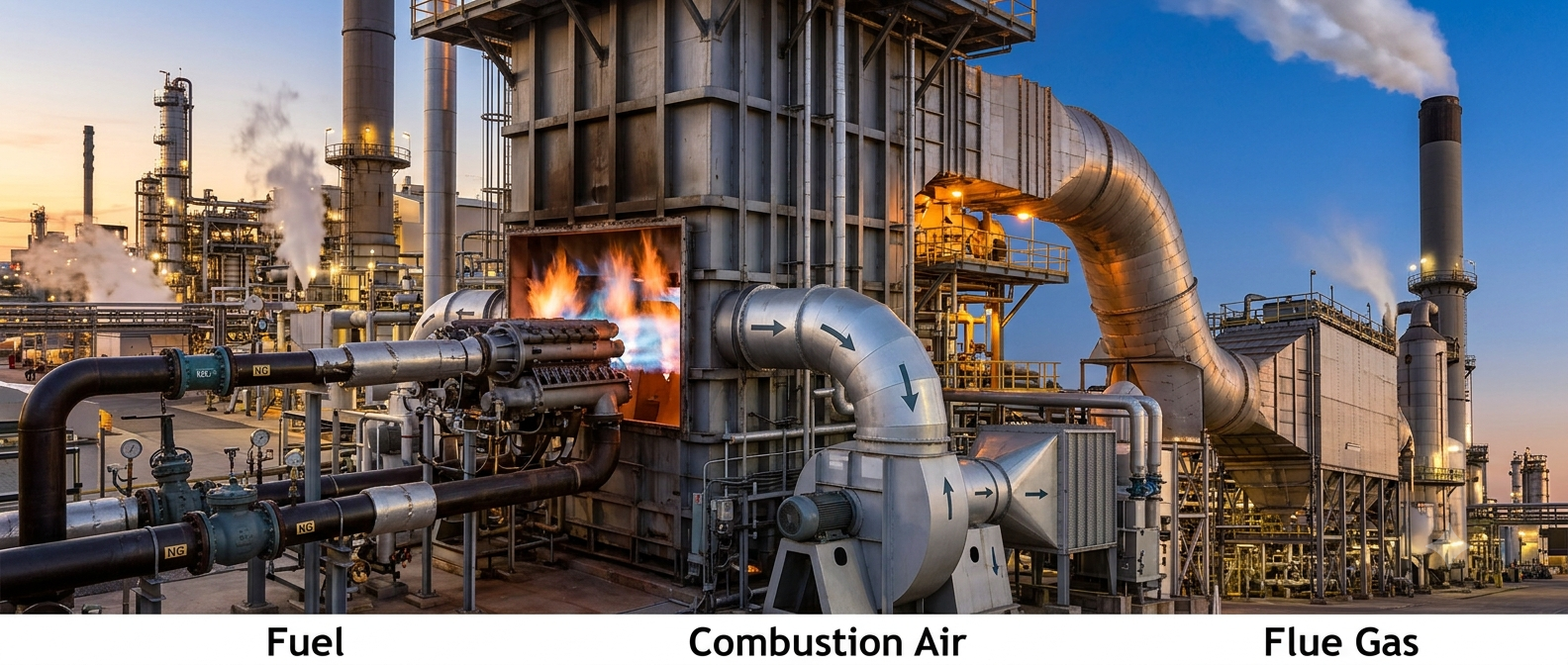
Fuel, combustion air, and flue gas are closely connected. Fuel provides the energy, combustion air supplies the oxygen required for burning, and flue gas carries away the products of combustion. Understanding these three elements helps engineers improve energy efficiency, reduce fuel consumption, and control emissions.
What Is Combustion?
Combustion is a chemical reaction between a fuel and an oxidizing agent, usually oxygen in the air. The reaction releases heat and may produce light or a visible flame.
Common industrial fuels include natural gas, coal, fuel oil, diesel, and biomass. Their combustion characteristics depend on their chemical composition, moisture content, heating value, and physical properties.
For efficient combustion, fuel and air must mix properly at a suitable temperature. Poor mixing, insufficient oxygen, or unstable operating conditions can result in incomplete combustion and energy losses.
Complete Combustion
Complete combustion occurs when the combustible elements in the fuel react sufficiently with oxygen. For hydrocarbon fuels, carbon mainly forms carbon dioxide (CO₂), while hydrogen forms water vapour (H₂O).
For example, the complete combustion of methane can be represented as:
CH₄ + 2O₂ → CO₂ + 2H₂O + Heat
In practical systems, nitrogen from the air also passes through the combustion chamber and becomes part of the flue gas.
Incomplete Combustion
Incomplete combustion occurs when the fuel does not burn completely. This can happen because of insufficient oxygen, poor fuel-air mixing, low combustion temperature, or inadequate residence time.
It may produce carbon monoxide (CO), soot, smoke, and unburned fuel. These products represent wasted energy and can create serious safety and environmental concerns.
Understanding Combustion Air
Combustion air is the air supplied to a burner or combustion chamber to support the burning process. Oxygen in the air reacts with the combustible components of the fuel, while most nitrogen passes through the system without participating directly in the reaction.
The quantity of air required depends on the type and composition of the fuel, the burner design, and operating conditions.
Theoretical Air Requirement
Theoretical air is the minimum quantity of air calculated to provide the oxygen required for complete combustion under ideal conditions. It is also called stoichiometric air.
Engineers determine this requirement using the chemical composition of the fuel and the relevant combustion reactions.
However, actual industrial combustion conditions are rarely ideal. Fuel and air may not mix perfectly, and fuel composition can vary during operation. Therefore, practical systems generally require additional air.
Excess Air in Combustion
Excess air is the air supplied beyond the theoretical requirement for complete combustion. It helps compensate for imperfect mixing and changing operating conditions.
The percentage of excess air is calculated using the following formula:
Excess Air (%) = [(Actual Air − Theoretical Air) / Theoretical Air] × 100
For example, if a combustion system theoretically requires 100 kg of air but receives 120 kg, the excess air is 20%.
Although excess air helps improve combustion completeness, supplying too much can reduce thermal efficiency. The additional air absorbs heat and increases the quantity of gas leaving through the exhaust system.
The optimum excess-air level depends on the fuel, burner design, equipment load, and emission requirements.
What Is Flue Gas?
Flue gas is the mixture of gases produced during combustion and discharged from a boiler, furnace, or other combustion equipment. It usually leaves the system through a flue, exhaust duct, or chimney.
Its composition depends on the fuel used, the amount of combustion air supplied, and the quality of the combustion process.
Common components include:
Carbon dioxide (CO₂): Produced when carbon burns completely.
Water vapour (H₂O): Formed when hydrogen reacts with oxygen.
Nitrogen (N₂): Mainly carried into the combustion chamber with the incoming air.
Oxygen (O₂): May remain when excess air is supplied.
Carbon monoxide (CO): Can indicate incomplete combustion.
Sulphur oxides (SOₓ): May form when sulphur-containing fuels are burned.
Nitrogen oxides (NOₓ): Can form during combustion, particularly at elevated temperatures.
The exact composition varies with fuel type, combustion conditions, and any air entering the exhaust system through leaks.
Why Flue Gas Analysis Matters
Flue gas analysis helps engineers assess combustion quality and identify opportunities to improve equipment performance. Measurements of oxygen, carbon monoxide, carbon dioxide, and flue-gas temperature provide useful information about the operating condition.
High oxygen levels may indicate excessive air or air leakage. High carbon monoxide can indicate incomplete combustion or poor mixing. However, these readings must be interpreted together because no single measurement provides a complete assessment.
Relationship Between Fuel, Air, and Flue Gas
Fuel, combustion air, and flue gas form an interconnected system.
The fuel composition determines the theoretical oxygen requirement. The air supply determines how much oxygen is available for combustion, while burner design and mixing influence how effectively that oxygen reacts with the fuel.
The resulting flue gas reflects the combustion process. Its composition and temperature help engineers evaluate whether the system is operating efficiently.
For example, insufficient air can increase carbon monoxide and unburned fuel losses. Excessive air can increase exhaust-gas flow and carry more heat out of the equipment. The objective is to supply sufficient air for stable, complete combustion while minimising avoidable heat loss.
Factors Affecting Combustion Efficiency
1. Fuel Composition and Quality
Different fuels have different heating values and oxygen requirements. Moisture, ash, sulphur, and variations in carbon and hydrogen content can influence combustion performance.
Using representative fuel data helps engineers calculate air requirements and select appropriate operating conditions.
2. Air-Fuel Mixing
Proper mixing allows oxygen to reach the combustible components of the fuel. Poor mixing may create oxygen-rich and oxygen-deficient zones within the combustion chamber.
Burner design, air distribution, fuel atomisation, and turbulence can all affect combustion quality.
3. Combustion Temperature
A suitable temperature supports stable ignition and effective combustion. If the temperature is too low, combustion may become incomplete. Excessively high temperatures can contribute to increased nitrogen oxide formation and equipment-related challenges.
4. Excess Air Level
Too little air can increase carbon monoxide, smoke, and unburned fuel. Too much air increases the amount of gas that must be heated and discharged.
Careful control of excess air helps balance combustion completeness, efficiency, and emissions.
5. Flue-Gas Temperature
High flue-gas temperatures may indicate that significant heat is leaving the system without being recovered. Where technically suitable, heat-recovery equipment such as economisers and air preheaters can transfer some of this energy back into the process.
However, exhaust temperature must remain within the limits required to prevent corrosion, condensation-related damage, and other operating problems.
Industrial Applications
Fuel combustion and flue-gas monitoring are important across several industries.
Power generation: Boilers burn fuels to produce steam for electricity generation. Combustion control helps improve fuel utilisation and operating reliability.
Chemical and process industries: Furnaces and fired heaters provide heat for chemical reactions, material processing, and other industrial operations.
Manufacturing: Kilns, ovens, and industrial heating equipment use combustion to process metals, ceramics, cement, and other materials.
Building services: Boilers provide heating and hot water for commercial and industrial facilities. Proper combustion adjustment supports efficient operation and safe exhaust handling.
Methods to Improve Combustion Performance
Engineers can improve combustion performance through regular inspection, monitoring, and suitable control strategies.
Measure flue-gas oxygen and carbon monoxide at appropriate operating conditions.
Adjust the air-fuel ratio within approved equipment operating limits.
Inspect burners, dampers, fans, and air-distribution systems.
Check for unwanted air leakage in furnaces and exhaust ducts.
Maintain fuel quality and monitor variations in fuel composition.
Evaluate flue-gas temperature and identify suitable heat-recovery opportunities.
Calibrate gas analysers and maintain combustion-control equipment.
Follow manufacturer recommendations, applicable standards, and safety procedures.
Combustion adjustments should be performed by qualified personnel. Reducing excess air without monitoring carbon monoxide and flame stability can create unsafe operating conditions.
Conclusion
Fuel, combustion air, and flue gas are fundamental elements of industrial thermal systems. Fuel provides the energy, air supplies the oxygen needed for combustion, and flue gas carries away the resulting combustion products.
Understanding their relationship helps engineers evaluate combustion quality, manage excess air, reduce heat losses, and improve equipment efficiency. By combining accurate measurements, suitable burner controls, regular maintenance, and effective heat recovery, industries can achieve more reliable combustion and better energy performance.
