

Article details
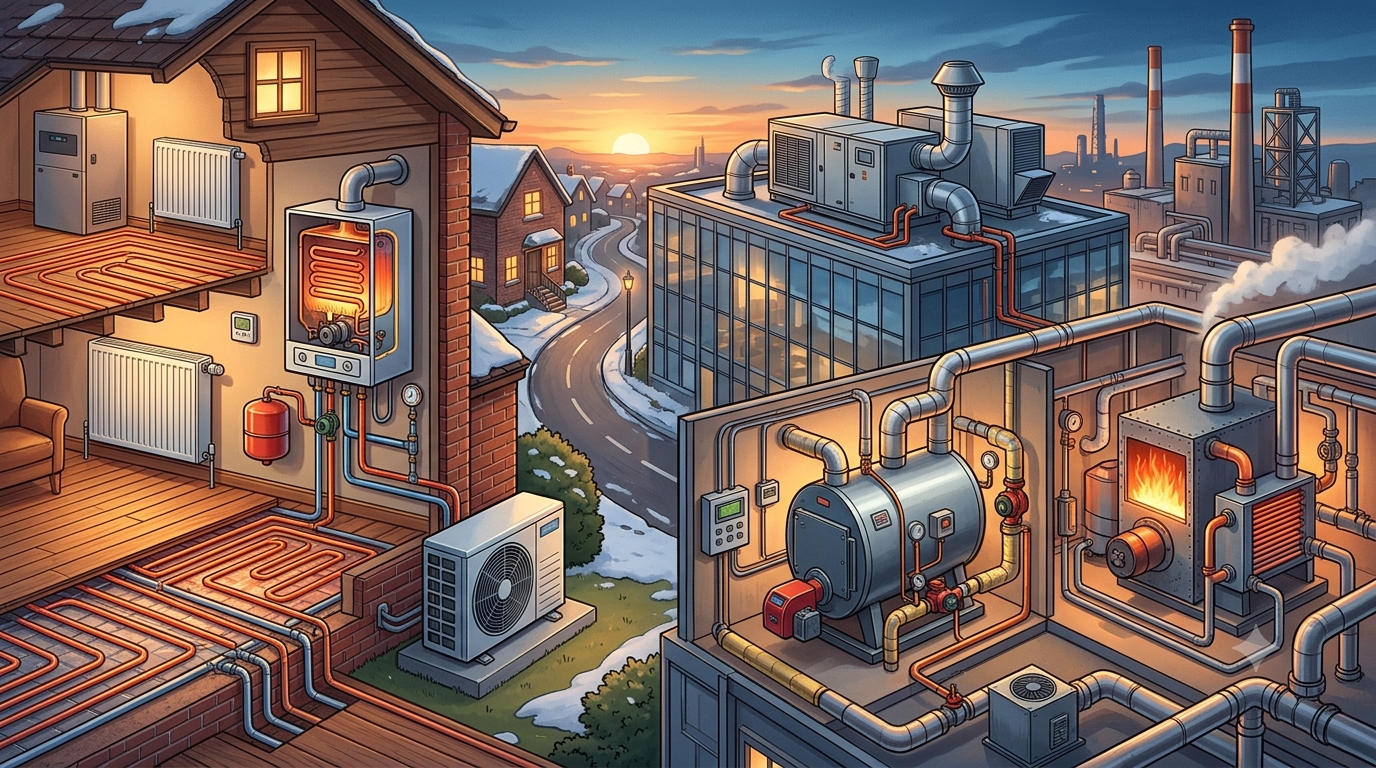
Heating systems play an essential role in maintaining comfortable indoor temperatures in residential, commercial, and industrial buildings. They provide warmth during cold weather, support temperature-sensitive processes, and help create suitable working and living environments.
Different heating systems use different energy sources, technologies, and distribution methods. Choosing the right system depends on the building's size, climate, energy availability, installation cost, and heating requirements.
This article explains the main types of heating systems, their working principles, major components, advantages, limitations, and common applications.
What Is a Heating System?
A heating system is a combination of equipment and components designed to generate, transfer, and distribute heat within a building or a specific space.
The system may use electricity, natural gas, heating oil, biomass, solar energy, or heat from the surrounding environment. Depending on its design, it can distribute heat through air, water, steam, or direct radiant transfer.
Heating systems are commonly used in houses, offices, hospitals, hotels, factories, warehouses, and educational institutions.
How Does a Heating System Work?
A heating system generally operates through three main stages: heat generation, heat distribution, and temperature control.
Heat generation: A boiler, furnace, electric heater, heat pump, or another heat source produces or collects thermal energy.
Heat distribution: The generated heat moves through air ducts, water pipes, radiators, underfloor heating circuits, or radiant panels.
Temperature control: A thermostat or control system monitors indoor temperature and adjusts the heating equipment to maintain the desired conditions.
For example, in a hydronic heating system, a boiler heats water and circulates it through pipes to radiators. The radiators transfer heat into the room, while a thermostat helps regulate the system.
The exact operating process depends on the heating technology and the building's heating demand.
Main Types of Heating Systems
Different heating technologies are suitable for different buildings and operating conditions. The most common systems are explained below.
1. Forced-Air Heating Systems

Forced-air heating systems use a furnace or heat pump to warm air and distribute it through a network of ducts and vents. A fan moves the heated air into different rooms, helping maintain a consistent indoor temperature.
These systems can operate using natural gas, electricity, or other suitable energy sources. They are often integrated with air-conditioning equipment to provide both heating and cooling.
Advantages:
Heats rooms relatively quickly.
Can work with central air-conditioning systems.
Supports air filtration and temperature control.
Limitations: Duct leakage, poor insulation, and dirty filters can reduce efficiency. Air movement may also distribute dust if filtration and maintenance are inadequate.
2. Hydronic Heating Systems

Hydronic heating systems use hot water as the heat-transfer medium. A boiler or heat pump heats the water, which circulates through pipes to radiators, baseboard heaters, fan-coil units, or underfloor heating circuits.
As the water passes through these devices, heat transfers into the surrounding space. The cooled water returns to the heat source to be reheated.
Hydronic systems are widely used in residential buildings, hotels, hospitals, and commercial facilities where controlled and comfortable heating is required.
Advantages:
Provides steady and relatively quiet heating.
Allows individual temperature control in different zones.
Can work efficiently with suitable heat pumps.
Limitations: Installation can be expensive, and leaks, circulation problems, or poor system balancing can affect performance.
3. Electric Heating Systems

Electric heating systems convert electrical energy into heat using resistance elements. Common examples include portable heaters, electric radiators, baseboard heaters, and fixed wall-mounted units.
When electricity passes through a resistance element, heat is generated and transferred to the surrounding air or nearby objects.
Electric heaters are suitable for small rooms, offices, temporary workspaces, and buildings where installing a central heating system is impractical.
Advantages:
Simple installation and operation.
No on-site combustion in resistance heaters.
Convenient temperature control.
Limitations: Running costs can be high where electricity prices are expensive. Resistance heaters convert electricity into heat at the point of use, while heat pumps can deliver more heat per unit of electricity consumed.
4. Heat Pump Systems

Heat pumps transfer thermal energy from one location to another instead of generating heat primarily through electrical resistance or fuel combustion.
In heating mode, an outdoor heat exchanger absorbs heat from the air or ground. A refrigerant carries this energy through the refrigeration cycle, and the indoor heat exchanger releases the heat into the building.
Air-source and ground-source heat pumps are common types. Many air-source models can also provide cooling during warmer weather.
Advantages:
Can deliver more thermal energy than the electrical energy they consume.
Offers heating and cooling in suitable configurations.
Can reduce operating costs compared with less efficient heating equipment.
Limitations: Initial costs may be high, and performance depends on outdoor conditions, system design, and equipment selection.
5. Radiant Heating Systems

Radiant heating transfers heat directly to people, furniture, floors, walls, and other surfaces. It can use electric heating elements or hot-water pipes installed beneath floors or within walls and ceilings.
Unlike conventional forced-air heating, radiant systems do not rely primarily on circulating warm air to provide comfort.
They are commonly installed in bathrooms, homes, hotels, and selected commercial buildings.
Advantages:
Provides comfortable and relatively uniform warmth.
Operates quietly.
Can reduce air movement and associated dust circulation.
Limitations: Installation or repairs beneath finished surfaces can be costly. Underfloor systems may also respond slowly to temperature changes.
6. Solar Heating Systems
Solar heating systems use energy from sunlight to provide heat. Solar thermal collectors absorb solar radiation and transfer the energy to water or another heat-transfer fluid.
The collected heat may be used for water heating or, in appropriately designed systems, contribute to space heating. Storage tanks and auxiliary heaters can help meet demand when sunlight is insufficient.
Advantages: Solar energy is renewable and can reduce dependence on conventional fuels.
Limitations: Output varies with weather, season, and available sunlight. Installation space, storage capacity, and backup heating requirements must be considered.
Important Components of a Heating System
Although equipment varies by technology, most heating systems contain several essential components.
Heat source: A furnace, boiler, heat pump, electric element, or solar collector supplies thermal energy.
Distribution network: Ducts, pipes, radiators, or radiant panels transfer heat to the required areas.
Circulation equipment: Fans and pumps move air or fluid through the system.
Thermostat: Measures temperature and controls heating operation according to the setpoint.
Valves and dampers: Regulate the flow of water, refrigerant, or air where applicable.
Safety controls: Monitor operating conditions and help prevent unsafe operation.
Proper selection and coordination of these components are essential for reliable operation and energy efficiency.
How to Choose the Right Heating System
Selecting a suitable heating system requires evaluating both building requirements and long-term operating conditions.
Building size and heat demand: Larger buildings generally require greater heating capacity. A professional heat-load calculation helps determine the correct equipment size.
Energy availability: Consider whether electricity, natural gas, or other energy sources are readily available and affordable.
Installation and operating costs: Compare equipment costs, installation expenses, maintenance requirements, and expected energy consumption.
Climate conditions: Outdoor temperatures and seasonal variations influence system performance, particularly for heat pumps and solar heating.
Temperature control: Buildings with different occupancy patterns may benefit from zoned heating and programmable thermostats.
Environmental impact: Energy-efficient equipment and renewable energy sources can help reduce emissions, depending on the energy supply and system design.
Maintenance Tips for Better Performance
Regular maintenance improves reliability, supports energy efficiency, and helps extend equipment life.
Clean or replace air filters according to manufacturer recommendations.
Inspect ducts and pipes for leaks, damage, and insulation problems.
Check thermostats, electrical connections, pumps, and circulation fans.
Arrange professional servicing of boilers, furnaces, and heat pumps.
Keep outdoor heat pump units clear of obstructions.
Monitor unusual noise, uneven heating, or unexpected increases in energy consumption.
Fuel-burning systems must also have suitable ventilation and correctly maintained combustion and exhaust components. Safety inspections should follow applicable local requirements.
Applications of Heating Systems
Heating systems serve a wide range of purposes across different industries.
Residential buildings: Maintain comfortable temperatures in homes and apartments.
Commercial buildings: Support suitable indoor conditions in offices, hotels, and shopping centres.
Healthcare facilities: Maintain required environmental conditions in patient rooms and selected clinical areas.
Industrial facilities: Supply process heat for manufacturing, drying, and temperature-sensitive operations.
Agriculture: Support greenhouse temperature control and selected livestock environments.
The required heating technology depends on the application, temperature range, operating schedule, and safety requirements.
Conclusion
Heating systems are an important part of building services engineering and industrial temperature management. Forced-air, hydronic, electric, heat pump, radiant, and solar systems each offer different benefits and limitations.
The best solution depends on heating demand, climate, energy costs, installation requirements, and maintenance needs. With appropriate system sizing, effective temperature controls, and regular servicing, a well-designed heating system can provide reliable comfort while managing energy consumption.
Understanding these technologies helps homeowners, facility managers, and engineering professionals make informed decisions about heating system selection, installation, and operation.
