

Article details
Essential HVAC Terms and Their Meanings
1. Air Conditioning
Air conditioning is the process of controlling indoor air temperature and humidity to improve comfort. It generally involves removing heat from indoor spaces and transferring it outdoors.
2. Ventilation
Ventilation is the process of supplying fresh air and removing stale or contaminated air from a building. Proper ventilation helps reduce indoor pollutants, odors, and excess moisture.
3. Thermostat
A thermostat is a control device that measures room temperature and switches heating or cooling equipment on or off to maintain the desired temperature.
4. Refrigerant
A refrigerant is a working fluid that absorbs and releases heat during the refrigeration cycle. It circulates through components such as the compressor, condenser, expansion device, and evaporator.
5. Compressor
The compressor increases the pressure of refrigerant vapor and moves it through the refrigeration system. It is a major component of air conditioners, chillers, and heat pumps.
6. Evaporator
The evaporator absorbs heat from indoor air or another cooling medium. As refrigerant passes through it, the refrigerant absorbs heat and changes from liquid to vapor.
7. Condenser
The condenser releases heat from the refrigerant to the surrounding air or water. This process allows the refrigerant to change from vapor into liquid under suitable operating conditions.
8. BTU (British Thermal Unit)
BTU is a unit of heat energy used to describe heating and cooling capacity. HVAC professionals use BTU ratings to compare equipment capacity with the heating or cooling requirements of a space.
9. CFM (Cubic Feet per Minute)
CFM measures the volume of air moving through a ventilation system, duct, or air-handling unit each minute. It helps engineers determine airflow requirements for effective ventilation and temperature control.
10. HVAC Ductwork
Ductwork is a network of passages that distributes conditioned air throughout a building. Proper duct sizing and installation help maintain balanced airflow and reduce energy losses.
11. Air Handling Unit (AHU)
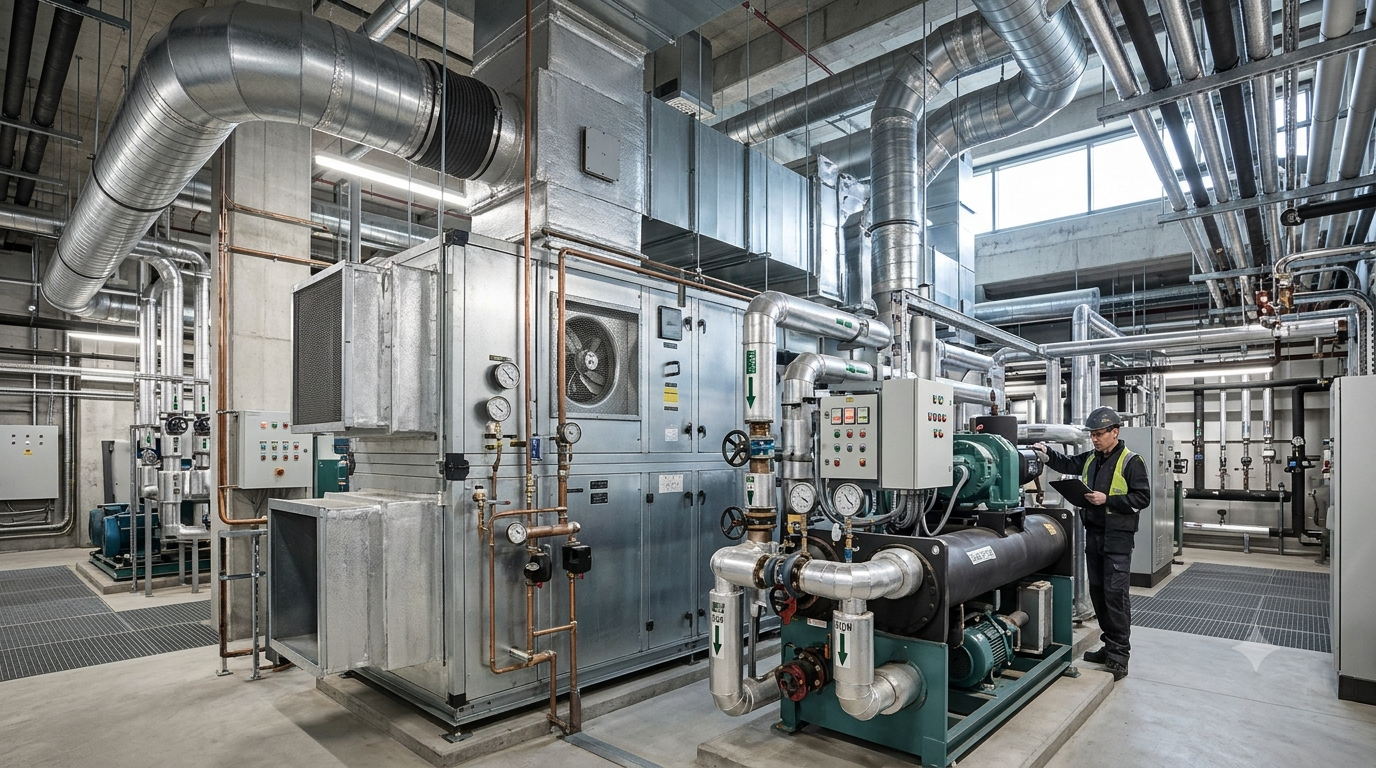
An Air Handling Unit is equipment used to circulate and condition air. It may contain fans, filters, heating or cooling coils, and dampers to regulate airflow and improve indoor air quality.
12. Heat Pump
A heat pump transfers heat from one location to another. It can provide cooling during warm weather and heating during cold weather by reversing the direction of heat transfer.
13. Humidity
Humidity refers to the amount of water vapor present in the air. Controlling humidity is important for occupant comfort, indoor air quality, and preventing moisture-related problems.
14. Air Changes per Hour (ACH)
ACH indicates how many times the equivalent volume of air in a room is supplied or replaced in one hour. It is commonly used when designing ventilation systems for offices, laboratories, and healthcare facilities.
15. HVAC Zoning
HVAC zoning divides a building into separate areas with independent temperature control. Dampers and individual thermostats help deliver heating or cooling according to the requirements of each zone.
Why Is HVAC Terminology Important?
Knowledge of HVAC terminology helps engineers interpret technical drawings, select suitable equipment, communicate with contractors, and identify system problems. It also supports better decisions regarding energy consumption, ventilation performance, and maintenance.For students and beginners, learning these terms provides a strong foundation for studying refrigeration, air distribution, thermal comfort, and building services engineering.
