

Article details
Introduction
Indoor temperature and humidity are important factors in maintaining a comfortable, healthy, and energy-efficient building. They affect how people feel, how heating, ventilation, and air conditioning (HVAC) systems perform, and how moisture behaves inside a building.Maintaining the right balance helps improve indoor air quality, reduce condensation, protect building materials, and support better energy management. Understanding these factors is essential for HVAC engineers, building designers, facility managers, and homeowners.
What Is Indoor Temperature?
Indoor temperature refers to the level of warmth or coolness inside an enclosed space. It is influenced by outdoor weather, insulation, ventilation, sunlight, occupancy, and the operation of heating and cooling equipment.A comfortable indoor temperature depends on the activity of occupants, their clothing, air movement, and the surrounding environment. In many occupied buildings, temperatures around 20°C to 26°C are commonly used as a general comfort range, although suitable settings vary by climate, building type, and individual preference.HVAC systems help maintain the desired temperature by controlling heating, cooling, and air distribution. Proper system design is necessary to avoid uneven temperatures between rooms and unnecessary energy consumption.
What Is Indoor Humidity?
Indoor humidity describes the amount of moisture present in the air. Relative humidity (RH) is commonly used to express how much water vapour the air contains compared with the maximum amount it can hold at the same temperature.Humidity is closely connected to temperature. Warm air can hold more water vapour than cold air, so changes in temperature can affect relative humidity even when the actual amount of moisture remains unchanged.For many indoor environments, a relative humidity level of approximately 30% to 60% is a useful general target. The ideal range depends on climate, building materials, occupant needs, and the risk of condensation or microbial growth.
Why Indoor Temperature and Humidity Matter
Temperature and humidity work together to determine thermal comfort and indoor air quality. Even when a room is at a suitable temperature, excessive humidity can make it feel warmer and uncomfortable.
Maintaining balanced conditions can help:
Improve occupant comfort and productivity.
Reduce the risk of mould and mildew growth.
Prevent condensation on windows, walls, and ceilings.
Protect furniture, wooden structures, and other building materials.
Support efficient HVAC operation and energy management.
Factors Affecting Indoor Moisture Levels
Indoor moisture levels depend on several factors. Cooking, bathing, washing clothes, indoor plants, and human breathing release water vapour into the air. The number of occupants and their daily activities can increase the moisture load inside a building.
Outdoor humidity, air leakage, ventilation rates, insulation, and building materials also influence indoor conditions. Inadequate ventilation or poorly maintained HVAC equipment may allow moisture to accumulate, particularly in bathrooms, kitchens, basements, and other poorly ventilated spaces.
How HVAC Systems Control Temperature and Humidity
HVAC systems regulate indoor conditions through heating, cooling, ventilation, humidification, and dehumidification. Air conditioners remove heat and can also remove moisture when humid air passes over a sufficiently cold cooling coil.However, temperature control alone does not always guarantee suitable humidity levels. In buildings with low cooling demand but significant internal moisture, additional dehumidification may be necessary.Proper equipment sizing, thermostat settings, airflow management, and regular maintenance help maintain stable indoor conditions while avoiding unnecessary energy use.
Effective Methods for Maintaining Indoor Conditions
Building owners and facility managers can take several practical steps to control indoor temperature and humidity.
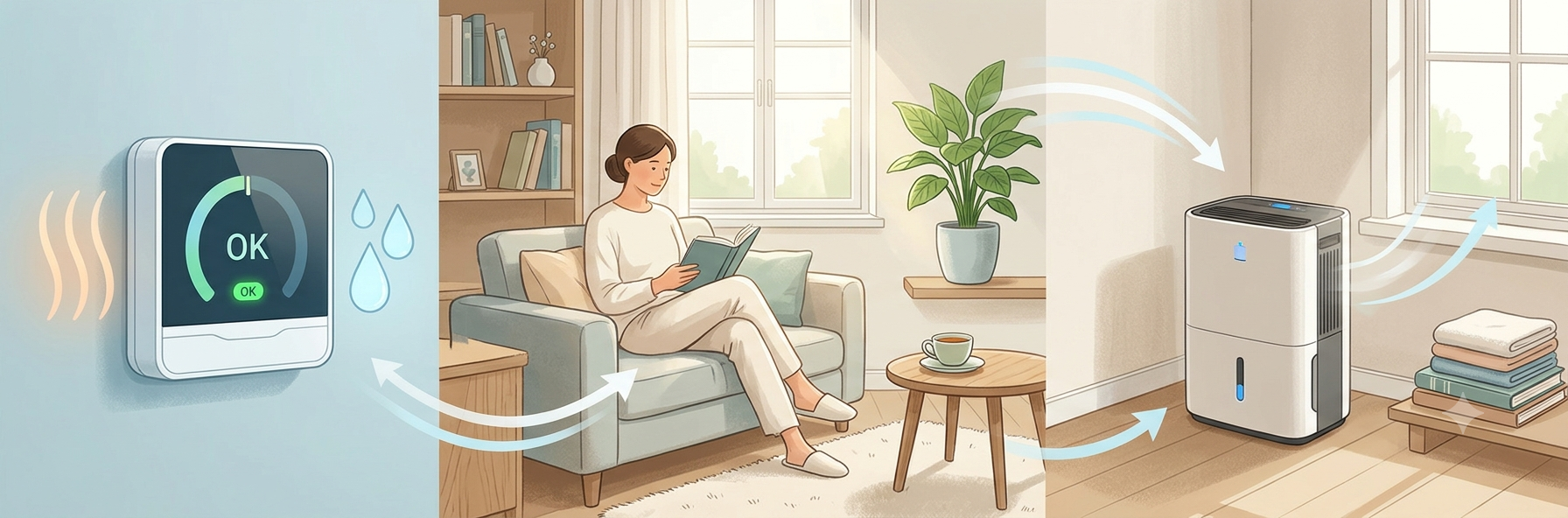
Monitor indoor conditions: Use reliable temperature and humidity sensors to identify unwanted changes.
Improve ventilation: Use suitable exhaust fans in kitchens and bathrooms to remove moisture at its source.
Maintain HVAC equipment: Clean filters, inspect cooling coils, and check condensate drainage regularly.
Control moisture sources: Repair water leaks and avoid allowing damp materials to remain indoors.
Improve insulation: Reduce cold surfaces where condensation may develop.
Use dehumidifiers when necessary: Select suitable equipment for buildings with persistent high humidity.
Conclusion
Indoor temperature and humidity control are essential parts of effective building management. A comfortable temperature combined with suitable humidity helps protect occupants, improve indoor air quality, and preserve building materials.
For HVAC engineers, understanding internal moisture loads, ventilation requirements, and the relationship between temperature and relative humidity is crucial when designing efficient systems. Regular monitoring, proper equipment selection, and effective moisture management can help maintain comfortable and energy-efficient indoor environments.
