

Article details
Introduction
Nuclear power plants play an important role in meeting the growing global demand for electricity. They provide large-scale power generation with low operational carbon emissions and support the stability of electricity supply. However, maintaining a nuclear power plant requires careful planning, advanced engineering systems, skilled professionals, and strict safety procedures.
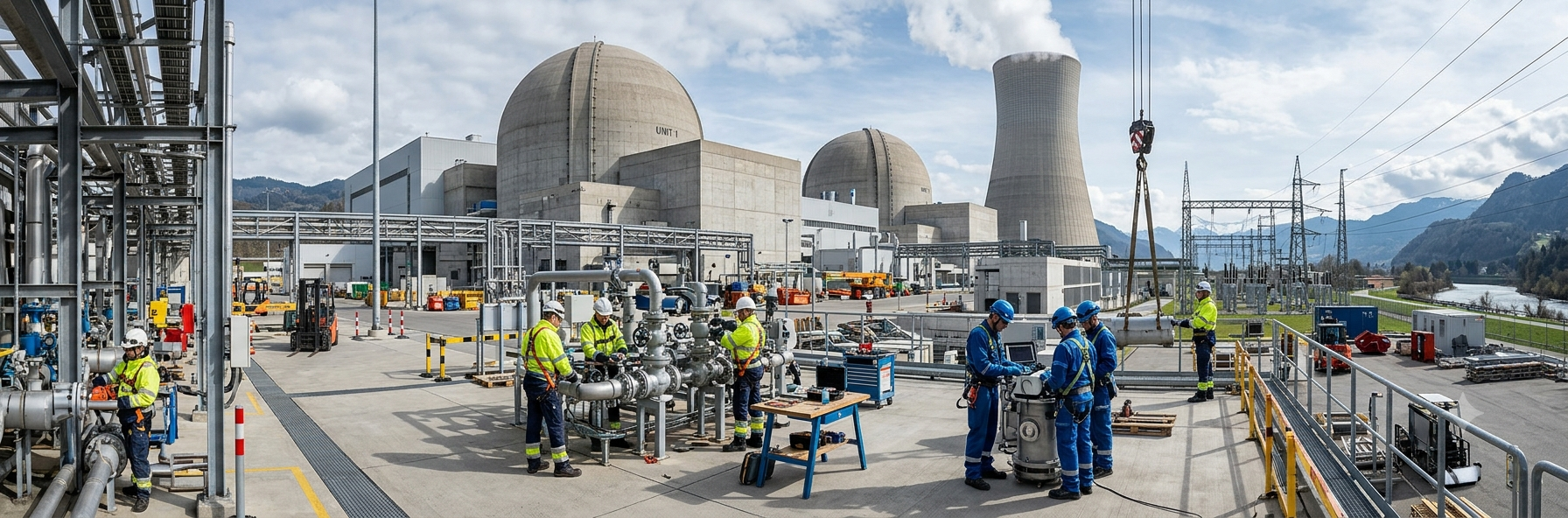
Nuclear Power Plant Operation and Maintenance (O&M) refers to the activities involved in operating plant systems, monitoring equipment performance, preventing failures, carrying out inspections, and maintaining the facility throughout its service life.
Effective operation and maintenance help improve plant reliability, reduce unexpected shutdowns, control operating costs, and protect workers, the public, and the environment.
1. What Is Operation and Maintenance in Nuclear Power Plants?
Operation and maintenance are two closely connected activities that ensure a nuclear facility performs safely and efficiently.
Plant operation involves controlling the reactor, monitoring operating conditions, managing power generation, and ensuring that all systems function within approved operating limits.
Plant maintenance focuses on keeping equipment, structures, and components in good working condition. It includes inspections, testing, calibration, repairs, replacements, and equipment upgrades.
These activities require coordination between operations, maintenance, engineering, radiation protection, quality assurance, and safety teams.
A well-organized O&M programme also considers the long-term condition of plant equipment and prepares the facility for continued operation.
2. Importance of Operation and Maintenance in Nuclear Facilities
Nuclear facilities operate under demanding technical and safety requirements. Even minor equipment problems can affect plant performance if they are not identified and addressed properly.
The major benefits of effective O&M include:
Improved safety: Regular inspections and monitoring help identify equipment defects before they develop into serious problems.
Higher reliability: Proper maintenance keeps essential systems available when required.
Reduced downtime: Planned maintenance helps avoid unexpected equipment failures and extended shutdowns.
Cost control: Efficient maintenance planning reduces unnecessary repairs and operational expenses.
Longer equipment life: Preventive activities help reduce wear, corrosion, and material degradation.
Regulatory compliance: Proper records, inspections, and operating procedures support compliance with nuclear safety requirements.
Operation and maintenance also contribute significantly to the economic performance of nuclear power plants.
3. Major Types of Nuclear Power Plant Maintenance
Nuclear power plants use different maintenance strategies depending on equipment condition, operating requirements, and safety priorities.
3.1 Preventive Maintenance
Preventive maintenance involves performing maintenance activities at planned intervals to reduce the possibility of equipment failure.
It includes scheduled inspections, lubrication, component replacement, cleaning, testing, and calibration. This approach helps identify early signs of deterioration and maintain equipment performance.
3.2 Corrective Maintenance
Corrective maintenance is performed when a component or system develops a fault or fails to meet its required performance.
It involves identifying the cause of the problem, repairing or replacing the affected component, and testing the system before returning it to service.
3.3 Predictive Maintenance
Predictive maintenance uses equipment data and condition-monitoring technologies to estimate when maintenance may be required.
Sensors monitor parameters such as temperature, vibration, pressure, and flow. Engineers analyse this information to identify abnormal conditions and plan maintenance before a failure occurs.
3.4 Condition-Based Maintenance
Condition-based maintenance depends on the actual operating condition of equipment rather than following only fixed maintenance schedules.
Inspection results, performance measurements, and diagnostic information help maintenance teams decide when intervention is necessary.
Combining these strategies helps improve maintenance planning and reduce unnecessary equipment shutdowns.
4. Key Systems Requiring Regular Monitoring
Several important systems in a nuclear power plant require continuous monitoring and systematic maintenance.
Reactor Systems: Reactor components, control mechanisms, coolant systems, and associated safety equipment must operate within their approved design conditions.
Cooling Systems: Cooling systems remove heat from the reactor and other equipment. Proper flow, pressure, temperature, and coolant quality are essential for reliable operation.
Electrical Systems: Generators, transformers, switchgear, emergency power supplies, and electrical distribution networks must remain reliable to support plant operation and safety functions.
Instrumentation and Control Systems: Sensors, control panels, monitoring devices, and digital control systems provide essential information for operating decisions.
Steam and Turbine Systems: Steam generators, turbines, condensers, pumps, and associated piping require regular inspections to maintain energy conversion efficiency.
Safety and Protection Systems: Emergency cooling, radiation monitoring, fire protection, and protective systems require regular testing to confirm their readiness.
5. Role of Technology in Modern Nuclear Plant Maintenance
Modern technologies are changing how nuclear power plants perform inspections, monitor equipment, and manage maintenance activities.
5.1 Digital Twin Technology
A digital twin is a computer-based representation of a physical reactor or plant system.
It uses information from sensors, operating records, and engineering models to provide insights into equipment condition and plant performance.
Engineers can use digital twins to simulate operating conditions, identify possible faults, evaluate maintenance requirements, and improve operational planning.
5.2 Artificial Intelligence and Predictive Analytics
Artificial intelligence (AI) and machine learning can analyse large volumes of plant operating data.
These technologies help identify unusual operating patterns, detect potential equipment problems, and support predictive maintenance decisions.
They can also improve fault diagnosis and help engineers prioritize maintenance activities.
5.3 Robotics and Drones
Robots and remotely operated inspection devices can perform tasks in difficult-to-access or hazardous areas.
They can support visual inspections, radiation surveys, equipment monitoring, and data collection.
Using robotics can reduce personnel exposure to radiation and other industrial hazards while improving inspection efficiency.
5.4 Advanced Sensors and Remote Monitoring
Advanced sensors continuously measure parameters such as temperature, pressure, vibration, radiation, and chemical conditions.
Remote monitoring systems help operators identify abnormal equipment behaviour and respond to developing problems.
These technologies also improve the consistency and quality of inspection data.
6. Commissioning and Initial Plant Operations
Commissioning is an important stage in the development of a nuclear power plant. It takes place before the facility enters regular commercial operation.
During commissioning, engineers verify that equipment, structures, instrumentation, and control systems meet their design requirements.
Major commissioning activities include:
Equipment installation verification.
Functional testing of mechanical and electrical systems.
Instrumentation and control system testing.
Safety system verification.
Operational procedure validation.
Staff training and emergency preparedness.
Performance testing and system acceptance.
Initial operations also require careful planning. Lessons learned during commissioning help improve maintenance procedures, prepare for the first planned outages, and establish reliable operating practices.
Early coordination between engineering, operations, maintenance, and safety teams can prevent operational difficulties later in the plant lifecycle.
7. Strategies for Reducing Nuclear Plant O&M Costs
Operation and maintenance expenses are important factors in determining the economic competitiveness of nuclear power generation.
Traditional maintenance approaches often depend on repairing components and extending their operating life. However, advanced reactor designs are encouraging new strategies to reduce maintenance complexity.
One emerging concept is the Build-to-Replace approach. Instead of designing every component to operate for several decades, selected components can be designed for predictable replacement and refurbishment.
This approach may simplify maintenance activities, reduce complex repair requirements, and improve equipment availability when supported by suitable engineering and safety assessments.
Other cost-reduction strategies include:
Automating repetitive inspection activities.
Using predictive maintenance instead of unnecessary scheduled interventions.
Improving spare-parts and inventory management.
Reducing the duration of planned maintenance outages.
Applying risk-informed inspection programmes.
Using digital tools for maintenance planning.
Improving workforce training and technical skills.
The objective is to reduce avoidable expenses without compromising nuclear safety, equipment reliability, or regulatory requirements.
8. Nuclear Safety, Quality Assurance, and Regulatory Compliance
Safety is the highest priority in nuclear power plant operation and maintenance. Every maintenance activity must follow approved procedures, technical specifications, and established safety requirements.
Quality assurance programmes help ensure that maintenance work is completed correctly and documented properly.
Important safety and quality practices include:
Radiation Protection: Monitoring radiation levels and limiting personnel exposure during maintenance activities.
Work Permit Systems: Ensuring that maintenance work is authorized and carried out under controlled conditions.
Quality Control: Verifying materials, equipment, installation, and repair activities against technical requirements.
Safety Assessments: Evaluating potential risks before performing maintenance or modifying plant systems.
Documentation: Maintaining inspection reports, equipment history, maintenance records, and corrective action reports.
Regulatory Inspections: Supporting independent safety reviews and demonstrating compliance with applicable nuclear regulations.
Plant operators are responsible for maintaining nuclear safety, while independent regulatory authorities provide oversight through inspections and enforcement where necessary.
9. Long-Term Operation and Plant Life Management
Nuclear power plants are designed for long operating lifetimes. However, ageing, corrosion, fatigue, radiation exposure, and changing operating conditions can affect equipment performance over time.
Plant Life Management (PLiM) is a systematic approach to managing the technical and economic condition of a nuclear facility throughout its lifecycle.
It involves:
Assessing the condition of important plant components
Monitoring material degradation and ageing mechanisms.
Planning equipment inspections and replacements.
Evaluating engineering modifications and upgrades.
Reviewing safety performance and operating experience.
Managing resources for long-term operation.
Regular safety assessments are particularly important when considering operating a facility beyond its original design life. Effective plant life management helps maintain safety, reliability, and operational performance over extended periods.
10. Future Trends in Nuclear Power Plant Operation and Maintenance
The future of nuclear plant maintenance will increasingly depend on automation, digital engineering, advanced monitoring, and improved equipment design.
Small Modular Reactors (SMRs) and other advanced reactor technologies are creating opportunities to develop more efficient maintenance systems.
Some important developments include:
AI-based equipment condition monitoring.
Automated plant inspections and diagnostics.
Digital twins integrated into plant design.
Remote maintenance and robotic inspection.
Advanced materials and high-performance sensors.
Improved cybersecurity for digital instrumentation and control systems.
Modular equipment designs that simplify component replacement.
These developments aim to improve plant availability, reduce maintenance requirements, and make future nuclear facilities more economically competitive.
Conclusion:
Nuclear Power Plant Operation and Maintenance is a critical part of ensuring safe, reliable, and economical electricity generation. It involves much more than operating machinery or repairing equipment. It requires coordinated engineering activities, continuous monitoring, preventive maintenance, safety assessments, and long-term asset management.With the adoption of digital twins, artificial intelligence, robotics, predictive analytics, and advanced inspection technologies, nuclear maintenance practices are becoming more efficient and data-driven.Future nuclear facilities will benefit from integrating maintenance requirements into the initial design stage itself. By combining strong safety management with modern engineering solutions, nuclear power plants can achieve improved equipment reliability, reduced operating costs, and sustainable long-term performance.
