

Article details
What Shoring Means in Construction
Shoring is a temporary support system used to stabilise structures, excavations, trenches, or partially completed works during construction, repair, or demolition activities. The purpose of shoring is to safely transfer loads away from unstable areas and prevent collapse, movement, or excessive deformation.
In practice, shoring can support vertical loads, lateral soil pressure, adjacent buildings, or weakened structural elements. A shoring system may consist of steel members, timber, hydraulic supports, sheet piles, braces, or proprietary modular systems depending on the project conditions.
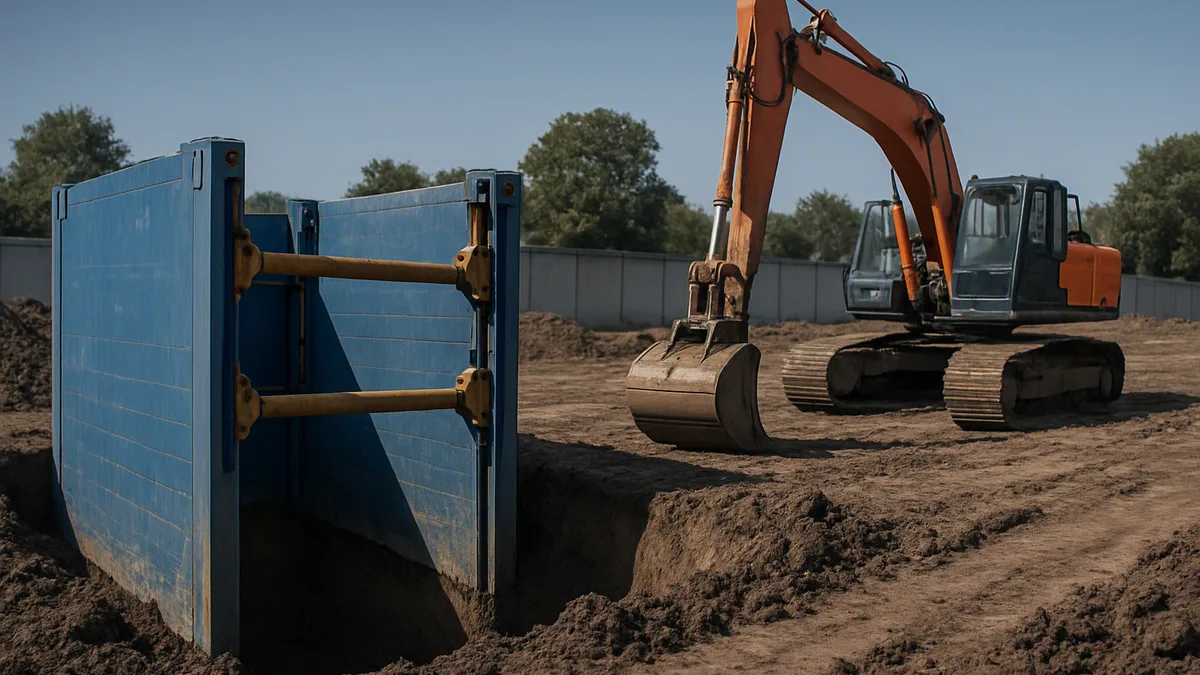
A common example is trench shoring during utility installation. When a trench becomes deep enough that the soil walls may fail, temporary supports are installed to keep the excavation stable while workers are inside. Another example is supporting a damaged building wall while structural repairs are carried out.
Shoring is usually temporary, but the engineering behind it is treated seriously because failure can lead to progressive collapse, ground movement, equipment damage, or worker injury. For a broader introduction to the topic, see what shoring is and why buildings need it.
Why Shoring Is Used in Building and Excavation Work
Construction activities often remove or alter parts of a structure or the surrounding ground that normally provide support. Shoring compensates for that temporary loss of stability.
In excavation work, removing soil changes the stress balance in the ground. The deeper the excavation, the greater the lateral pressure acting on the excavation walls. Without support, the sides may collapse or cause settlement in nearby roads, utilities, or buildings.
In building work, shoring may be needed when:
- Removing load-bearing walls
- Repairing foundations
- Strengthening damaged structures
- Creating basement extensions
- Supporting facades during demolition
- Stabilising structures after fire or impact damage
Shoring also allows construction to proceed safely in stages. For example, when casting a reinforced concrete slab, temporary shores support the formwork and fresh concrete until the slab gains enough strength to carry its own load.
On infrastructure projects, shoring is commonly used around shafts, tunnels, retaining walls, bridge works, and underground utilities. Some projects combine shoring with temporary access structures such as working platforms or protective systems similar to construction gantries.
Types of Shoring Systems and Their Applications
Different shoring systems are suited to different structural and ground conditions. Selection depends on excavation depth, soil type, groundwater, available space, and loading requirements.
Raking Shoring
Raking shores are inclined members installed against a wall to provide lateral support. They transfer loads from the wall into the ground through a series of braces and sole plates.
This system is often used when:
- A wall becomes unstable
- Adjacent buildings are demolished
- Structural repairs are being carried out
- Temporary external support is required
Raking systems are common in older masonry buildings where walls require stabilisation during renovation.
Flying Shoring
Flying shores span horizontally between two adjacent structures to support one or both walls without using ground-based props. This arrangement keeps the area below clear for access or construction operations.
Flying shores are useful when removing or rebuilding sections between neighbouring buildings.
Dead Shoring
Dead shoring uses vertical props or supports to carry gravity loads while structural alterations are made below. For example, if a load-bearing wall is removed to create a larger opening, dead shores temporarily support the floors and roof above.
Steel beams are often used to distribute these loads. Understanding load paths and member behaviour is important when selecting support members such as universal beams or channels. Related structural concepts are explained in types of beams in mechanics.
Hydraulic Shoring
Hydraulic shores use hydraulic pistons to apply controlled pressure against trench walls or excavation faces. These systems are fast to install and adjust, making them common in utility and pipeline work.
Advantages include:
- Rapid installation
- Reduced manual handling
- Adjustable support pressure
- Suitable for confined excavations
Hydraulic systems still require correct spacing, alignment, and inspection to perform safely.
Sheet Pile Shoring
Sheet piles are interlocking steel sections driven into the ground to retain soil and sometimes groundwater. Tie-backs or internal bracing may be added for additional stability.
This method is widely used for:
- Deep excavations
- Basement construction
- Marine works
- Retaining structures
- Cofferdams
Sheet piles perform well where excavation depths and groundwater pressures are significant.
Soldier Pile and Lagging Systems
In this system, vertical steel piles are installed first, followed by timber, concrete, or steel lagging between them as excavation progresses.
It is commonly used in urban excavation projects because installation can be relatively flexible around existing utilities and adjacent structures.
Difference Between Shoring, Underpinning and Scaffolding
These terms are sometimes confused because all involve temporary support systems, but they serve different purposes.
Shoring provides temporary structural or excavation support to prevent collapse or movement during construction activities.
Underpinning strengthens or extends an existing foundation. It is usually a permanent structural modification rather than temporary support. Underpinning may involve enlarging footings, deepening foundations, or transferring loads to stronger soil layers.
Scaffolding is primarily a temporary access and working platform system for personnel and materials. While scaffolding carries loads, its main purpose is access rather than structural stabilisation.
A practical example helps distinguish them:
- If a basement excavation threatens nearby foundations, temporary shoring may support the excavation walls.
- If the existing building foundations are inadequate, underpinning may permanently strengthen them.
- Scaffolding may then provide worker access to carry out the construction work.
Key Design Considerations for Shoring Structures
Shoring design combines structural engineering and geotechnical engineering principles. Even temporary works require proper analysis because loading conditions can change quickly during construction.
Load Assessment
The first step is identifying all expected loads, including:
- Soil pressure
- Hydrostatic pressure
- Building loads
- Construction equipment loads
- Traffic surcharge loads
- Wind or vibration effects
Temporary loads during construction sequencing are often critical.
Soil Conditions
Soil type strongly influences shoring selection and spacing. Cohesive soils behave differently from granular soils, and groundwater can significantly reduce stability.
Engineers typically review geotechnical investigation data before finalising the design.
Structural Capacity and Deflection
Shoring members must resist both strength and serviceability demands. Excessive deflection may damage nearby utilities or buildings even if the system does not fail structurally.
Connections, braces, walers, and bearing surfaces all require adequate capacity and stiffness.
Construction Sequence
Temporary works are highly sequence-dependent. A shoring system may only remain stable if excavation and bracing occur in the correct order.
For example, excavating too deeply before installing the next level of bracing can overload the unsupported wall.
Monitoring and Adjustment
Large projects may include instrumentation such as settlement markers, inclinometers, or load monitoring systems to detect movement early.
Structural analysis software is often used to model temporary works and load combinations. Tools such as STAAD Pro are commonly used for structural analysis of support systems and temporary structures.
Shoring Safety Requirements and Site Best Practices
Shoring failures are hazardous because they can occur suddenly and affect both workers and nearby structures. Safe installation and inspection procedures are therefore essential.
Competent Design and Approval
Temporary works should be designed or reviewed by qualified personnel with relevant structural and geotechnical experience. Field modifications should not be made without engineering review.
Inspection Before Entry
Excavations and shoring systems should be inspected regularly, particularly:
- Before each shift
- After heavy rain
- After nearby vibration or impact
- Following excavation changes
- After installation adjustments
Visible movement, cracking, water ingress, or member deformation may indicate developing instability.
Safe Access and Egress
Workers inside excavations need safe entry and exit routes. Ladders, ramps, or stair access should remain unobstructed and positioned appropriately.
Control of Loads Near Excavations
Heavy equipment, spoil piles, and stored materials placed too close to excavation edges increase lateral pressure and surcharge loads. Maintaining setbacks reduces the risk of collapse.
Groundwater Management
Water can destabilise excavations by increasing pore pressure and reducing soil strength. Dewatering systems, drainage, or cutoff measures may be necessary depending on site conditions.
Communication and Emergency Planning
Workers should understand excavation hazards, exclusion zones, and emergency procedures. Emergency rescue planning is particularly important for confined or deep excavations.
Common Construction Projects That Require Shoring
Shoring appears across many sectors of construction and civil engineering because temporary instability is common during staged construction.
Typical projects include:
- Basement excavations
- Utility trench installation
- Bridge construction and repair
- Tunnel and shaft excavation
- Facade retention projects
- Demolition and structural alteration work
- Foundation repair and underpinning projects
- Retaining wall construction
- Marine and waterfront structures
Urban construction projects often depend heavily on shoring because work occurs close to existing buildings and utilities. In dense city environments, controlling settlement and protecting neighbouring structures may become one of the main design challenges.
Although shoring is temporary, it is a critical part of construction engineering. Properly designed systems allow excavation, alteration, and repair work to proceed safely while protecting workers, nearby structures, and the public.
