

Article details
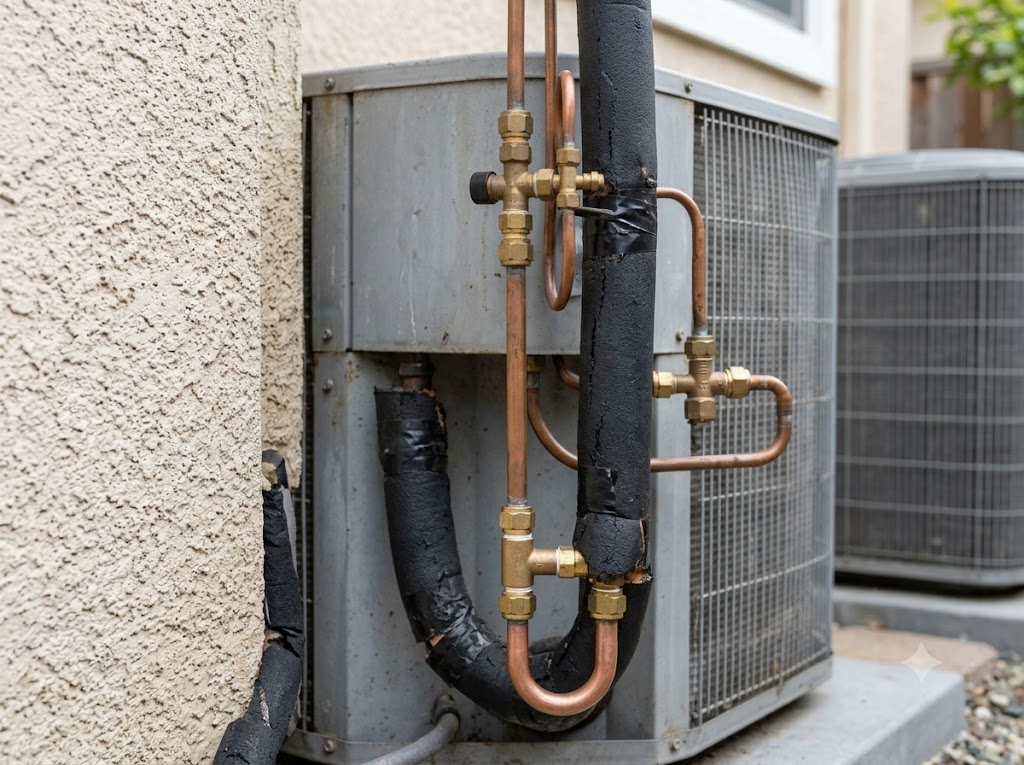
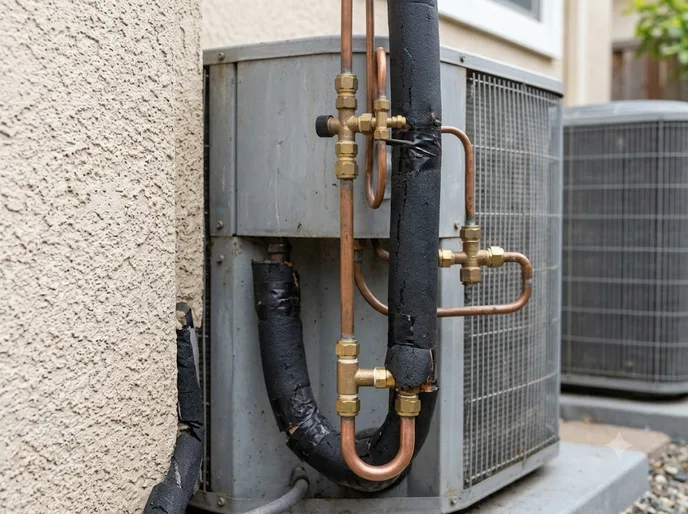
In most piping, a low spot where liquid collects is a mistake. In refrigerant piping, it is sometimes a tool. A trap is a deliberately formed P shaped fitting that holds oil or liquid refrigerant, and a well placed one helps carry oil up a riser or keeps it from draining where it should not. The skill is in knowing which traps help, which ones hurt, and how to keep each one small enough to do its job without becoming a problem of its own.
Two Kinds of Trap
A standard trap, usually called a P trap, is a low point in the line. It collects oil and lets the gas pick it up and carry it onward. An inverted trap is the opposite, a high point the pipe has to climb over, which stops oil and liquid from running back down the line by gravity.
Both exist to solve the same underlying problem: oil and liquid refrigerant move with gravity when the gas is not moving fast enough to carry them, and the piping has to be arranged so that this movement helps instead of causing trouble.
Suction P Traps: Staging Oil Up a Riser
When the compressor sits above the evaporator, the suction line must carry oil upward, and guidance calls for an oil trap in every such installation. During low suction pressure operation, oil tends to separate from the vapor and cling to the pipe, and then drain back toward the evaporator.
A trap at the base of the riser changes that. Oil collects in the trap and forms a small pool, and the suction gas picks it up in drops and carries it up the riser. Without the trap, oil could creep back into the evaporator, where excess oil reduces capacity.
In tall risers, a single trap at the base is not enough. Guidance recommends adding intermediate traps to temporarily hold oil along the way and keep it from falling all the way back to the bottom. Recommended spacing varies by source, from every ten to fifteen feet in one handbook to every twenty feet in a rooftop unit manual, so the manufacturer's guidance for the specific equipment governs.
Discharge Line Traps: Protecting the Compressor Head
Discharge lines carry oil too, and the concern there is what happens when the compressor stops. Oil left on the walls of a high discharge riser can drain back into the compressor head during the off cycle, and oil in the head can cause damage at the next start up.
Traps at the base of the riser and at intervals in tall risers catch that oil before it reaches the compressor. An industry skills workshop from the Australian refrigeration and air conditioning institute points out a related risk. If a single base trap is expected to drain a very tall riser, it can flood during the off cycle and let oil run back to the compressor anyway, which is why long risers get additional traps.
When the condenser sits above the compressor, a further precaution applies. Manufacturer guidance says an inverted trap or a check valve should be installed on the discharge line so liquid refrigerant and oil cannot flow back into the compressor during the off cycle.
Inverted Traps: Keeping Liquid and Oil Where They Belong
Inverted traps show up in several places, and the logic is always the same, make the pipe climb before it drops.
Evaporator above the compressor. Manufacturer guidance says the suction line should rise above the top of the evaporator before running down to the compressor. That keeps liquid refrigerant and oil in the evaporator during the off cycle instead of draining down the suction line.
Suction lines feeding a header. Guidance says to use inverted traps whenever a suction header sits above the evaporator, so oil does not drain into an idle evaporator when others are running.
Idle evaporators in multi evaporator systems. Handbooks list preventing oil from draining to an idle evaporator as a core job of the suction line, and an inverted trap is one way to meet it.
Practitioners do not all agree on how much to rely on inverted traps. Some experienced technicians prefer to slope suction lines toward the compressor and avoid inverted traps at the top of risers altogether, using them only when sloping is not possible. Others point out that on systems with the condensing unit on a roof and evaporators far below, an inverted trap is important on suction piping if hot gas bypass capacity control is used. This disagreement is a reminder that trap guidance is as much practice as rule.
Sizing the Trap: Small Is the Point
A trap holds oil, and oil that sits in a trap is oil that is not in the compressor sump. The design goal is therefore to make the trap as small as the job allows.
Guidance for fabricated traps is to keep them compact, with one handbook advising against going beyond about four times the size of the refrigerant line. In a double riser, the trap at the base of the large riser must be close coupled to limit its oil holding capacity, as discussed in the previous article. Oversized or sloppily fabricated traps hold more oil than needed, and that oil can come back as a slug when the system loads up.
Where Oil Should Not Collect
Not every low point is a deliberate trap. Sagging pipe runs, low spots from field routing, and poorly supported lines can trap oil by accident. The design goal for suction and discharge lines is to avoid trapping oil in the evaporator or suction line, from where it may not return. A clean horizontal run pitched toward the compressor, with deliberate traps only where the geometry requires them, keeps the oil moving.
When the compressor sits below the evaporator, gravity assists oil return, which is why the guidance on suction traps focuses on the case where the compressor is above the evaporator.
A Quick Decision Guide
Situation | Typical trap response |
|---|---|
Compressor above evaporator | P trap at the base of the suction riser, intermediate traps in tall risers |
Tall discharge riser | P trap at the base, additional traps for tall risers |
Condenser above compressor | Inverted trap or check valve on the discharge line |
Evaporator above compressor | Suction line rises above the top of the evaporator before dropping to the compressor |
Suction header above evaporators | Inverted trap into the header |
Compressor below evaporator | Generally, pitch toward the compressor, riser traps usually unnecessary |
The Practical Takeaway
Traps are a controlled way to manage oil. P traps catch oil at the bottom of a riser so the gas can lift it, discharge traps protect the compressor head during off cycles, and inverted traps keep liquid and oil from draining back where they should not go. Each trap should be there for a reason, kept as small as possible, and placed where the geometry demands it. The mistake is not using a trap. It is leaving an unintended low spot, or building a trap larger than the problem requires.
EveryEng. For everyone in Engineering.
