
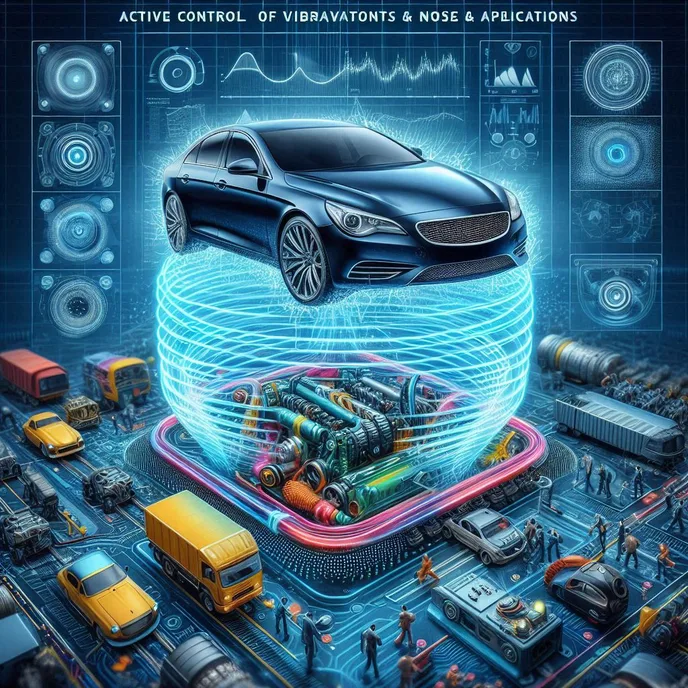
Active Contol of vibrations & Noise and applications of AI/ML fo automotive NVH
Active Contol of vibrations & Noise and applications of AI/ML fo automotive NVH

- Lifetime access
- Certificate of completion
- Foundational Learning
- Access to Study Materials
Why enroll
What enrolled engineers say
Felt like sitting next to a senior engineer sketching control loops and tradeoffs, not a polished lecture. The bit that stuck was the ANC section where they walk through feedforward vs feedback using an LMS filter and a 120 Hz road-noise example, then map it to a simple Simulink block. It connects cleanly to day-to-day work: wiring data from the repo, sanity-checking arch choices, and thinking about what actually survives prod, even if the AI/ML piece stays light. mostly fine for beginner level, though I wasn't sold on the brief k8s/CI aside and wished there was more on vehicle-level validation before our upcoming controller swap.
Nice to see corner cases get airtime instead of being hand-waved. The Chapter 3 FxLMS adaptive feedforward ANC walkthrough using the road-noise dataset, with sensor delay misalignment called out, stuck. I've already mirrored the repo pattern in a small prod experiment; the arch diagrams map cleanly to what we ship. Wasn't sold on the AI section rushing past feature drift; wished there was more obs on model decay, but it still fit my professional dev time well.
While poking at obs gaps between prod NVH tests and what we log, I stumbled onto this beginner course and skimmed a few modules between meetings. The early framing around active control vs passive damping clicked fast, and the chapter where they walk through an LMS-based active noise control loop on a half-car model stuck, especially the plot showing coherence dropping after tuning. It helped map textbook control to things I actually touch, like wiring data from a test rig into a repo and sanity-checking assumptions before a PR hits CI. i wasn't sold on the AI/ML angle at first, but the short example using a simple regressor to predict cabin boom from road profiles was practical enough. I wished there was more on validation pitfalls in prod, or how this plays with k8s when models retrain off test data. Still, I got more out of this than the last couple conferences I sat through, fewer slides, more stuff I can try tomorrow.
Is this course for you?
You should take this if
- You work in Automotive
- You're a Noise & Vibration Engineering / Artificial Intelligence professional
- You prefer self-paced learning you can revisit
You should skip if
- You need a different specialisation outside Noise & Vibration Engineering
- You need live interaction with an instructor
Course details
Course suitable for
Key topics covered
Course content
The course is readily available, allowing learners to start and complete it at their own pace.
- Active Contol of vibrations & Noise and applications of AI/ML fo automotive NVH35 min
Opportunities that await you!
Career opportunities
Why people choose EveryEng
Industry-aligned courses, expert training, hands-on learning, recognized certifications, and job opportunities-all in a flexible and supportive environment.

 Oct 2, 2026