Skip to main contentEngineering Courses, Mentoring & Jobs | EveryEng
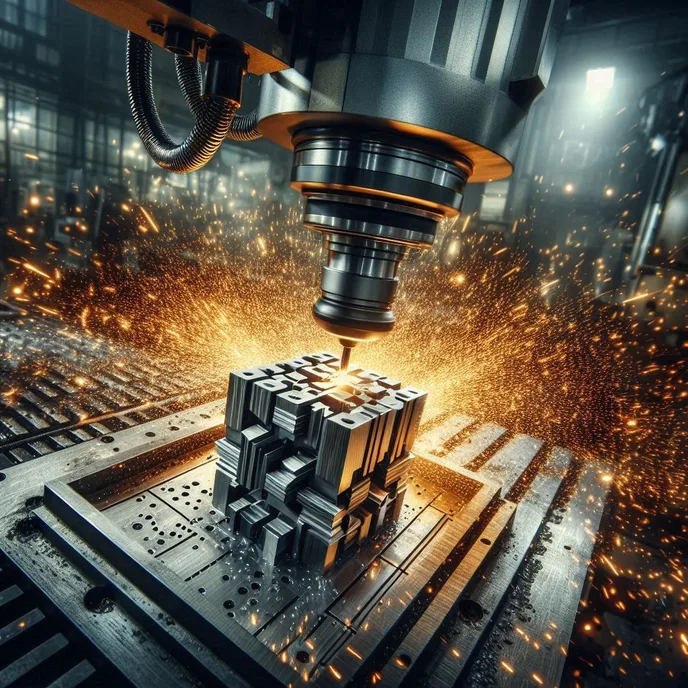
Advanced machining processes banner
Preview this course

Advanced machining processes

Advanced machining processes banner
Preview this course
Self-paced Advanced

Advanced machining processes

3(115)
1 enrolled
157 views
FREE
703 min
Anytime
English
157 views
Engineering Academy
Engineering AcademyLearn Without Limits: Free Engineering Courses
  • Lifetime access
  • Certificate of completion
  • Anytime Learning
  • Learn from Industry Expert

Why enroll

Participants join Advanced Machining Processes programs to gain in-depth knowledge of modern manufacturing techniques that address the limitations of conventional machining. These programs help learners understand how to machine hard, brittle, and heat-resistant materials with high precision and superior surface quality. By exploring non-traditional processes such as EDM, ECM, laser, and water jet machining, participants develop the ability to select appropriate processes for complex geometries and tight tolerances.

Additionally, participants benefit from industry-relevant insights, practical applications, and exposure to emerging technologies widely used in aerospace, automotive, biomedical, and advanced manufacturing sectors. The program enhances technical competence, problem-solving skills, and career readiness by aligning theoretical fundamentals with real-world manufacturing challenges and current industrial practices.

Is this course for you?

You should take this if

  • You work in Manufacturing & Industrial
  • You're a Manufacturing Engineering / Mechanical Engineering professional
  • You have 3+ years of hands-on experience in this field
  • You prefer self-paced learning you can revisit

You should skip if

  • You're new to this field with no prior experience
  • You need a different specialisation outside Manufacturing Engineering
  • You need live interaction with an instructor

Course details

Advanced Machining Processes encompass a set of non-traditional and high-precision manufacturing techniques used to machine materials that are difficult or uneconomical to process using conventional methods. These processes are particularly suited for high-strength alloys, hardened steels, composites, ceramics, and micro-scale components, where accuracy, surface integrity, and minimal material damage are critical.

Advanced machining includes processes such as Electrical Discharge Machining (EDM), Electrochemical Machining (ECM), Laser Beam Machining (LBM), Electron Beam Machining (EBM), Ultrasonic Machining (USM), Abrasive Water Jet Machining (AWJM), and Plasma Arc Machining (PAM). Unlike traditional cutting, material removal is achieved through thermal, electrical, chemical, or abrasive energy rather than direct mechanical contact.

These processes offer significant advantages, including high dimensional accuracy, the ability to produce complex geometries, excellent surface finish, reduced cutting forces, and minimal tool wear. Advanced machining plays a vital role in industries such as aerospace, automotive, biomedical, electronics, energy, and precision tooling, enabling the manufacture of intricate components that meet stringent performance and quality requirements.

source :NPTEL INDIA

Course suitable for

Key topics covered

  • chemical machining

  • electron beam machining EBM

  • modeling & simulation of surface generation in magnetorheological flow finishing process

  • abrasive water jet machining AWJM

  • ultrasonic machining USM

Course content

The course is readily available, allowing learners to start and complete it at their own pace.

17 lectures11 hr 43 min
  1. Chemical Machining part1
    14 min
  2. Chemical Machining part2
    17 min
  3. Electron Beam Machining EBM
    28 min
  4. Laser Beam Machining LBM
    54 min
  5. Electrochemical Machining Process
    79 min
  6. Electrodischarge Grinding Process and Diamond Grinding Process
    36 min
  7. Hybrid Machining Process using Electrochemical Machining Concept
    44 min
  8. Modeling & Simulation of Surface Generation in Magnetorheological Flow Finishing Process
    54 min
  9. Magnetorheological Polishing Fluid
    43 min
  10. Rotational Magnetorheological Abrasive Flow Finishing Process
    28 min
  11. Abrasive Flow Machining AFM
    39 min
  12. Magnetic Abrasive Finishing MAF or Mechanical Type Advance Finishing Process
    41 min
  13. Parameters of Mangnetorheological Abrasive Flow Finishing Process
    21 min
  14. Abrasive water jet machining AWJM
    61 min
  15. Ultrasonic Machining USM Part 2
    64 min
  16. Ultrasonic Machining USM Part 1
    51 min
  17. INTRODUCTION Advanced Machining Processes
    29 min

Opportunities that await you!

Career opportunities

Where this fits — what comes before, what comes next

Why people choose EveryEng

Industry-aligned courses, expert training, hands-on learning, recognized certifications, and job opportunities-all in a flexible and supportive environment.

FREE

Access anytime

Questions and Answers

A: The right choice lands in the low single‑digit mm/min range, which balances typical EDM power density against kerf volume removal. Option B confuses wire transport speed with erosion rate. Option C ignores that flushing helps stability, not energy input. Option D overweights hardness while skipping discharge physics.

A: The accepted path is to hold to the cited version unless the contract shifts responsibility, keeping scope stable at startup. Option B assumes automatic supersession that contracts don't grant. Option C trades schedule for compliance without authority. Option D bypasses purchaser control of requirements.

A: The real exposure is ignition from unstable arcs when flushing fails, which current limits don't stop. Option B treats wire break as harmless. Option C shifts to quality, not hazard. Option D ignores that degraded fluid changes ignition behavior.

A: The viable estimate stays low because fracture volume per impact is tiny even at high frequency. Option B multiplies frequency without limiting fracture size. Option C imports metal cutting intuition. Option D ignores brittle fracture mechanics.