Skip to main contentEngineering Courses, Mentoring & Jobs | EveryEng
Lathe Simulator banner

Lathe Simulator

Lathe Simulator banner
Self-paced Beginner

Lathe Simulator

4(1581)
3 enrolled
1295 views
FREE
73 min
Anytime
English
1295 views
Team EveryEng
Team EveryEngMechanical Engineering
  • Lifetime access
  • Certificate of completion
  • Foundational Learning
  • Access to Study Materials

Why enroll

Participants join this course to gain practical, hands-on experience in operating a lathe machine without the risks associated with real equipment. It helps build confidence and foundational machining skills in a safe virtual environment. Learners also benefit from understanding real-world manufacturing processes and improving their job readiness. Additionally, the course is ideal for beginners looking to explore machining techniques efficiently and effectively.

Is this course for you?

You should take this if

  • You work in Manufacturing & Industrial
  • You're a Manufacturing Engineering / Mechanical Engineering professional
  • You prefer self-paced learning you can revisit

You should skip if

  • You need a different specialisation outside Manufacturing Engineering
  • You need live interaction with an instructor

Course details

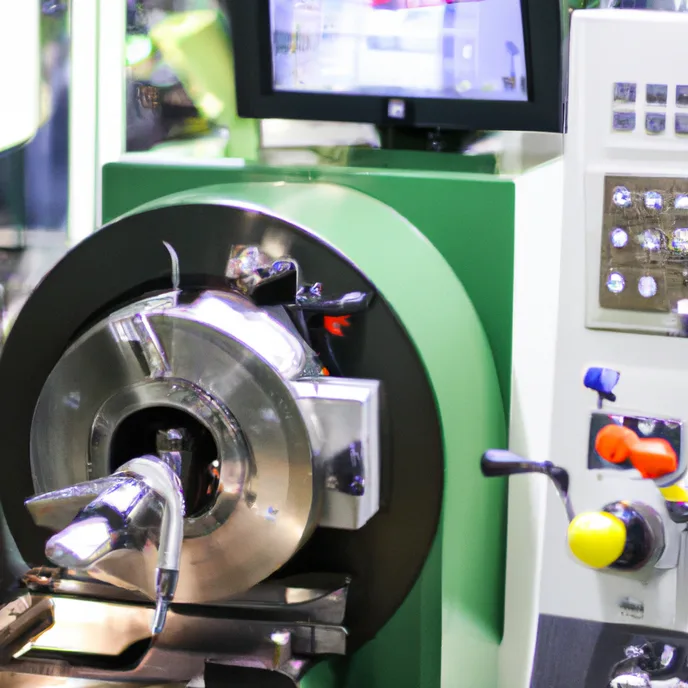
The Lathe Simulator Training course provides an immersive and practical learning experience for individuals interested in machining and manufacturing processes. It focuses on developing essential skills required to operate a lathe machine, one of the most widely used tools in engineering workshops. Through a realistic virtual simulator, participants can understand machine components, controls, and operational techniques in a safe and controlled environment. The course covers key concepts such as turning, facing, drilling, and cutting operations. Learners will also gain insight into tool selection, material handling, and precision measurement. By eliminating the risks associated with physical machines, the simulator allows users to practice repeatedly and build confidence. This hands-on approach enhances both theoretical understanding and practical knowledge. The course is ideal for beginners, students, and professionals looking to upgrade their machining skills. It also helps in improving problem-solving abilities related to real-world manufacturing challenges. Overall, the training equips participants with industry-relevant skills, making them better prepared for careers in mechanical and production engineering.

Course suitable for

Key topics covered

  • Preparaing

  • Facing

  • Turning

  • Grooving and Chamfering

Course content

The course is readily available, allowing learners to start and complete it at their own pace.

4 lectures1 hr 13 min
  1. Lathe Simulator Part 1 (Preparing)
    23 min
  2. Lathe Simulator Part 2 (Facing)
    19 min
  3. Lathe Simulator Part 3 (Turning)
    12 min
  4. Lathe Simulator Part 4 (Grooving and Chamfering)
    19 min

Opportunities that await you!

Career opportunities

Why people choose EveryEng

Industry-aligned courses, expert training, hands-on learning, recognized certifications, and job opportunities-all in a flexible and supportive environment.

FREE

Access anytime

Questions and Answers

A: The 3–5% clamp force loss that can happen with jaw wear isn’t monitored by the interlock. The guard only blocks access; it doesn’t verify retention force, so a part can still leave the chuck at speed.

A: That ±8% oscillation is the boundary. Mechanical friction or tooling issues shift steady-state speed, but hunting without alarms points to an unstable control loop rather than a power or cutting geometry issue.

A: The pH above 8.5 and stagnant oxygen gradients are the threshold. That combination drives differential aeration cells, not acid attack or SCC, at these temperatures.

A: The boundary is the diameter basis. Using V = πDN, 180 m/min over 0.06 m lands just under 1 000 rpm; mixing units or radius doubles or halves the result.