Skip to main contentEngineering Courses, Mentoring & Jobs | EveryEng
Complexity of Vehicle Brake Noise with applications of Active Control of Vibrations & Noise banner

Complexity of Vehicle Brake Noise with applications of Active Control of Vibrations & Noise

Complexity of Vehicle Brake Noise with applications of Active Control of Vibrations & Noise banner
Self-paced Intermediate

Complexity of Vehicle Brake Noise with applications of Active Control of Vibrations & Noise

4(115)
6 enrolled
759 views
FREE
44 min
Anytime
English
759 views
MILIND AMBARDEKAR
MILIND AMBARDEKARConsultant
  • Lifetime access
  • Certificate of completion
  • Interactive Video Lessons
  • Completion Certificate

Why enroll

Brake noise remains one of the most challenging NVH issues in automotive engineering. This course provides a structured approach to brake noise diagnosis and control, combining traditional design methods with cutting-edge active noise control strategies.

Essential for NVH engineers, brake system designers, and vehicle dynamics specialists, this training will help professionals implement practical solutions for world-class braking performance in modern passenger cars and EVs.

Understand the need of modal decoupling at the design stage for brake-disc-pad- calliper to mitigate the noise in different frequency bands of harshness

What enrolled engineers say

4 verified reviews
  • May 3, 2026

    Needed something that’d stand up to a code review mindset, and the first gripe: module 4 dragged a bit, especially the math recap before getting to control. After that, it clicks. The section on mode-coupling squeal, specifically the worked example with the μ–v curve and eigenvalue drift in Chapter 3, stuck with me. It bridges legacy brake arch thinking with modern active control without hand-waving. The FxLMS walkthrough in the active vibration control chapter felt like reading a clean PR: assumptions stated, failure modes called out, obs on stability limits. Not a lab-heavy course, but the examples map cleanly to real prod constraints. Time spent here didn’t feel wasted between meetings.

    Yogesh S. · Dyno Test Engineer Verified
  • May 3, 2026

    Prereqs were assumed and respected, so time wasn’t burned rehashing controls basics. The section on mode‑coupling squeal in Chapter 3 stuck, especially the caliper example where the active feedforward controller actually shifted the unstable pair; pulling the MATLAB repo and skimming the ANC script felt close to how I’d wire it in a PR. wasn't sold on how lightly the obs side was treated for road noise vs dyno, but it didn’t derail the flow. Compact, useful, not padded.

    Prem K. · PCB Verified
  • May 3, 2026

    Grabbed it over a weekend and didn’t plan to finish; small gripe first: module 4 on control theory pacing dragged, and the labs assume you’ve already got MATLAB toolboxes set up. After that, it clicked. The section on brake squeal eigenmodes, especially the example walking through μ‑v curves and mode coupling, stuck with me. I liked how it framed tradeoffs the way I think about arch choices in prod: you can push RPS, but obs and stability move too. The active control case comparing feedforward vs feedback felt like a clean PR discussion, not academic fog. I’m a freelancer, so time matters; this mapped well to how I reason about infra changes. The tradeoff matrix near the end is sitting in my notes for later.

    Ramesh S. Verified

Is this course for you?

You should take this if

  • You work in Automotive
  • You're a Noise & Vibration Engineering / Automobile Engineering professional
  • You have some foundational knowledge in the subject
  • You prefer self-paced learning you can revisit

You should skip if

  • You're looking for an introductory overview course
  • You need a different specialisation outside Noise & Vibration Engineering
  • You need live interaction with an instructor

Course details

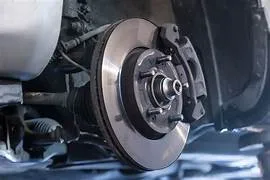
This course delves into the complexities of brake noise, covering its various forms like brake squeal, judder, and rotor-induced vibrations.

Participants will explore Complex Eigen Analysis, Modal Decoupling solutions, and transfer path analysis to diagnose and mitigate unwanted noise. Special focus will be given to designing brake systems for noise elimination, including the role of vacuum pump noise during actuation.

The course will also introduce advanced active control techniques, such as Active Vibration Control and Active Noise Cancellation (ANC), demonstrating their applications in premium vehicles and EVs for superior in-cab quietness.

Course suitable for

Key topics covered

  • Generations of various brake system noise

  • Brake judder, squeal

  • Complex Eigen analysis of brake disc & rotor

  • Modal Decoupling is the Solution !

  • Vehicle-Design for elimination of Brake squeal at all frequencies

  • Transfer path analysis

  • Brake Vacuum pump noise during actuation

  • Active Vibrations control strategies for brake system

  • Active Noise cancellation and Active Sound Design for In-cab of premium cars

Course content

The course is readily available, allowing learners to start and complete it at their own pace.

2 lectures44 min
  1. Brake Squeal Transient Phenomenon
    9 min
  2. What are The Passive Control Ways of Automotive NVH
    35 min

Opportunities that await you!

Career opportunities

Why people choose EveryEng

Industry-aligned courses, expert training, hands-on learning, recognized certifications, and job opportunities-all in a flexible and supportive environment.

FREE

Access anytime

Questions and Answers

A: Uniform oxidation mostly biases brake torque and doesn't sustain a squeal feedback loop. Hydrogen embrittlement needs plating processes and manifests as fracture, not noise drift. Chloride underfilm corrosion lifts the pad locally, reduces effective stiffness, and destabilizes the friction-induced mode. Thermal fatigue of the hat excites judder bands and sits well below squeal frequencies.

A: More clamp force raises energy input and can aggravate squeal modes. A floating architecture with compliance absorbs geometric error before it excites the pad-disc system. Disc runout control helps torque variation but doesn't isolate caliper-induced mode coupling. Higher control gain amplifies structural uncertainty and risks instability.

A: Actuators are isolated from the hydraulic force path and can't remove torque. Electrical saturation doesn't stay purely electrical because the control loop disengages. Saturation collapses the control authority, leaving the passive system intact but noisy. Disc thermal runaway is governed by braking energy, not the small actuator forces.

A: MMC doesn't guarantee alignment once assembled with mating parts. MMC allows geometric error to grow as size departs, which can stack unfavorably. Stiffness isn't defined by a GD&T modifier. Dynamic behavior is directly affected by alignment and constraint conditions.