<link href="https://fonts.googleapis.com/css2?family=Caveat:wght@500;700&family=JetBrains+Mono:wght@400;500;600&display=swap" rel="stylesheet" /> Skip to main contentEngineering Courses, Mentoring & Jobs | EveryEng
Design a fork in Swivel Bearing in SOLIDWORKS banner

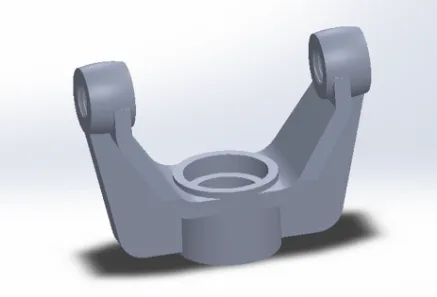
Design a fork in Swivel Bearing in SOLIDWORKS

Design a fork in Swivel Bearing in SOLIDWORKS banner
Self-paced Beginner

Design a fork in Swivel Bearing in SOLIDWORKS

4(1581)
4 enrolled
1226 views
FREE
20 min
Anytime
English
1226 views
Team EveryEng
Team EveryEngMechanical Engineering
  • Lifetime access
  • Certificate of completion
  • Foundational Learning
  • Access to Study Materials
Volume pricing for groups of 5+

Why enroll

Students will have gained a comprehensive understanding of fork design with swivel bearings in SolidWorks, equipped with the skills and knowledge to tackle complex design challenges in mechanical engineering with confidence and proficiency. They will be prepared to apply their expertise to a wide range of industries, contributing to the development of innovative and efficient mechanical systems.

What enrolled engineers say

3 verified reviews
  • Feb 25, 2026

    Initially, I wasn’t sure what to expect from this course given it’s positioned as beginner-level. The content focuses on modeling a fork with a swivel bearing in SOLIDWORKS, but what stood out was how clearly it exposed load paths and constraint logic, which are topics that come up all the time in aerospace structures. Concepts like bearing load transfer and tolerance stack-up were familiar from aircraft hinge and landing gear work, even if the application here is more industrial. One challenge was mentally mapping catalog bearing data to the CAD model. Translating axial vs. radial load assumptions into mates and clearances took a bit of iteration, especially when considering misalignment edge cases that would be unacceptable in flight hardware. The course doesn’t go deep into fatigue life or certification-style safety factors, but it does encourage thinking about stress risers around fillets, which aligns with aerospace fatigue practice. A practical takeaway was building the fork parametrically so geometry can adapt to different bearing sizes without breaking downstream features. In industry, that kind of flexibility matters at the system level when requirements change late. Overall, it felt grounded in real engineering practice.

    Sateesh Kumar Y. Verified
  • Feb 25, 2026

    This course turned out to be more technical than I anticipated. Even though it’s positioned as beginner, the fork-with-swivel-bearing example touches on design concerns that show up in aerospace hardware, especially around load paths and fatigue life at filleted transitions. The walkthrough in SOLIDWORKS forced some discipline around how bearing seats, shoulders, and clearances are modeled, which is closer to how we’d treat a flight-control bracket than a hobby part. One challenge was keeping the swivel bearing properly constrained without over-defining mates. That’s a common CAD pitfall, and here it highlighted an edge case where the model looks fine but would bind once tolerances stack up. In industry, especially in aerospace, that tolerance stack-up can kill you during assembly or drive unexpected wear, so seeing it early was useful. The course also hinted at system-level implications—how misalignment in the fork affects downstream components, not just the bearing itself. Compared to aerospace practices, the safety factors and material discussion were light, but that’s expected at this level. A practical takeaway was a cleaner approach to modeling bearing interfaces so they’re FEA-ready later. It definitely strengthened my technical clarity.

    Mirthul S. Verified
  • Feb 25, 2026

    This course turned out to be more technical than I anticipated. Even though it’s labeled beginner, the fork and swivel bearing geometry forces you to think about load paths and constraint management, which is very much an aerospace mindset. The sections on bearing alignment and clearance stacking reminded me of issues we see in flight-control linkages, where a small misalignment can turn into accelerated wear or unexpected friction. One challenge was keeping the model robust when changing fork width or pin diameter. A few features were overdefined early on, and rebuilding the design intent took some trial and error. That’s a realistic pain point, and it mirrors what happens when CAD models don’t anticipate downstream changes. From a practical standpoint, the biggest takeaway was how to set up mates and reference geometry so the swivel bearing motion stays predictable. In industry, especially in aerospace structures, that’s critical for fatigue life assumptions and fail-safe behavior. The course doesn’t go deep into GD&T or formal stress analysis, but it does hint at edge cases like off-axis loading and interference during rotation. Overall, it felt grounded in real engineering practice.

    Dipansh S. · Mechanical Design Intern Verified

Is this course for you?

You should take this if

  • You work in Manufacturing & Industrial
  • You're a CAD & Analysis / Mechanical Engineering professional
  • You prefer self-paced learning you can revisit

You should skip if

  • You need a different specialisation outside CAD & Analysis
  • You need live interaction with an instructor

Course details

This course provides an in-depth exploration of fork design with swivel bearings using SolidWorks, one of the most widely used CAD software in the industry. Participants will learn how to model and assemble forks incorporating swivel bearings, which are crucial for smooth rotational and pivoting movements in mechanical systems. The course covers fundamental design principles, including load analysis, material selection, and tolerance considerations to ensure functionality and durability. Learners will also understand the integration of forks in applications such as industrial machinery, automotive suspensions, and material handling equipment. Hands-on exercises will focus on creating accurate 3D models, performing assemblies, and simulating movement to predict real-world performance. Additionally, participants will explore best practices for parametric design, drawing creation, and documentation for manufacturing purposes. By the end of the course, learners will be proficient in designing efficient and reliable fork mechanisms, capable of handling dynamic loads while ensuring smooth operation. This knowledge will equip engineers, designers, and students with practical skills to contribute effectively to mechanical design projects in various industries.

Course suitable for

Key topics covered

  • Learn to create a design a fork in Swivel Bearing in SOLIDWORKS.

Course content

The course is readily available, allowing learners to start and complete it at their own pace.

2 lectures20 min
  1. Swivel Design
    9 min
  2. Swivel Design
    11 min

Opportunities that await you!

Skills & tools you'll gain

SolidWorks

Career opportunities

FREE

Access anytime

Questions and Answers

A: The correct path prevents angular misalignment by locking both lugs into a common datum structure. B talks wear, which isn’t driven by missing datums. C confuses housing fit with pin alignment. D misreads how general tolerances interact with explicit fits.

A: The right logic protects against brinelling from peak load. B is ISO 281 territory. C mixes maintenance guidance with design criteria. D confuses quality system rules with bearing performance limits.

A: The correct reasoning ties crack origin and orientation to peak local stress. B would show brittle fracture without a consistent initiation point. C loads the pin axially, not the lug fillet. D causes random pit-driven cracks, not clean fillet initiation.

A: The correct value uses double-shear area, halving the load per plane. B forgets the second shear plane. C mixes single-shear with diameter error. D drops π from the area entirely.