Skip to main contentEngineering Courses, Mentoring & Jobs | EveryEng
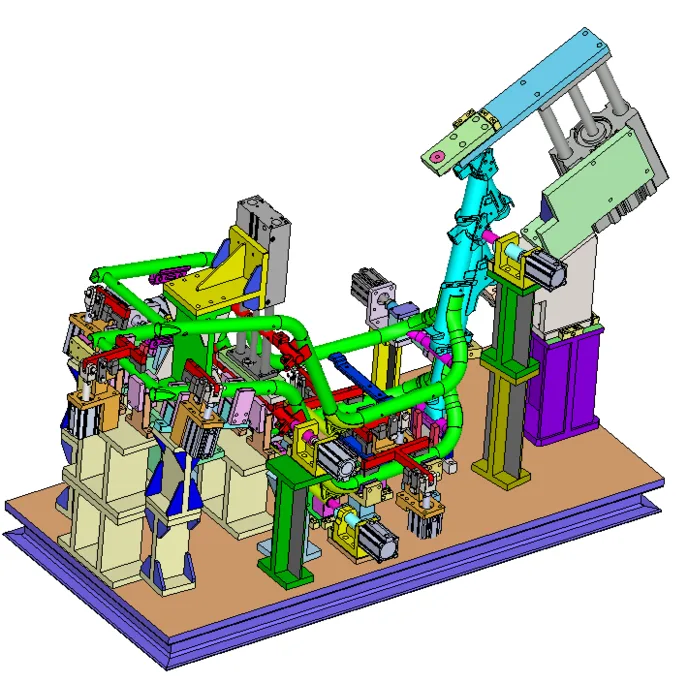
Understanding of BIW Welding Fixtures banner
Live Online Class Basic

Understanding of BIW Welding Fixtures

4(2)
2 enrolled
917 views
COMPLETED

Tell us and we’ll notify you when the next batch is scheduled.

1 hr
Nov 20, 2024 · 1:30 PM
English , Hindi
917 views
Mayank Barthwal
Mayank BarthwalTeam Leader / Engineering Biw Welding fixtures design
  • Session recordings included

Why enroll

Participant who are interested in learning the design and manufacturing process of jig fixtures used in automobile industries.

Is this course for you?

You should take this if

  • You work in Automotive or Manufacturing & Industrial
  • You're a Manufacturing Engineering / Mechanical Engineering professional
  • You prefer live, instructor-led training with Q&A

You should skip if

  • You need a different specialisation outside Manufacturing Engineering
  • You need fully self-paced, on-demand content

Course details

Through this course, I would like to share my knowledge & skills about the designing of welding fixtures.

Course suitable for

Key topics covered

1.) 3-2-1 Principle in BIW

2.) Mechanisms

3.) Clamping

4.) GD&T

5.) Concept Design

Opportunities that await you!

Career opportunities

Training details

This is a live course that has a scheduled start date.

Live session

Started

Wed, Nov 20, 2024 Ended

1:30 PM UTC· your timezone

Duration

1 hour per day

Why people choose EveryEng

Industry-aligned courses, expert training, hands-on learning, recognized certifications, and job opportunities-all in a flexible and supportive environment.

COMPLETED

Nov 20, 2024 · 1:30 PM

Questions and Answers

A: The 3-2-1 locating logic breaks once compliance exceeds a few tenths under weld load. ISO 1101 is about functional relationships, not just geometry, and a floating arm shifts under gun force even if the drawing tolerance looks fine.

A: Once spatter layers reach roughly 0.2–0.3 mm, operators scrape them off, and that repeated removal drives adhesive wear. The others exist, but they don’t move the pin location fast enough to blow Cp/Cpk.

A: With ±0.8 mm variation, you need constraint without over-constraint. One round plus one diamond manages 4 DOF while letting thermal strain bleed off instead of storing it until gun release.

A: Flatness and level within ~0.1 mm/m set the reference. Pin true position comes next. Clamp repeatability only matters once the datums are real; reversing the order hides root cause.