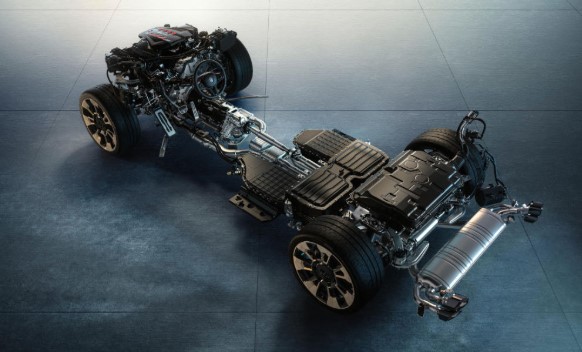
The Art of Powertrain Mounting: Minimizing Vehicle Vibrations for Smooth Rides

MILIND AMBARDEKAR
Consultant
Pre-recorded video course. Watch anytime at your own pace.
$ 114
13 already enrolled!
Advanced course for professionals
Anytime Learning
Learn from Industry Expert
Career Option Guideline
The Art of Powertrain Mounting: Minimizing Vehicle Vibrations for Smooth Rides
Why enroll
If you are an engineer or automotive professional seeking to master vibration control in powertrain mounting, this course is for you.
You will gain practical insights into designing robust yet refined mounting solutions that balance NVH and durability. With real-world case studies and best practices, you’ll learn how to enhance ride comfort, improve component longevity, and solve complex vibration issues in modern vehicles.
Whether you're working with IC engines or electric motors, this course equips you with the essential knowledge to create quieter and smoother-performing vehicles.
Course content
The course is readily available, allowing learners to start and complete it at their own pace.
The Art of Powertrain Mounting: Minimizing Vehicle Vibrations for Smooth Rides
5 Lectures
68 min
Introduction
Preview
4 min
Design requirements of mounting of IC engine or electric motor on vehicle chassis.
12 min
Modal Separation, MBD Analysis, Optimization
8 min
Novel Design of Rubber Mounts to balance conflicting requirements
20 min
Electric Motor Train mounting, Advanced Technology
24 min
Course details
The Art of Powertrain Mounting: Minimizing Vehicle Vibrations for Smooth Rides explores the critical engineering principles behind designing and implementing effective powertrain mounting systems in modern vehicles. This course delves into the interplay between the engine, transmission, and chassis, emphasizing how proper mounting reduces vibrations, noise, and harshness for enhanced ride comfort. Students will learn about different types of mounts, including hydraulic, rubber, and active systems, and how material selection, geometry, and damping strategies influence performance. Through theoretical discussions and practical case studies, the course examines vibration modes, resonance, and dynamic load distribution. Participants will gain insights into diagnostic tools, simulation techniques, and experimental testing methods for evaluating mount effectiveness. Additionally, the course covers emerging technologies, such as adaptive and semi-active mounts, highlighting their role in electric and hybrid vehicles. By the end, learners will be equipped with the knowledge to design, analyze, and optimize powertrain mounting solutions, balancing vehicle dynamics, passenger comfort, and durability. Practical exercises and real-world examples ensure a hands-on understanding of minimizing unwanted vibrations while maintaining drivetrain performance.
Course suitable for
Aerospace Automotive Mechanical
Key topics covered
Introduction
Design requirements of mounting of IC engine or electric motor on vehicle chassis.
Modal Separation, MBD Analysis, Optimization
Novel Design of Rubber Mounts to balance conflicting requirements
Electric Motor Train mounting, Advanced Technology
$ 114
Access anytime