
Skip to main contentEveryEng | Everything for Engineering
Search icon
Search icon

Technical Courses

Soft-Skills Trainings

Seminar & Conferences

Articles & Blogs

Jobs / Hiring

Internship Options

Project Based Freelancing

Communities & Consultation

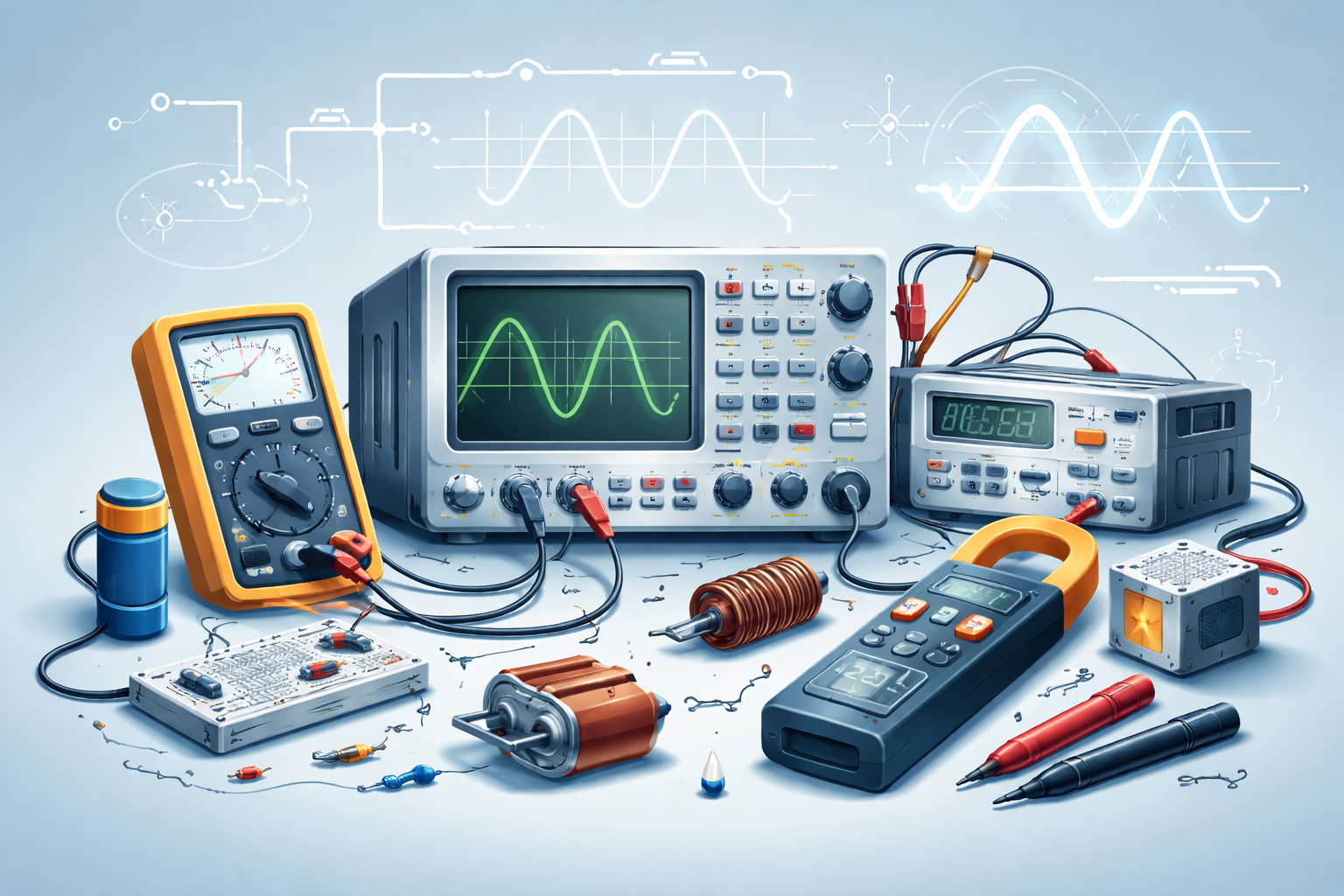
AC Fundamentals. banner
Preview this course

AC Fundamentals.

Engineering Academy

Engineering Academy

Learn Without Limits: Free Engineering Courses

Rating 4 (7)
Course typeWatch to learn anytime
Duration 359 Min
Start Access anytime
Language English
Views76

FREE

AC Fundamentals. banner
Preview this course

AC Fundamentals.

Why enroll

Participants join this course to build a strong and clear understanding of electrical and AC circuit fundamentals in simple, easy language. It helps them solve numerical problems confidently and understand core concepts like AC circuits, network theorems, and power. The course is highly useful for competitive exams, technical interviews, and practical electrical work.

Opportunities that awaits you!

Certificate thumbnail

Earn a course completion certificate

Add this credential to your LinkedIn profile, resume, or CV. Share it on social media and in your performance review

Course content

The course is readily available, allowing learners to start and complete it at their own pace.

Video info icon

AC Fundamentals.

25 Lectures

359 min

  • ELECTRICAL AC FUNDAMENTALS-1 || RMS VALUE || AVERAGE VALUE || FORM FACTOR ||

    Preview icon

    Preview

    14 min

  • ELECTRICAL AC FUNDAMENTALS-2 || ACTIVE,REACTIVE,APPARENT POWER || RESONANCE ||

    11 min

  • AC circuits fundamentals in English

    24 min

  • ELECTRICAL NETWORKS PART-1

    19 min

  • TSSPDCL || JUNIOR LINEMAN || Basics KVL & KVL ||

    12 min

  • ELECTRICAL || VOLTAGE || CURRENT || EMF|| NETWORK || PART-4

    6 min

  • TSSPDCL || JUNIOR LINEMAN || PROBLEMS ON STAR DELTA CONVERSION ||

    11 min

  • TSSPDCL || JUNIOR LINEMAN || Ac circuits lec - 2 ||

    11 min

  • IDEAL AND PRACTICLE VOLTAGE SOURCES

    9 min

  • IDEAL AND PRACTICLE CURRENT SOURCES

    8 min

  • Superposition theorem

    8 min

  • THEVENIN'S AND NORTON'S THEOREMS IN TELUGU

    15 min

  • Electrical Networks And DC basics important questions

    38 min

  • Know about maximum power transfer theorem and condition for maximum power transfer theorem

    11 min

  • AC THROUGH PURE RESISTOR

    8 min

  • AC THROUGH PURE INDUCTOR & WHY CURRENT LAGS IN INDUCTOR

    9 min

  • AC THROUGH CAPACITOR & HOW CURRENT LEADS VOLTAGE

    6 min

  • VIZAG STEEL JT Electrical || CAPACITORS || Important mcq for competative exams ||

    18 min

  • VIZAG STEEL JT ELECTRICAL || MAXIMUM POWER TRANSFER THEOREM || SIVARAMARAJU ||

    14 min

  • AP Sachivalayam & Vizag steel || digital assistant & junior trainee || Electrical classes lec-01 ||

    23 min

  • vizag steel & digital assistant || single phase Ac circuits || lec-03 ||

    20 min

  • VIZAG STEEL & AP Grama sachivalayam || junior trainee & Digital assistant || AC - circuits-2 ||

    17 min

  • VIZAG STEEL- JT & AP Grama sachivalayam -DA || AC circuits-III RL RC RLC ||

    24 min

  • TSSPDCL || JUNIOR LINEMAN || Important problem on KVL || P SIVARAMARAJU ||

    11 min

  • TSSPDCL || JUNIOR LINEMAN || Ac circuits lec - 1 ||

    12 min

Course details

This course is designed to build a strong foundation in electrical and AC circuit fundamentals for students and job-oriented exam aspirants. It starts with basic electrical concepts such as voltage, current, EMF, and electrical networks, helping learners understand how circuits work from the ground up. The course explains AC fundamentals including RMS value, average value, form factor, frequency, and phase in a simple manner. Learners will understand active, reactive, and apparent power and their importance in real electrical systems. Detailed coverage of AC circuits with resistor, inductor, and capacitor explains why current leads or lags voltage. The course includes RL, RC, and RLC circuits, along with resonance concepts. Kirchhoff’s laws (KCL & KVL) and problem-solving techniques are explained step by step. Important network theorems such as Superposition, Thevenin’s, Norton’s, and Maximum Power Transfer are covered with clear conditions and applications. Concepts of ideal and practical voltage and current sources are also included. The course focuses on numerical problems, MCQs, and exam-oriented questions, making it highly useful for competitive exams and practical understanding.

Source:
Vizag Tech Hub (Youtube)

Course suitable for

  • Automotive
  • Electrical
  • Engineering & Design
  • Project Management
  • Research & Developmnet

Key topics covered

  • RMS Value

  • Average Value

  • Form Factor

  • Active Power

  • Reactive Power

  • Apparent Power

  • Resonance

  • Basic AC concepts

  • Sinusoidal waveforms

  • Frequency and phase angle

  • Electrical network basics

  • Elements of a network

  • Types of circuits

  • Kirchhoff’s Current Law (KCL)

  • Kirchhoff’s Voltage Law (KVL)

  • Voltage

  • Current

  • EMF

  • Electrical Network

  • Star to Delta conversion

  • Delta to Star conversion

  • Numerical problems

  • AC circuit analysis

  • Impedance concepts

  • Phase relationships

  • Ideal voltage source characteristics

  • Practical voltage source characteristics

  • Ideal current source characteristics

  • Practical current source characteristics

  • Principle of superposition

  • Application steps

  • Limitations

  • Thevenin’s theorem

  • Norton’s theorem

  • Conversion between Thevenin and Norton

  • DC circuit fundamentals

  • Network theorems

  • Exam-oriented questions

  • Concept of maximum power transfer

  • Condition for maximum power transfer

  • Voltage–current relationship

  • Power consumption

  • Inductive reactance

  • Current lagging voltage

  • Reason for phase lag

  • Capacitive reactance

  • Current leading voltage

  • Reason for phase lead

  • Types of capacitors

  • Applications

  • Important MCQs

  • Single-phase AC fundamentals

  • Power calculations

  • RL circuit analysis

  • RC circuit analysis

  • RLC circuit behavior

  • Loop analysis

  • Numerical problem solving

  • Introduction to AC

  • Basic AC parameters

  • Or turn it into a study plan or PPT outline 📘✨

FREE

Access anytime