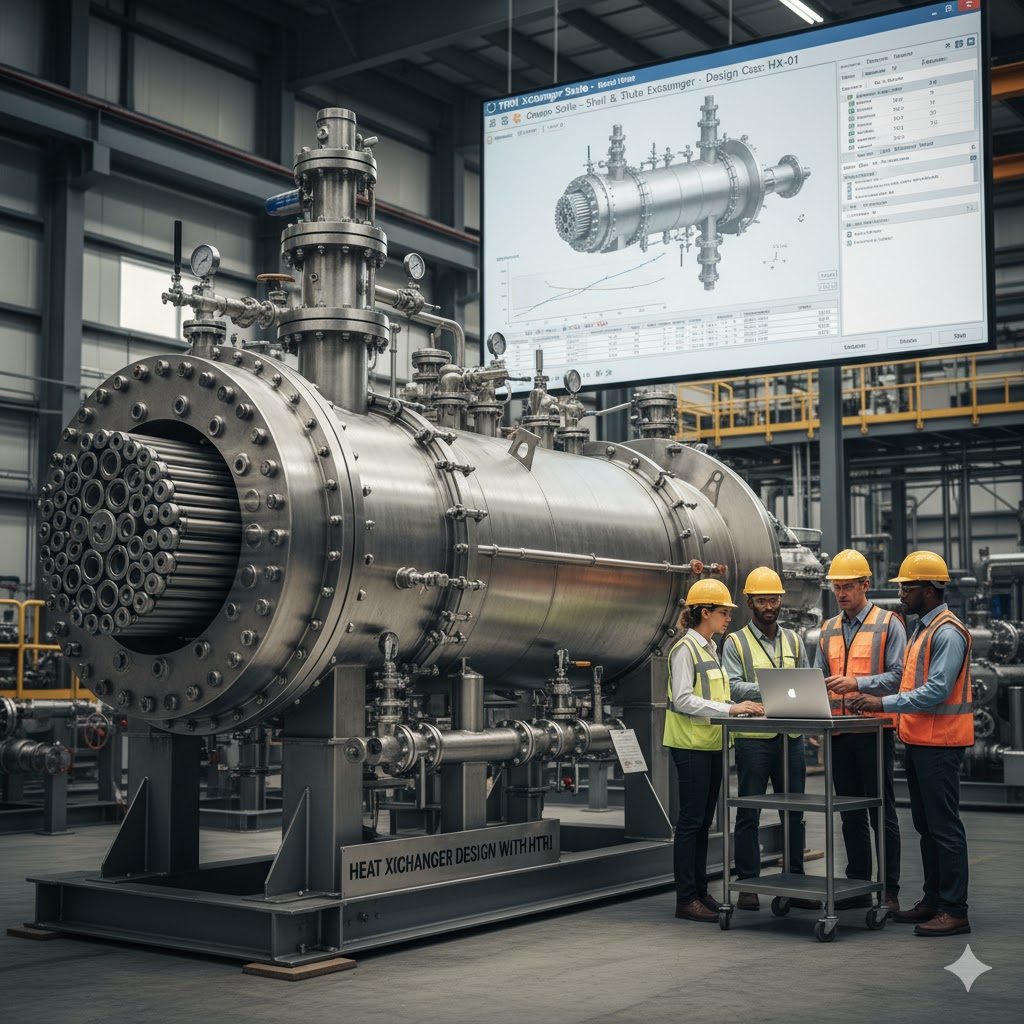
Day 1 - Fundamentals & Shell-and-Tube Heat Exchanger Design Basics
&) Introduction to Heat Exchanger Design
- Objective & importance of thermal design in process industry
- Types of heat exchangers and their applications
- Flow arrangements - parallel, counter & cross-flow
¥ Thermal Design Fundamentals
- Basic heat-transfer concepts
- LMTD and Effectiveness-NTU methods
- Fouling factors and correction factors (Ft)
- Heat-load calculation from process data
K Shell-and-Tube Exchanger Design Concepts
- TEMA types and configurations
- Tube layout, pitch & pass arrangement
- Shell-side vs. tube-side fluid selection
- Tube count & bundle layout basics
ntroduction to HTRI Software
- Interface overview and project setup
- Input data preparation from process datasheet
- Unit system selection, stream data & properties
&) Hands-on Industrial Example 1
- Creating a new case in HTRI
- Step-by-step demo on single-phase application
- Interpretation of results (heat duty, area, pressure drop, velocity, etc.)
Day 2 - Advanced Thermal Design & Troubleshooting
&) Multi-Pass & Multi-Stream Exchangers
- Tube-pass selection logic
- Impact of passes on performance
- Key design considerations for complex applications
B3 Pressure Drop and Velocity Analysis
- Tube-side and shell-side pressure drop estimation
- Design limits as per API and process criteria
- Optimization for velocity and erosion limits
&) Design Validation & Optimization
- Rating vs. Design mode in HTRI
- Performance check for existing units
- Area optimization and cost considerations
Troubleshooting & Common Issues
- Causes of vibration, fouling & thermal stress
- Troubleshooting steps using HTRI
- Discussion on industrial experience and field observations
&) Hands-on Industrial Example 2
- Step-by-step thermal design for real industrial data
- Report generation & interpretation
- Discussion on results and design insights
O Q&A
- Open Q&A session with participants
- Discussion on career growth in Process Design