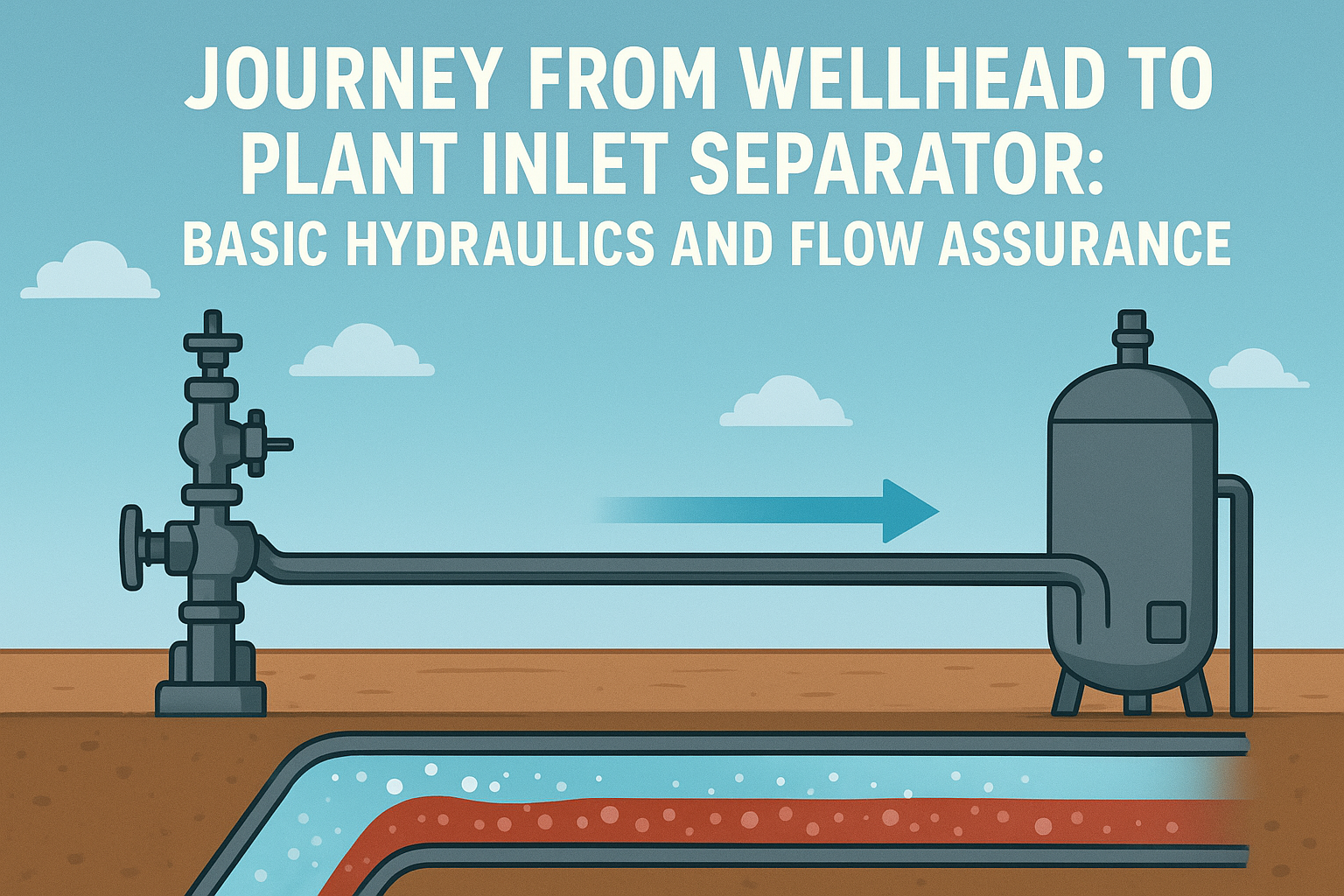
Multiphase flow line and Trunk line Basic Hydraulics and Flow Assurance
$ 25
8 already enrolled!
Beginner course for learners

Foundational Learning

Access to Study Materials

Self-Paced Learning
Multiphase flow line and Trunk line Basic Hydraulics and Flow Assurance
Trainers feedback
Course type
Watch to learn anytime
Course duration
106 Min
Course start date & time
Access anytime
Language
English
Why enroll

Course content
The course is readily available, allowing learners to start and complete it at their own pace.

Multiphase flow line and Trunk line Basic Hydraulics and Flow Assurance
3 Lectures
106 min

Course Overview & Introduction
Preview
9 min
Basic Hydraulic and Flow Assurance
67 min
Slug Key Characteristics & Decision tree structure
30 min
Course details
Course suitable for
Key topics covered
Course Attachments
Our Alumni Work At





























































































Why people choose EveryEng
Industry-aligned courses, expert training, hands-on learning, recognized certifications, and job opportunities—all in a flexible and supportive environment.
- Industry Veteran
- Trainer Review

Subsea7
I was searching for a reliable platform to expand my engineering knowledge, and EveryEng exceeded my expectations. The content and courses are well-structured, informative, and taught by experienced professionals. A great platform for Engineers!

C P Sharma
Principal Engineer
London

Heelium
EveryEng is my go-to platform for engineering education. The courses are easy to follow, and the instructors are very knowledgeable. The platform has helped my team gain confidence and expertise in our field.

Siddharth Jain
Co-Founder
Pune, India

Penta Global Engineering
Engineering education should be hands-on, and that’s exactly what EveryEng provides. From interactive Q&A sessions to on-the-job training, this platform offers everything a modern engineer needs to succeed!

Prashant Joshi
Operation Director
Dubai, UAE

Halliburton
I had been looking for a reliable online platform for engineering courses, and EveryEng delivered beyond my expectations. The content is top-notch, the instructors are excellent, and the learning experience is seamless.

Harish Venugopal
Technical Professional
Bangalore, India

LyondellBasell
The learning experience at EveryEng is truly exceptional! The platform is well-organized, making it easy to find relevant courses. The detailed lessons and expert insights are very helpful and helped greatly to improve engineer's technical knowledge.

Suresh Nawandar
Global Technology Leader
The Hague, Netherlands

Basic Process Engineering
Questions and Answers
More from Same Author
- Technical Courses
- Articles


524

2
Online
Live courses

March 28

2 Hrs
Beginner
Online
Live courses
Interacting with trainer

1735
265
Online
Live courses
November 30
1 Hrs
Beginner
Online
Live courses
Interacting with trainer
1263
8
E-Learning
Unlimited access
Beginner
E-Learning
Unlimited access
Pre-recorded videos
Earning and Growth option in same Industry Domain
- Pre-recorded
- Online live session
- Offline
- Articles
2882
4
E-Learning
Unlimited access
Advanced
E-Learning
Unlimited access
Pre-recorded videos

339
4
E-Learning
Unlimited access
Intermediate
E-Learning
Unlimited access
Pre-recorded videos

5753
1
E-Learning
Unlimited access
Beginner
E-Learning
Unlimited access
Pre-recorded videos

More Training & Development option to expand your reach
- Technical courses
- Soft-skills courses
- Seminars
- Articles & Blogs

1941
6
Online
Live courses
December 31
160 Hrs
Advanced
Online
Live courses
Interacting with trainer


163
Online
Live courses
February 21
25 Hrs
Advanced
Online
Live courses
Interacting with trainer


792
Online
Live courses
February 21
30 Hrs
Advanced
Online
Live courses
Interacting with trainer