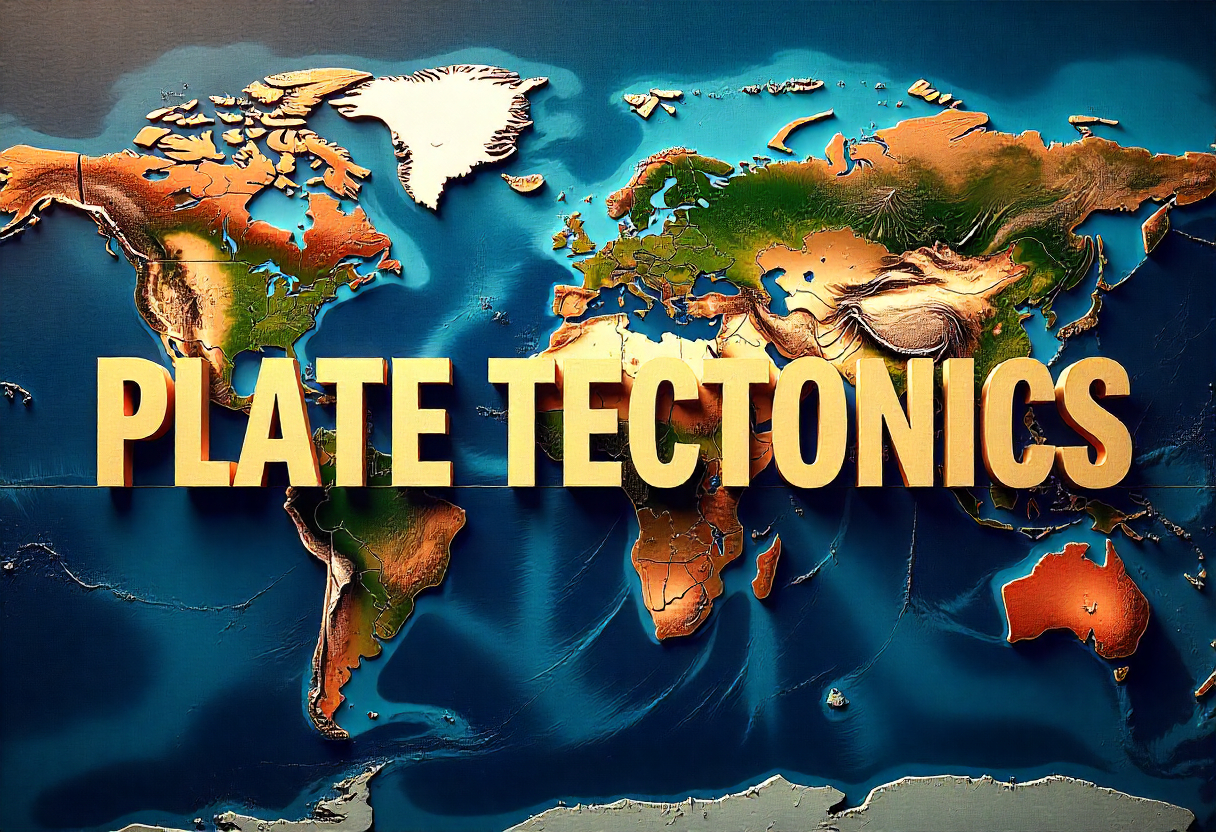
Plate Tectonics

Engineering Academy
Learn Without Limits: Free Engineering Courses
FREE
Advanced course for professionals

Anytime Learning

Learn from Industry Expert

Career Option Guideline
Plate Tectonics
Why enroll
Opportunities that awaits you!

Earn a course completion certificate
Add this credential to your LinkedIn profile, resume, or CV. Share it on social media and in your performance review
Career opportunities
Course content
The course is readily available, allowing learners to start and complete it at their own pace.

Plate Tectonics
30 Lectures
974 min
Lecture 1: Interior of Earth-I
Preview
33 min
Lecture 2: Interior of Earth-II
17 min
Lecture 3: Interior of Earth-III
36 min
Lecture 4: Interior of Earth-IV
25 min
Lecture 5: Interior of Earth- V
39 min
Lecture 6: Interior of Earth-VI
33 min
Lecture 7: Oceanic Crust- I
36 min
Lecture 8: Oceanic Crust- II
33 min
Lecture 9: Continental Crust- I
34 min
Lecture 10: Continental Crust- II
39 min
Lecture 11: Types of Plates and Plate Margins
39 min
Lecture 12: Basic Assumption of Plate Tectonics
26 min
Lecture 13: Relative Motion of Lithospheric Plates
30 min
Lecture 14: Euler's Theory on Lithospheric Plate Motion
35 min
Lecture 15: Constructive/ Creative Plate Margin
37 min
Lecture 16: Slow and Fast Spreading Ridges
31 min
Lecture 17: Magma Chamber Properties at Mid-Oceanic Ridge
32 min
Lecture 18: Age-Depth Relationship Around the Mid-Oceanic Ridge
27 min
Lecture 19: Along Axis Segmentation of the Mid Oceanic Ridge
33 min
Lecture 20: Propagating Rifts and Microplate Development
28 min
Lecture 21: Conservative Plate Margin- I
34 min
Lecture 22: Conservative Plate Margin- II, Continental Transform Faults
26 min
Lecture 23: Conservative Plate Margin- III, Transform Continental Margins
39 min
Lecture 24: Conservative Plate Margin- IV, Continental Transform Faults
23 min
Lecture 25: Destructive Plate Margins- I
39 min
Lecture 26: Destructive Plate Margins-II, The Oceanic Trench
32 min
Lecture 27: Destructive Plate Margins-III, The Island Arc System
35 min
Lecture 28: Destructive Plate Margins-IV, The Back Arc Basin and Accretionary Prism
35 min
Lecture 29: Destructive Plate Margins-V, Seismicity in the Subduction Zone
35 min
Lecture 30: Destructive Plate Margins-VI, Gravity Anomaly and Thermal Structure at Subduction Zone
33 min
Course details
Course suitable for
Key topics covered
Why people choose EveryEng
Industry-aligned courses, expert training, hands-on learning, recognized certifications, and job opportunities—all in a flexible and supportive environment.
- Industry Veteran
- Trainer Review

BBC
EveryEng is the perfect platform for engineers at all stages of their careers. The courses are practical, engaging, and industry-relevant. You can learn so much and feel more confident professionally.

Chitra Sharma
Software Engineer
London

KPMG
From learning new technologies to getting hired, this platform changed engineer's career trajectory! It's a great work by Engineer's behind the EveryEng brain.

Rahul Dalal
Senior Resourc Manager
Dallas, USA

SLB
EveryEng stands out with its exceptional learning materials, expert guidance, and real-world applications. It can truly help to enhance skills and knowledge, making more confident professional.

Rajeev Panda
Project Manager
Pune, India

Subsea7
I was searching for a reliable platform to expand my engineering knowledge, and EveryEng exceeded my expectations. The content and courses are well-structured, informative, and taught by experienced professionals. A great platform for Engineers!
C P Sharma
Principal Engineer
London

SaiDeepa
I’m amazed by the depth of knowledge available on EveryEng. The platform covers various engineering topics in detail, making learning both exciting and rewarding. I would highly recommend it to everyone!

Kranthi Bolineni
COO
Hydrabad, India