
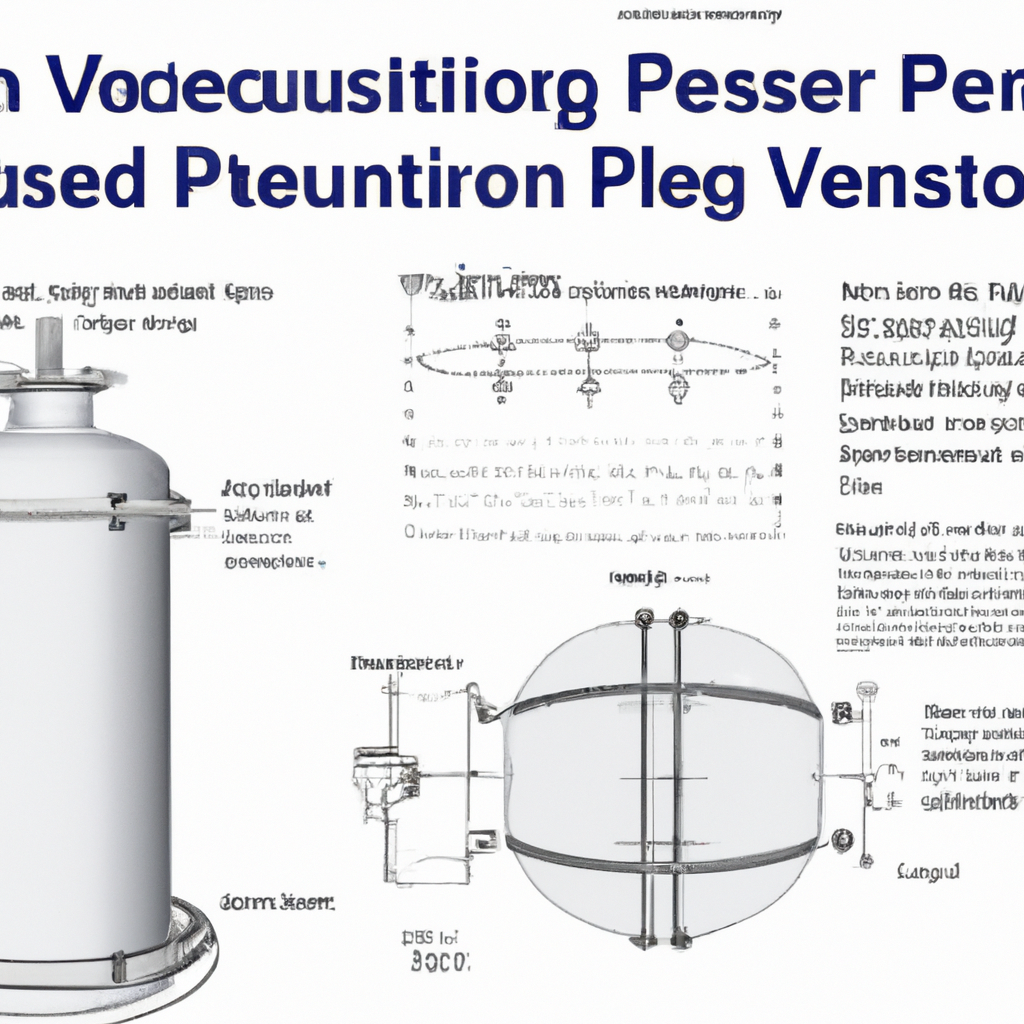
Design of Pressure Vessel using PV Elite – Inspection Criteria to be considered as Design Engineer
Shanmugam V
Lead / Senior Mechanical Engineer/Static Equipment Engineer
$ 50
Beginner course for learners
Design of Pressure Vessel using PV Elite – Inspection Criteria to be considered as Design Engineer

Trainers feedback
4
(7 reviews)
Shanmugam V
Lead / Senior Mechanical Engineer/Static Equipment Engineer
Course type
Instructor led live training
Course duration
5 Hrs
Course start date & time
Coming in Next Month
Language
English
This course format is where trainer will explain you the subject via online live session. Date and time are not decided yet but it will be planned within next 2 weeks after you enroll & pay for this course?. Get in touch with our team if any clarification is required.
Why enroll
1. How elementary and advanced topics of pressure vessel Inspection & Testing that are applied in development of Pressure vessel codes and standards.
2. Theoretical background behind design code requirements which helps an engineer understand the strengths, weaknesses and applicability of the code requirements.
3. An insight into the newly introduced codes.
4. Bridging the gap between theoretical knowledge and code requirements.
5. University students who want to take up career in static equipment engineering and wants to learn about the most widely used Industrial standard.
6. Experienced engineers who want to understand the background of code rules and requirements
Course details
This course will cover basic and advanced topics of Pressure Vessel Engineering Design, Inspection and Testing requirement to provide a robust understanding of the background theory behind technical requirements of Pressure Vessel codes and standards. This will serve as a refresher course on core and advanced topics of Pressure Vessel Engineering to understand technical background of design and analysis as per codes & standards.
This course covers all important aspects of Pressure Vessel Design, Fabrication and testing, which comprises of
• Design, Analysis and Engineering requirement for Pressure Vessel
• Metallurgy and Material Selection while designing Pressure vessel
• Fabrication prerequisite while Pressure Vessel engineering
• Heat Treatment requirement for Pressure Vessel
• Testing & Inspection essentials for Pressure Vessel Design
All of above topics are covered in different modules of this course hence we encourage you to enroll all modules to learn all major and critical areas of Pressure vessel engineering.
Classifications of Static Equipment Engineering is a specialized discipline of Mechanical Engineering which covers the design of static equipments like Pressure vessels (Process Columns, Drums, Reactors, Separators, Drain vessel), Heat exchangers (Shell and Tube, Plate and Frame, Plate and Shell, Air Coolers), Atmospheric Tanks (Low pressure and LPG Tanks), Flare Stack in chemical, petrochemical, or hydrocarbon facilities. We have different courses to cover above listed equipment & do participate in all courses.
Course suitable for
Oil & Gas Chemical & Pharmaceutical Energy & Utilities Mechanical
Key topics covered
This module talks about fabrication requirement as per ASME Code. Quality Control and Inspection is one of most important aspects of Pressure vessel Engineering and through understanding of Inspection is essential for Design Engineering because their drawing will get converted into actual product. Following topics are covered in this module
1. Inspection
a. Asbuilt dimensional measurement
b. Types of Non destructive Examination
c. Radiography Examination
d. Magnetic particle Examination
e. Dye Penetration Examination
f. Ultrasonic Examiantion
g. Hardness testing
Do enroll other module to learn more on fundamentals of material requirement while designing pressure vessel and understand ASME Code that are critical for a static equipment engineer.
Training details
This is a live course that has a scheduled start date.
Live session
Why people choose EveryEng
Industry-aligned courses, expert training, hands-on learning, recognized certifications, and job opportunities—all in a flexible and supportive environment.
- Industry Veteran
- Trainer Review

$ 50
- $ 0 Early bird discount
Coming in Next Month
Questions and Answers
A: PV Elite is an advanced software package specifically designed for the analysis and design of pressure vessels, heat exchangers, and storage tanks. It enables engineers to perform comprehensive stress analysis, calculate thickness requirements, and ensure compliance with codes like ASME Section VIII. PV Elite is important because it simplifies complex calculations, improves accuracy, and helps in verifying that the vessel design meets safety standards and regulatory requirements. More information can be found on the official Hexagon PV Elite page: https://hexagonppm.com/products/pv-elite
A: Key inspection criteria include ensuring that material thickness and joint designs meet code requirements, proper validation of allowable stress values, checking for nozzle reinforcement and corrosion allowances, verifying stress intensities under different loading conditions, and ensuring weld quality and inspection accessibility. PV Elite facilitates these by incorporating ASME code checks and generating detailed reports that aid inspectors and engineers during fabrication and commissioning. Detailed inspection standards can also be referenced in ASME Section VIII and related NDE procedures.
A: PV Elite allows engineers to input a corrosion allowance value during the design phase, representing the anticipated material thickness loss over the vessel's operational life. It automatically adds this allowance to the minimum required thickness to ensure structural integrity over time. This ensures the vessel remains safe even after some material loss. Understanding and incorporating corrosion allowance is critical for long-term safety and durability. For more technical guidance, refer to the ASME Boiler and Pressure Vessel Code, Section VIII, Division 1, UG-16.
A: PV Elite integrates several international codes and standards, primarily the ASME Boiler and Pressure Vessel Code, Section VIII, Divisions 1 and 2. It also includes design codes like EN 13445 (European Pressure Equipment Directive) and PD 5500 (UK standard). The software ensures compliance with these codes through built-in rules for stress analysis, thickness calculations, nozzle reinforcement, and material specifications. This integration helps certification and inspection teams to verify vessel safety efficiently.
A: Yes, PV Elite includes tools for fatigue analysis which are essential to assess the vessel’s ability to withstand cyclic loading over its lifetime. It calculates stress ranges and the number of cycles based on operating conditions and load variations, comparing results with allowable fatigue limits per code requirements. This helps in identifying potential fatigue failure points and guides design optimization. For detailed fatigue analysis methodologies, refer to ASME VIII-2 Part 5 and API 579-1/ASME FFS-1.
A: Validating input parameters involves cross-checking vessel geometry, material properties, operating conditions, loads, and corrosion allowances against project specifications and relevant codes. It is essential to review these inputs carefully to avoid errors that could compromise safety. PV Elite provides input verification tools and error-checking mechanisms that flag inconsistent or missing data. Additionally, good engineering practice includes peer review and comparison with hand calculations or alternative software tools.
A: Nozzle reinforcement is necessary to compensate for the weakening effect of openings on the vessel shell or head. PV Elite evaluates nozzle reinforcement by calculating the required area of additional material (often in the form of pads or thicker sections) in compliance with ASME Section VIII rules. It assesses geometry, loads, and stress intensities to verify whether the reinforcement is adequate to maintain structural integrity. This analysis ensures that localized stresses around the nozzle do not exceed allowable limits.
A: PV Elite allows engineers to incorporate thermal load cases by defining temperature gradients within the vessel components. It performs stress analysis under these thermal conditions by calculating expansion, contraction, and associated stresses, which are critical for vessels operating under fluctuating or high-temperature environments. These thermal stresses are combined with pressure and other mechanical loads for overall stress evaluation ensuring the vessel can safely operate under thermal cycling.
More from Same Author
- Technical Courses
- Articles
60
Online
Live courses
Intermediate
Online
Live courses
Interacting with trainer
254
Online
Live courses
January 8
9 Hrs
Beginner
Online
Live courses
Interacting with trainer
4
403
Online
Live courses
December 21
1.5 Hrs
Beginner
Online
Live courses
Interacting with trainer
Earning and Growth option in same Industry Domain
- Pre-recorded
- Online live session
- Offline
- Articles
5
1789
4
E-Learning
Unlimited access
Beginner
E-Learning
Unlimited access
Pre-recorded videos
4 (20)
2172
10
E-Learning
Unlimited access
Advanced
E-Learning
Unlimited access
Pre-recorded videos
4
2276
4
E-Learning
Unlimited access
Advanced
E-Learning
Unlimited access
Pre-recorded videos
More Training & Development option to expand your reach
- Technical courses
- Soft-skills courses
- Seminars
- Articles & Blogs
4
403
Online
Live courses
December 21
1.5 Hrs
Beginner
Online
Live courses
Interacting with trainer
998
3
Online
Live courses
December 31
160 Hrs
Advanced
Online
Live courses
Interacting with trainer
254
Online
Live courses
January 8
9 Hrs
Beginner
Online
Live courses
Interacting with trainer