
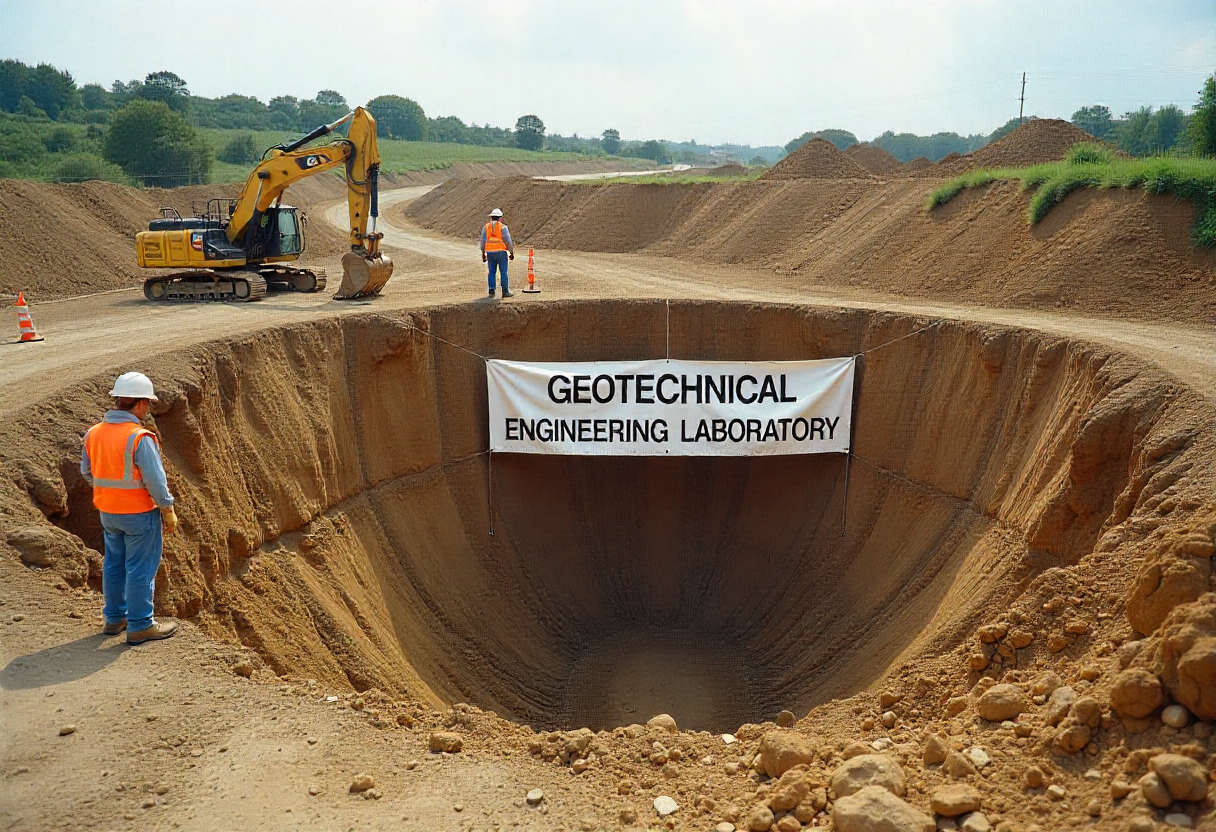
Geotechnical Engineering Laboratory

Engineering Academy
Learn Without Limits: Free Engineering Courses
FREE
Advanced course for professionals

Anytime Learning

Learn from Industry Expert

Career Option Guideline
Geotechnical Engineering Laboratory
Why enroll

Course content
The course is readily available, allowing learners to start and complete it at their own pace.

Geotechnical Engineering Laboratory
22 Lectures
638 min
Soil Processing
Preview
31 min
Specific Gravity and Field Density
28 min
Field Density
27 min
Grain Size Analysis
33 min
Grain Size Analysis (contd..)
29 min
Grain Size Analysis (contd...)
31 min
Atterberg Limit
36 min
Compaction
15 min
Compaction (contd1.)
32 min
Compaction (contd..)
30 min
Compaction and Permeability
28 min
Permeability
28 min
Permeability and Shear Strength
32 min
Shear Strength
29 min
Shear Strength (contd..)
31 min
Shear Strength (contd...)
31 min
Shear Strength (contd...,)
27 min
Shear Strength (contd,.)
30 min
Shear Strength (contd.)
17 min
Consolidation
31 min
Consolidation (contd1.)
33 min
Consolidation (contd..)
29 min