
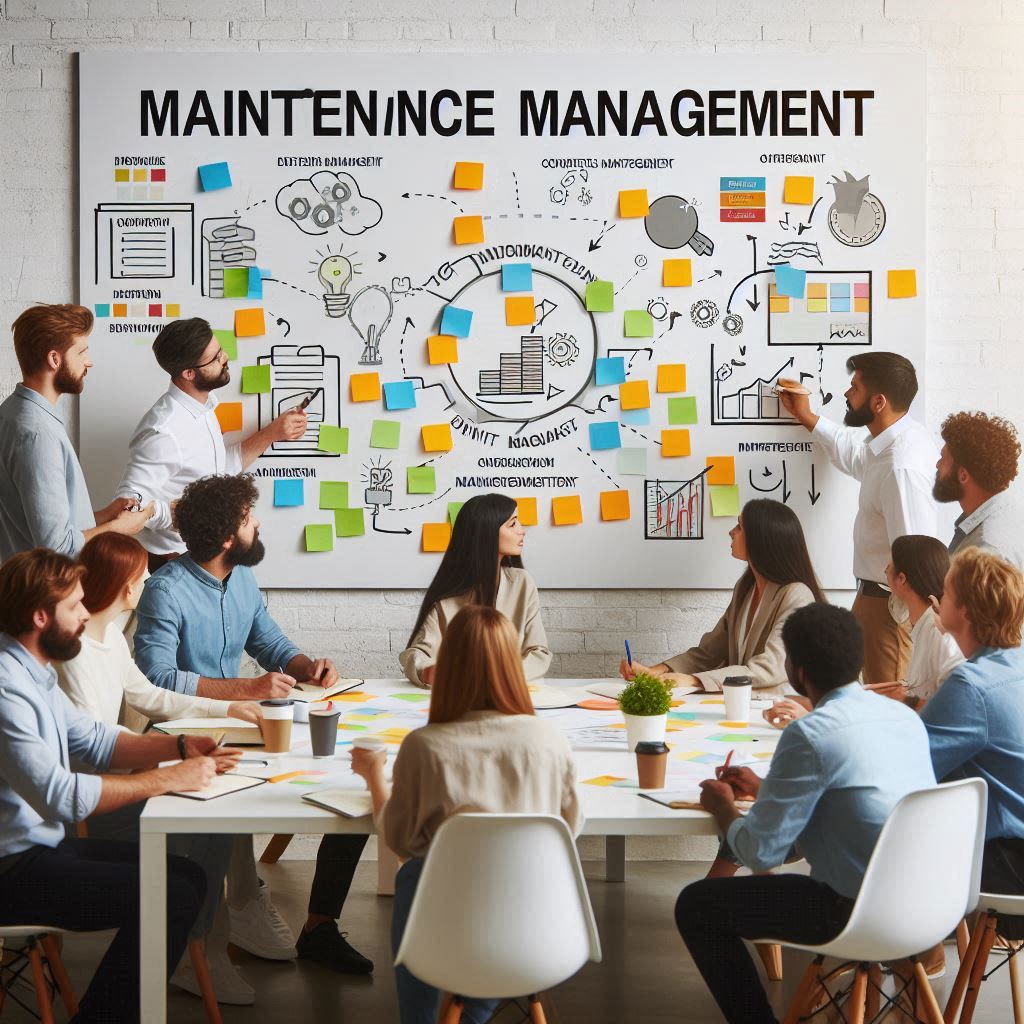
Maintenance Management

Chaitanya Purohit
Consultant
Live instructor-led sessions. Scheduled date and time.
$ 20
Beginner course for learners

Foundational Learning

Access to Study Materials

Self-Paced Learning
Maintenance Management

Course details
This course provides a comprehensive guide to maintenance management, focusing on strategies and practices to enhance equipment reliability, optimize maintenance processes, and ensure operational efficiency. Designed for maintenance managers, engineers, and facility managers, the program covers key concepts in preventive and predictive maintenance, asset management, and continuous improvement.
Course suitable for
Oil & Gas Aerospace Automotive Health, Safety & Environmental Mechanical Metallurgy & Material Science
Key topics covered
Introduction to Maintenance Management:
Definition and Importance: Overview of maintenance management and its critical role in ensuring the reliability, safety, and performance of assets in industries like manufacturing, facilities, and infrastructure.
Objectives of Maintenance: Key goals, including minimizing downtime, extending asset life, and reducing operational costs.
Types of Maintenance:
Corrective Maintenance: Addressing equipment failure after it occurs and ensuring quick restoration to service.
Preventive Maintenance: Scheduled maintenance activities aimed at preventing equipment failure and optimizing performance.
Predictive Maintenance: Using condition monitoring and data analysis to predict equipment failure before it happens.
Reliability-Centered Maintenance (RCM): A structured approach to determining the most effective maintenance strategy based on equipment criticality and reliability.
Maintenance Planning and Scheduling:
Work Order Management: The process of creating, assigning, and tracking maintenance work orders for both routine and emergency tasks.
Planning Preventive Maintenance: How to develop and manage a preventive maintenance schedule that balances frequency with resource availability.
Resource Allocation: Ensuring the right tools, materials, and personnel are available for maintenance tasks to improve efficiency.
Asset Management:
Asset Lifecycle Management: Understanding the lifecycle of assets from acquisition, operation, maintenance, and retirement, and how to plan maintenance based on asset age and condition.
Asset Criticality Analysis: Identifying and prioritizing assets that are critical to production or operations, and determining the appropriate level of maintenance for each.
Spare Parts Management: Efficiently managing spare parts inventory to minimize downtime and reduce inventory costs.
Key Performance Indicators (KPIs) for Maintenance:
Downtime Metrics: Measuring unplanned downtime and its impact on productivity, along with strategies to reduce it.
Mean Time Between Failures (MTBF): Analyzing the average time between failures to track equipment reliability.
Mean Time to Repair (MTTR): Monitoring the average time it takes to restore equipment after a failure and working to improve repair efficiency.
Maintenance Cost per Unit: Tracking the cost-effectiveness of maintenance operations and identifying areas for cost reduction.
Maintenance Strategies and Best Practices:
Condition-Based Monitoring: Implementing systems for continuous monitoring of equipment condition, such as vibration analysis, thermography, and oil analysis.
Total Productive Maintenance (TPM): Involving all employees in the maintenance process, focusing on both maintenance and operational excellence to improve equipment uptime.
Root Cause Analysis (RCA): Identifying and addressing the root causes of recurrent failures to prevent them from happening in the future.
Maintenance Technologies and Tools:
Computerized Maintenance Management Systems (CMMS): The role of CMMS in automating maintenance scheduling, work orders, and asset management.
Mobile Maintenance Solutions: Using mobile devices and apps to enable technicians to access work orders, parts, and documentation on the go.
IoT and Industry 4.0: The role of the Internet of Things (IoT) in predictive maintenance through real-time data collection and analysis from connected devices.
Safety and Compliance in Maintenance:
Safety Standards: Understanding the importance of safety in maintenance activities and ensuring compliance with regulations (e.g., OSHA, local safety standards).
Lockout/Tagout (LOTO) Procedures: Best practices for ensuring worker safety during maintenance tasks by controlling hazardous energy sources.
Environmental Considerations: Managing waste, chemicals, and emissions during maintenance activities to comply with environmental regulations.
Staff Training and Development:
Skill Development: Ensuring maintenance staff have the necessary technical skills and certifications to perform their jobs effectively.
Continuous Improvement: Encouraging a culture of ongoing training, knowledge sharing, and improvement to enhance maintenance performance and safety.
Training details
This is a live course that has a scheduled start date.
Live session
$ 20
$ 0 Early bird
Coming in Next Month