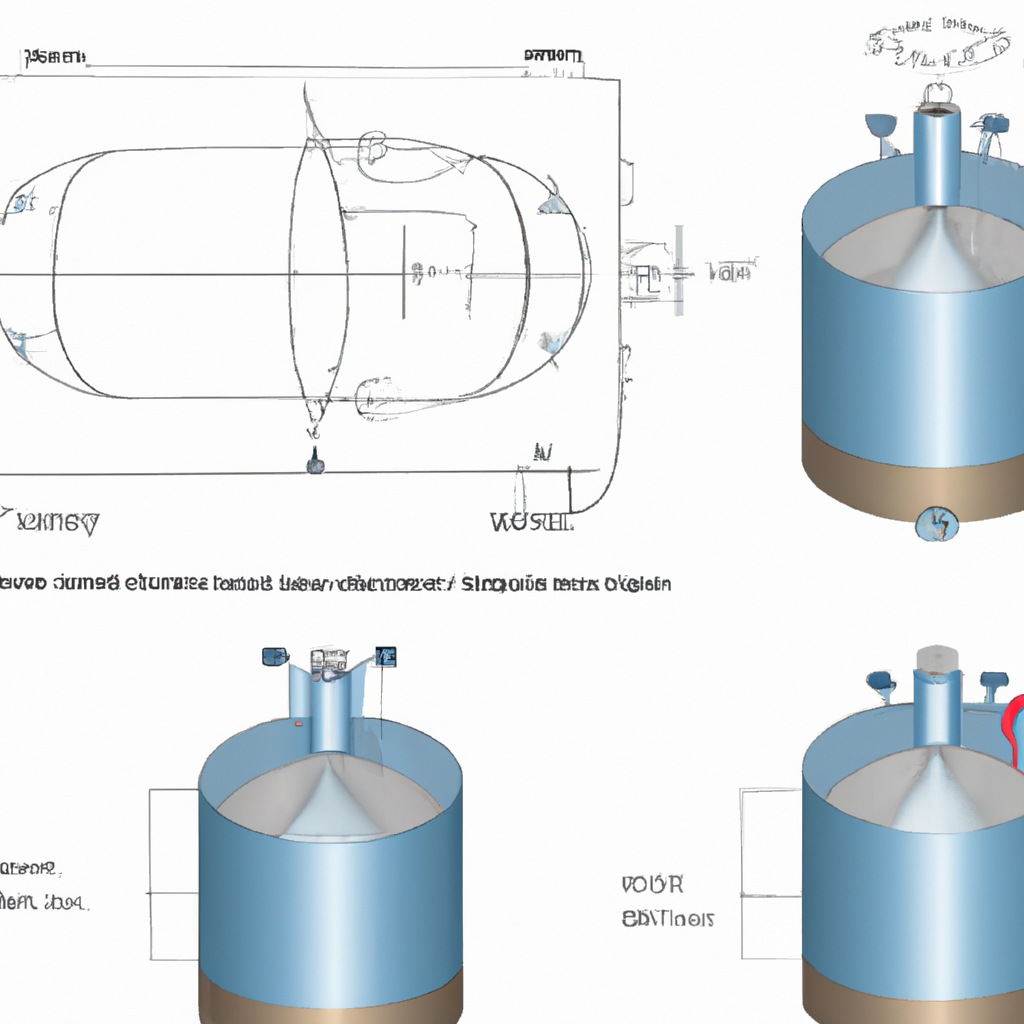
Design of Pressure Vessel using PV Elite – Fabrication aspects of Pressure Vessel
Shanmugam V
Lead / Senior Mechanical Engineer/Static Equipment Engineer
$ 50
Beginner course for learners
Design of Pressure Vessel using PV Elite – Fabrication aspects of Pressure Vessel
Trainers feedback
4
(7 reviews)
Shanmugam V
Lead / Senior Mechanical Engineer/Static Equipment Engineer
Course type
Instructor led live training
Course duration
3 Hrs
Course start date & time
Coming in Next Month
Language
English
This course format is where trainer will explain you the subject via online live session. Date and time are not decided yet but it will be planned within next 2 weeks after you enroll & pay for this course?. Get in touch with our team if any clarification is required.
Why enroll
1. How elementary and advanced topics of pressure vessel manufacturing that are applied in development of Pressure vessel codes and standards.
2. Theoretical background behind design code requirements which helps an engineer understand the strengths, weaknesses and applicability of the code requirements.
3. An insight into the newly introduced codes.
4. Bridging the gap between theoretical knowledge and code requirements.
5. University students who want to take up career in static equipment engineering and wants to learn about the most widely used Industrial standard.
6. Experienced engineers who want to understand the background of code rules and requirements
Course details
This course will cover basic and advanced topics of Pressure Vessel Engineering Design and Fabrication requirement to provide a robust understanding of the background theory behind technical requirements of Pressure Vessel codes and standards. This will serve as a refresher course on core and advanced topics of Pressure Vessel Engineering to understand technical background of design and analysis as per codes & standards.
This course covers all important aspects of Pressure Vessel Design, Fabrication and testing, which comprises of
• Design, Analysis and Engineering requirement for Pressure Vessel
• Metallurgy and Material Selection while designing Pressure vessel
• Fabrication prerequisite while Pressure Vessel engineering
• Heat Treatment requirement for Pressure Vessel
• Testing & Inspection essentials for Pressure Vessel Design
All of above topics are covered in different modules of this course hence we encourage you to enroll all modules to learn all major and critical areas of Pressure vessel engineering.
Classifications of Static Equipment Engineering is a specialized discipline of Mechanical Engineering which covers the design of static equipments like Pressure vessels (Process Columns, Drums, Reactors, Separators, Drain vessel), Heat exchangers (Shell and Tube, Plate and Frame, Plate and Shell, Air Coolers), Atmospheric Tanks (Low pressure and LPG Tanks), Flare Stack in chemical, petrochemical, or hydrocarbon facilities. We have different courses to cover above listed equipment & do participate in all courses.
Course suitable for
Oil & Gas Chemical & Pharmaceutical Energy & Utilities Mechanical
Key topics covered
This module talks about fabrication requirement as per ASME Code. Production & Fabrication is one of most important aspect of Pressure vessel Engineering and through understanding of fabrication is essential for Design Engineering because their drawing will get converted into actual product. Following topics are covered in this module
1. Dishend Fabrication
2. Plate Rolling
3. Pressure vessel fabrication tolerance requirement
4. Welding and weld joints
5. Impact testing requirements
6. Platform and ladders
Do enroll other module to learn more on fundamentals of material requirement while designing pressure vessel and understand ASME Code that are critical for a static equipment engineer.
Training details
This is a live course that has a scheduled start date.
Live session
Why people choose EveryEng
Industry-aligned courses, expert training, hands-on learning, recognized certifications, and job opportunities—all in a flexible and supportive environment.
- Industry Veteran
- Trainer Review
$ 50
- $ 0 Early bird discount
Coming in Next Month
Questions and Answers
A: When designing a pressure vessel using PV Elite, key fabrication considerations include material selection, weld joint designs, allowable stresses, and dimensional tolerances. PV Elite provides tools to evaluate stresses and thickness requirements as per codes such as ASME Section VIII. Understanding how the vessel will be manufactured — for example, whether it will be rolled, welded, or forged — impacts the design parameters such as weld types (butt welds, fillet welds), heat treatment needs, and inspection methods. Additionally, PV Elite helps ensure compliance with code-mandated fabrication details, including notch toughness requirements and post-weld heat treatments. For detailed fabrication guidelines, you can refer to ASME BPVC Section VIII and resources like the PV Elite help manual (https://hexagonppm.com/products/pv-elite).
A: PV Elite calculates the minimum required thickness of pressure vessel shells based on internal pressure, material allowable stresses, corrosion allowance, and external loads per design codes like ASME Section VIII. It considers the fabrication constraints such as rolling limits and available plate sizes. By iteratively adjusting input parameters, engineers can optimize shell thickness to avoid overdesign, which reduces material waste and fabrication cost while maintaining safety. PV Elite also evaluates the stresses and checks for local and global failures, ensuring the selected thickness meets both code and fabrication feasibility. More details can be found in the PV Elite documentation: https://hexagonppm.com/resources.
A: Weld joints are critical to the structural integrity of pressure vessels since they are the points where two components are joined, often subjected to high stress. PV Elite allows you to define different weld joint types and evaluates their impact on stress distribution and allowable stresses per relevant codes. It helps identify critical weld areas that require special inspection such as radiography or ultrasonic testing. Furthermore, PV Elite incorporates factors like weld joint efficiency, which affects the required thickness and overall strength of the vessel components. This ensures that fabrication detail complies with design requirements, minimizing the risk of failure. For further reading on weld joints and joint efficiency, see ASME BPVC Section VIII Division 1.
A: Corrosion allowance is a deliberate additional thickness added to the pressure vessel components to account for material loss over the vessel’s operational life due to corrosion. In PV Elite, you specify the corrosion allowance, and the software includes this in the minimum required thickness calculation ensuring that after expected corrosion, the vessel maintains structural integrity and safety. This is crucial in fabrication phase to select the correct plate thickness and welding procedures since it impacts both material cost and fabrication complexity. Typically, corrosion allowance values are chosen based on the process fluid, operating environment, and maintenance practices. More detailed guidelines can be found in industry standards such as ASME Section VIII.
A: Yes, PV Elite aids engineers in verifying dimensional checks and fabrication tolerances to ensure that the constructed pressure vessel complies with design parameters. While it primarily focuses on structural analysis and design code compliance, it allows users to input dimensional data as per fabrication standards and highlights discrepancies if they affect vessel integrity or code compliance. This helps fabricators maintain quality control and avoid costly rework. For detailed tolerance guidelines, refer to ASME Section VIII and fabrication quality manuals like those from The American Society of Mechanical Engineers.
A: During fabrication design, PV Elite considers external loads such as wind, seismic loads, weight of attachments (lifting lugs, nozzles), and operating loads including thermal stresses. These loads influence vessel support design, saddle or skirt sizing, and shell reinforcement requirements. Inputting accurate external loads allows PV Elite to simulate combined stress scenarios ensuring that the pressure vessel will remain safe and functional not only under internal pressure but also under these additional loads experienced during fabrication, transportation, and operation. Detailed methods for load application can be found in ASME Section VIII Division 2 and related structural standards.
A: Heat treatment processes such as post-weld heat treatment (PWHT) relieve residual stresses developed during welding, thereby improving the mechanical properties like toughness and ductility of the vessel material. Although PV Elite does not perform heat treatment simulation, it allows designers to incorporate material properties after heat treatment into calculations, ensuring stresses and allowable limits reflect the actual conditions. This affects the choice of materials, welding procedures, and fabrication scheduling. Fabrication standards and ASME Section VIII provide guidelines on when and how heat treatments should be applied.
A: Inspection and testing during fabrication are vital to ensure the pressure vessel meets safety and quality standards. Designers using PV Elite factor in weld joint types, material selection, and fabrication complexity to determine required non-destructive examination (NDE) methods like radiography, ultrasonic testing, magnetic particle inspection, and hydrostatic testing. PV Elite's detailed code compliance reporting assists in verifying that inspection requirements are accounted for. Understanding these helps coordinate fabrication schedules and cost estimation. For comprehensive inspection requirements, ASME BPVC Section V and VIII provide detailed protocols.
A: Nozzle reinforcements are areas around openings for connections, designed to maintain pressure boundary integrity despite the discontinuities caused by the openings. During fabrication, these reinforcements can involve additional thickness or separate reinforcement pads. PV Elite calculates the required reinforcement based on nozzle size, loading conditions, and applicable code rules, ensuring the nozzle junction meets strength requirements. This impacts fabrication effort since reinforcements may require additional material, welding, and inspection. Detailed nozzle reinforcement design is governed by ASME Section VIII Division 1, and PV Elite provides specific features to handle these calculations.
A: Indeed, PV Elite includes features to generate detailed design and calculation reports that conform to ASME and other relevant codes. These reports include fabrication details such as component thicknesses, weld joint efficiencies, allowable stresses, corrosion allowances, reinforcement calculations, and stress analysis results. These documents are essential for fabrication shops, quality control, and certification bodies. Utilizing the built-in reporting features helps reduce errors, speeds up the review process, and ensures traceability. More information on report generation can be found in the PV Elite user documentation available at https://hexagonppm.com/products/pv-elite.
More from Same Author
- Technical Courses
- Articles
4
Watch to learn anytime
370
9
E-Learning
Unlimited access
5
Watch to learn anytime
567
26
E-Learning
Unlimited access
4 (17)
Watch to learn anytime
740
62
E-Learning
Unlimited access
Earning and Growth option in same Industry Domain
- Pre-recorded
- Online live session
- Offline
- Articles
Watch to learn anytime
274
E-Learning
Unlimited access
Watch to learn anytime
224
E-Learning
Unlimited access
4 (19)
Watch to learn anytime
822
E-Learning
Unlimited access
More Training & Development option to expand your reach
- Technical courses
- Soft-skills courses
- Seminars
- Articles & Blogs
Instructor led live training
528
3
Online
Live courses
November 16
30 Hrs
Advanced
Instructor led live training
28
1
Online
Live courses
November 30
1 Hrs
Beginner
Instructor led live training
254
Online
Live courses
December 27
30 Hrs
Advanced