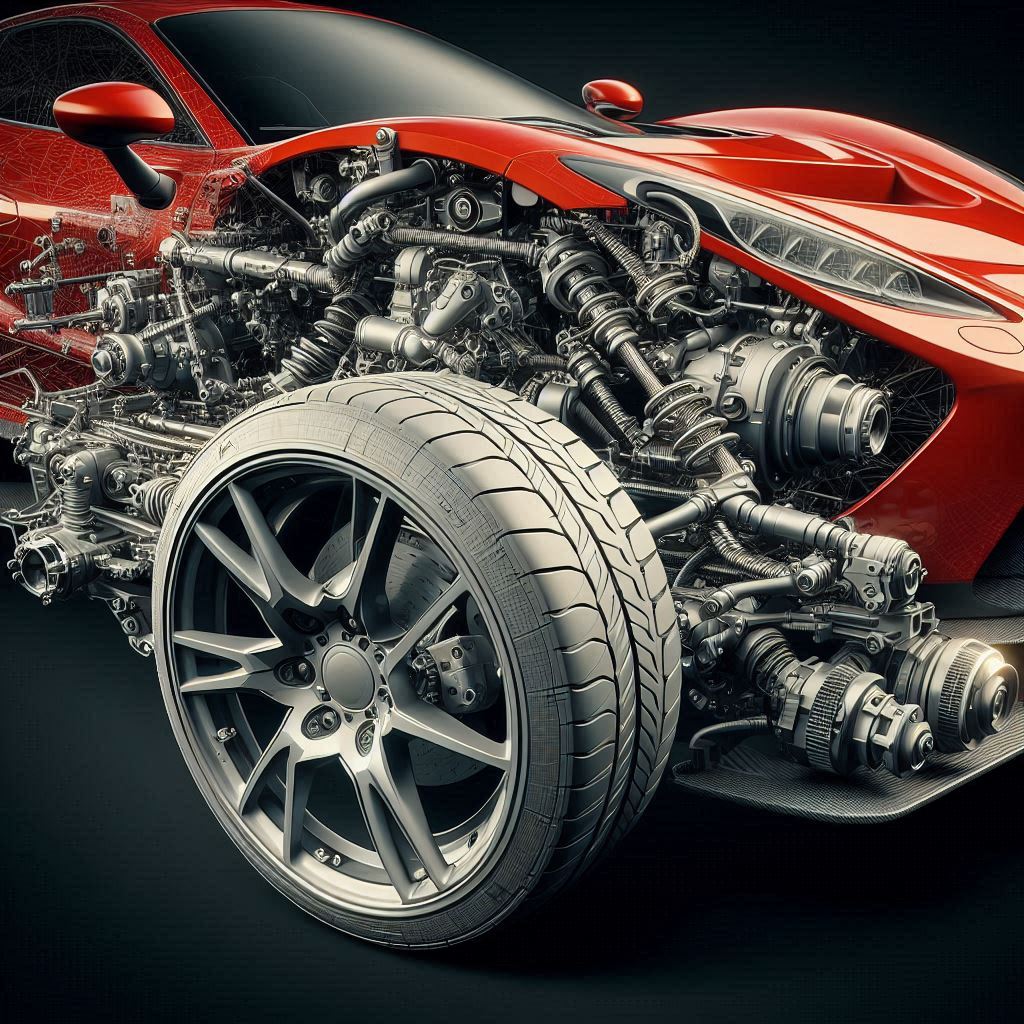
Engineering Design - Vehicle Dynamics
Team EveryEng
Mechanical Engineering
Pre-recorded video course. Watch anytime at your own pace.
FREE
26 already enrolled!
Beginner course for learners
Foundational Learning
Access to Study Materials
Self-Paced Learning
Engineering Design - Vehicle Dynamics
Why enroll
Participants join this course to gain a deep understanding of how vehicles behave under different driving conditions and to learn the principles behind safe, efficient, and high-performance design. They will develop skills in simulation, analysis, and optimization of vehicle dynamics. The course equips learners to tackle real-world engineering challenges in automotive and transportation industries. It is ideal for those aiming to design, test, or improve modern vehicles for performance, safety, and comfort.
Course content
The course is readily available, allowing learners to start and complete it at their own pace.
Engineering Design - Vehicle Dynamics
32 Lectures
1615 min
Introduction to Vehicle Dynamics
Preview
47 min
Longitudinal Dynamics
49 min
Vehicle Load Distribution – Acceleration and Braking
47 min
Brake Force Distribution, Braking Efficiency and Braking Distance
49 min
Tractor – Semi Trailer
47 min
Tire Mechanics – An Introduction
48 min
Mechanical Properties of Rubber
50 min
Slip, Grip and Rolling Resistance
50 min
Tire Construction and Force Development
49 min
Contact Patch and Contact Pressure Distribution
52 min
Tire Brush Model
49 min
Lateral Force Generation
50 min
Ply Steer and Conicity (Part 1)
52 min
Ply Steer and Conicity (Part 2)
53 min
Tire Models – Magic Formula
51 min
Classification of Tyre Models and Combined Slip
49 min
Lateral Dynamics - An Introduction
49 min
Lateral Dynamics – Bicycle Model
52 min
Lateral Dynamics – Stability and Steering Conditions
52 min
Understeer Gradient and State Space Approach
49 min
Handling Response of a Vehicle
49 min
Mimuro Plot for Lateral Transient Response (Part 1)
50 min
Mimuro Plot for Lateral Transient Response (Part 2)
53 min
Parameters affecting vehicle handling characteristics
51 min
Subjective and Objective Evaluation of Vehicle Handling (Part 1)
51 min
Subjective and Objective Evaluation of Vehicle Handling (Part 2)
52 min
Subjective and Objective Evaluation of Vehicle Handling and Rollover Prevention
46 min
Rollover Prevention (contd..) and Vertical Dynamics
51 min
Vertical Dynamics – An Introduction
50 min
Vertical Dynamics – Quarter Car Model
51 min
Random Process and Conclusion [contd.]
67 min
Noise, Vibration and Harshness – Random Processes
50 min
Course details
This course provides an in-depth exploration of vehicle dynamics, applying core engineering design principles to the behavior and performance of vehicles. Students will study how forces, motion, and energy interact in real-world driving conditions, learning to analyze vehicle responses under various scenarios. The curriculum covers key topics such as suspension systems, steering mechanisms, braking performance, and tire dynamics. Emphasis is placed on simulation techniques and computational tools to predict vehicle behavior accurately. Participants will gain hands-on experience in optimizing vehicle stability, handling, and ride comfort. The course also addresses safety considerations, ensuring designs meet regulatory and practical standards. By integrating theory with practical applications, students will learn to design vehicles that achieve an optimal balance between performance, efficiency, and passenger comfort. Advanced topics may include aerodynamics, weight distribution, and control systems. Throughout the course, problem-solving and analytical skills are developed to tackle complex vehicle engineering challenges. By the end, students will be equipped to contribute to modern vehicle design, testing, and performance optimization.
Source: nptelhrd (YouTube Channel)
Vehicle Dynamics by Dr. R. Krishna Kumar, Department of Engineering Design, IIT Madras.
Course suitable for
Aerospace Automotive Rail & Transport Mechanical
Key topics covered
Introduction to Vehicle Dynamics
Vehicle Kinematics and Kinetics
Tire Mechanics and Modeling
Suspension System Design
Steering and Handling Dynamics
Braking and Acceleration Performance
Vehicle Stability and Control
Design Optimization and Simulation
FREE
Access anytime