
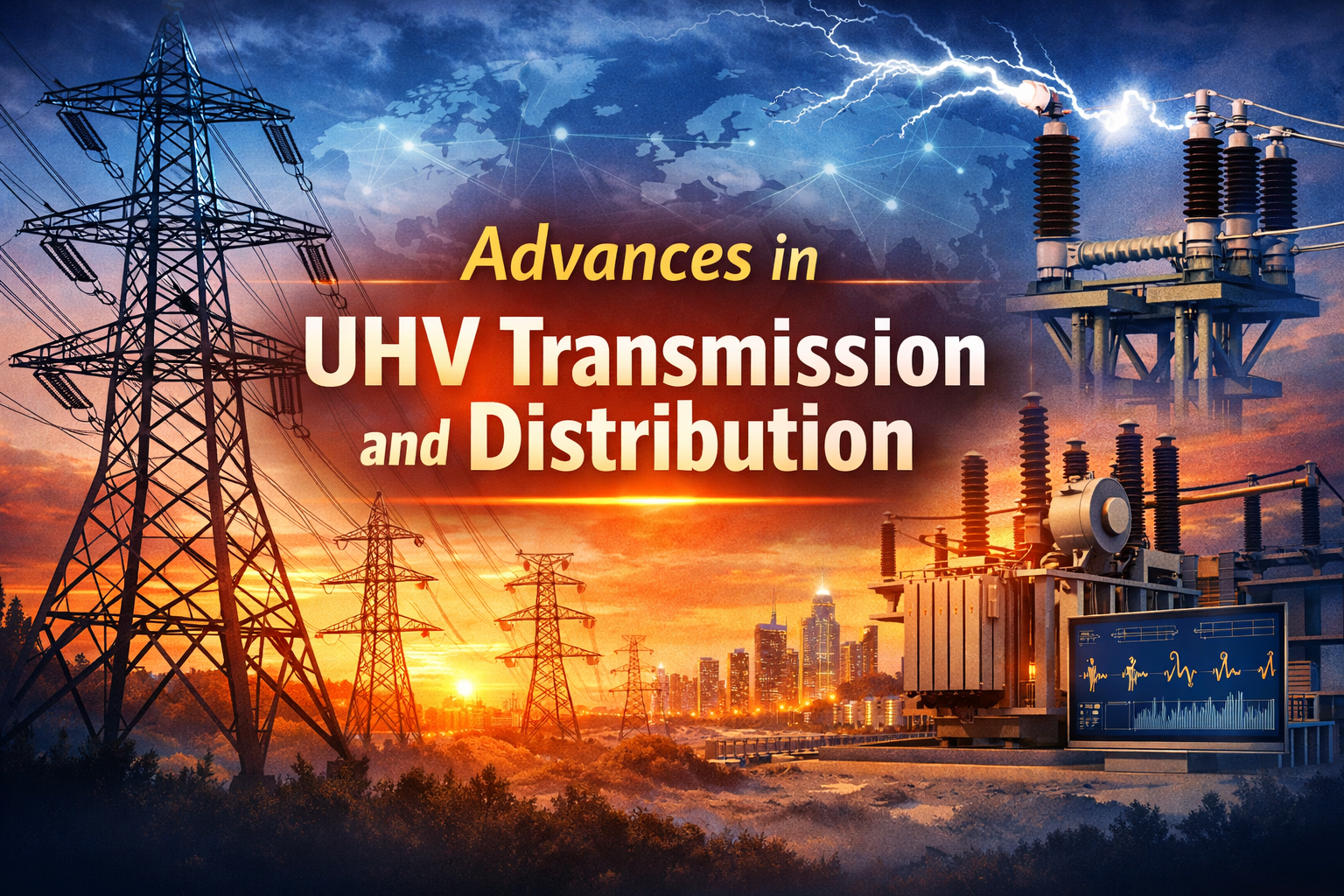
Advances in UHV Transmission and Distribution
Engineering Academy
Learn Without Limits: Free Engineering Courses
Pre-recorded video course. Watch anytime at your own pace.
FREE
Advanced course for professionals
Anytime Learning
Learn from Industry Expert
Career Option Guideline
Advances in UHV Transmission and Distribution

Why enroll
Participants join this course to understand modern EHV/UHV power systems in an easy way, learn how high-voltage transmission is designed and protected, and upgrade their knowledge for careers, higher studies, or work in the power and energy sector.
Course content
The course is readily available, allowing learners to start and complete it at their own pace.
Advances in UHV Transmission and Distribution
30 Lectures
964 min
Advantages of HVAC/DC Transmission, Introduction to Grid Management
Preview
34 min
Transmission system development , Important components of transmission system
27 min
Insulation coordination, over voltage in power systems
31 min
Design/selection of insulators, Importance of grading/cc rings
27 min
Non ceramic insulators performance-service experience
33 min
Failure of apparatus in the field, importance of reliability and testing
28 min
Pollution flashover phenomena, modeling etc
29 min
Planning of High Voltage laboratories
48 min
Importance of High Voltage testing and techniques employed
25 min
Basic philosophy of HV testing, tests for various HV apparatus
34 min
HV testing techniques for various apparatus
44 min
HV testing on Composite Insulators
22 min
Surface degradation studies on composite insulators
39 min
Surface morphological techniques for composite insulators
37 min
Conductors used for EHV/UHV transmission
24 min
Corona nad interference on transmission lines
20 min
Introduction of HTLS conductors and their advantages
29 min
Mechanical considerations for HV conductors
45 min
Introduction to Towers and importance of foundations
32 min
Selection/Design of clearances for HV towers
21 min
Design Optimization for UHV towers
35 min
Introduction to 1100kV HVDC
23 min
Introduction to HV Substations
28 min
Types of Substations, comparison
34 min
Insulation coordination, Components in a typical substation
46 min
Preventive maintenance of Substation
35 min
Electric and magnetic fields, mitigations techniques
28 min
Importance of Grounding, reducing Earthing resistance
40 min
Introduction to the use of Fiber optic cables, OPGW
27 min
Introduction to communication and SCADA
39 min
Course details
This course explains the latest developments in EHV/UHV power transmission and distribution in a simple and clear way. It helps learners understand why EHV/UHV systems are important, how they are designed, and what makes them different from conventional systems. The course covers modern design requirements such as insulation, protection, and safety, and also discusses the present and future growth of UHV transmission. Key components and substation design are explained using lectures, practical video demonstrations, and assignments for better understanding.
Source: Advances in UHV Transmission and Distribution [Youtube Channel]
Course suitable for
Automotive Electrical Engineering & Design Project Management Research & Developmnet
Key topics covered
Introduction to UHV and EHV transmission and why it’s important
Advantages of HVAC vs DC transmission systems
Introduction to electrical grid management and power systems
How transmission systems develop and their design issues
Important components used in transmission systems
What insulation coordination means in high-voltage systems
How overvoltages occur and how they are managed
How insulators are selected and designed for UHV lines
Why grading rings and corona rings are used on towers and insulators
Types of insulation and performance of non-ceramic insulators
Measuring high voltages safely in transmission systems
Digital recording methods used in high-voltage testing
Upgrading or uprating existing transmission lines
Why safety and protection systems are needed in UHV networks
Auto-reclosure schemes and protection relays for EHV/UHV lines
Basics of power flow and load distribution in transmission lines
How corona effect impacts losses and noise in high-voltage lines
What bundle conductors are and why they are used in EHV/UHV systems
Differences between alternating current (AC) and direct current (DC) transmission
Substation design principles for UHV networks
Grounding and earthing practices for high-voltage equipment
Line losses and factors influencing efficiency of long-distance transmission
How UHV transmission supports integration of renewable energy
Challenges and solutions in building long-distance ultra-high-voltage lines
Safety rules for working on or near high-voltage transmission systems
Maintenance strategies for EHV/UHV transmission infrastructure
Environmental effects and mitigation in UHV transmission
Future trends in power transmission technology
Case studies or examples from real UHV transmission projects
Summary of key design and operational guidelines for UHV power systems
FREE
Access anytime