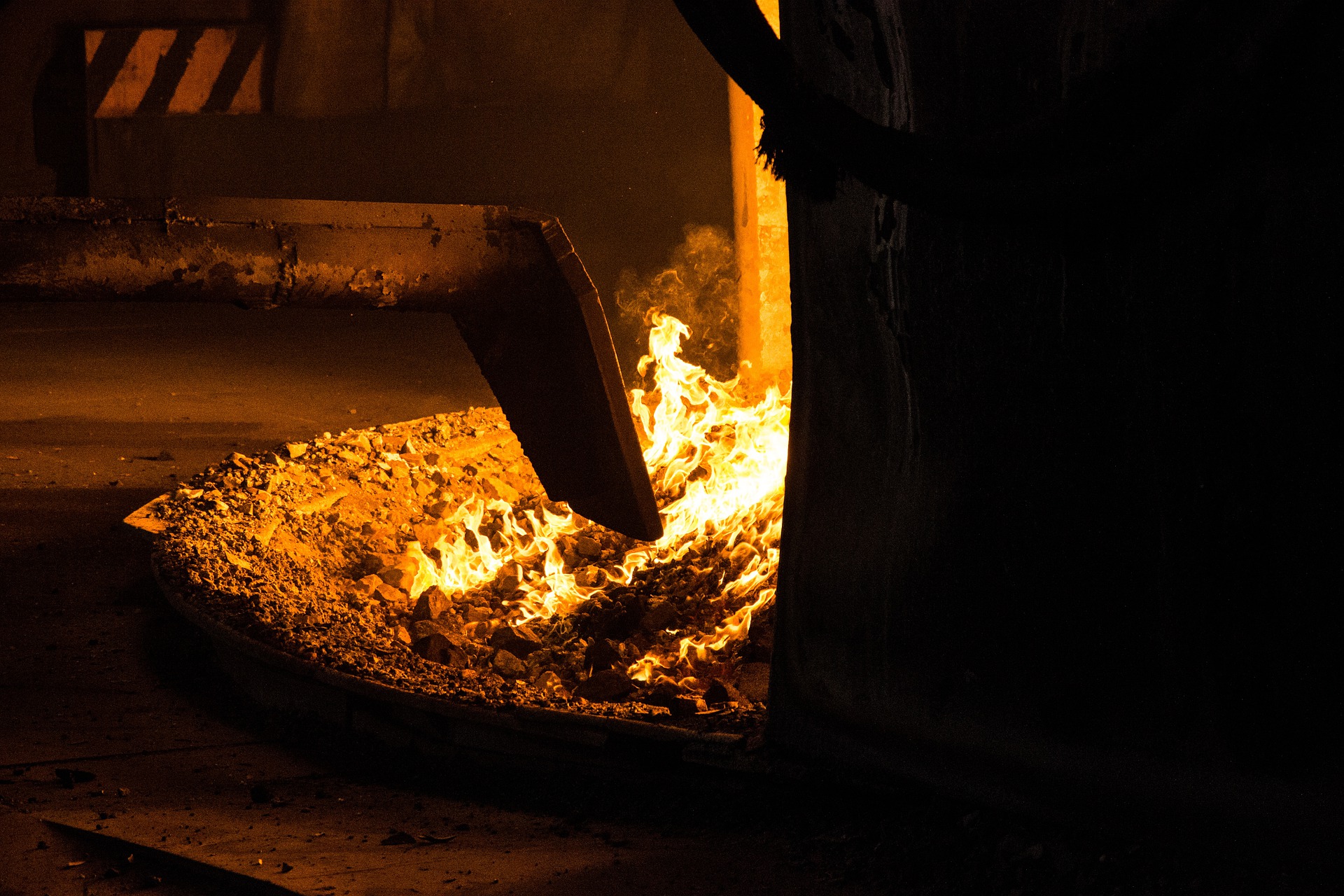
Engineering Materials - Iron & Steel making
Chaitanya Purohit
Consultant
$ 20
Beginner course for learners
Engineering Materials - Iron & Steel making

Trainers feedback
0
(0 reviews)
Chaitanya Purohit

Consultant
Course type
Instructor led live training
Course duration
2 Hrs
Course start date & time
Coming in Next Month
Language
English
This course format is where trainer will explain you the subject via online live session. Date and time are not decided yet but it will be planned within next 2 weeks after you enroll & pay for this course?. Get in touch with our team if any clarification is required.
Why enroll
Understanding the intricacies of iron and steel making can catapult your career in the metallurgical and manufacturing industries. With expertise in this area, you can transition into roles like Process Engineer, Quality Assurance Manager, or Production Manager, overseeing the production of high-quality steel products. Further advancements can lead to senior positions like Plant Manager, Technical Director, or Research and Development Lead, driving innovation in steel production and application. Additionally, this knowledge can also open doors to careers in related fields like materials science, welding engineering, or corrosion engineering, offering a wide range of opportunities for professional growth and advancement.
Course details
The major classifications of engineering materials include metals, polymers, ceramics, and composites. The important characteristics of the materials within each of these classes are discussed in this course, and use of material properties are also explained. Engineering design materials to meet required properties to design an eqipment & materials science plays an important role to understand the fundamental factors that influence the structure and properties of a material. such as thermodynamics, structural evolution, etc. This course is designed to provide in depth knowledge on various iron & steel making.
You will learn various parameters after completing this course -
1. What is industrial steel & Iron making
2. Types of making processes
3. Theoretical background behind each requirements which helps an engineer to understand the importance each making process.
4. An insight into the newly introduced methods, it's criteria and guidelines.
5. Bridging the gap between theoretical knowledge and practical application requirements.
6. University students who want to take up career in engineering or manufacturing department and wants to learn about the most widely used best practices and standard.
7. Experienced engineers who want to grow their career in engineering or production by understand the background of different types requirements
Course suitable for
Aerospace Automotive Mechanics & Turbomachinery Chemical & Process Civil & Structural Mechanical
Key topics covered
Training details
This is a live course that has a scheduled start date.
Live session
Why people choose EveryEng
Industry-aligned courses, expert training, hands-on learning, recognized certifications, and job opportunities—all in a flexible and supportive environment.
- Industry Veteran
- Trainer Review

$ 20
- $ 0 Early bird discount
Coming in Next Month
Questions and Answers
A: Carbon equivalent (CE) is a calculated value that estimates the combined effect of various alloying elements on the hardness and weldability of steel. A higher CE indicates a greater tendency for steel to harden and crack during welding, requiring preheat or post-weld heat treatment. The common formula for CE is: CE = %C + (%Mn/6) + (%Cr + %Mo + %V)/5 + (%Ni + %Cu)/15. Controlling CE helps in selecting appropriate welding procedures. Further details at: https://www.thefabricator.com/thefabricator/article/weldingweldability/understanding-carbon-equivalent-and-weldability
A: Limestone acts as a flux in blast furnace operation. When heated, it decomposes to form lime (CaO) which reacts with silica (SiO2) and other impurities in the iron ore to form slag. The slag is molten and floats on top of the molten iron, enabling easy separation. This is crucial for removing impurities such as sulfur and phosphorus, enhancing the quality of the pig iron. A technical explanation can be found here: https://www.sciencedirect.com/topics/engineering/limestone
A: Steel quality control involves monitoring chemical composition, microstructure, and mechanical properties using techniques such as spectroscopy for elemental analysis, metallography for microstructure observation, and tensile, hardness, or impact tests for mechanical properties. The entire production process from raw materials to final product is inspected. Non-destructive testing methods like ultrasonic and radiographic testing detect internal defects. Industry standards such as ASTM, ISO, and EN define quality criteria. A detailed overview is available at: https://www.twi-global.com/technical-knowledge/faqs/what-quality-control-methods-are-used-in-steel-production
A: Wrought iron and cast iron differ primarily in their carbon content and properties. Wrought iron contains less than 0.08% carbon and is tough, malleable, and ductile with fibrous slag inclusions that enhance its corrosion resistance. It is commonly used in decorative ironwork and structural applications needing ductility. Cast iron contains 2-4% carbon, making it hard and brittle but excellent under compression, often used in engine blocks and pipes. For a comprehensive explanation, refer to: https://www.metalsupermarkets.com/difference-between-cast-iron-and-wrought-iron/
A: The Basic Oxygen Furnace (BOF) and Electric Arc Furnace (EAF) are two predominant steelmaking methods. BOF converts pig iron from the blast furnace into steel by blowing high-purity oxygen to oxidize impurities. It is efficient for large-scale production and primarily uses iron from iron ores. Conversely, EAF uses electric arcs to melt scrap steel and small amounts of molten iron. EAF is flexible, allows for recycling scrap steel, and is more environmentally friendly. For more detailed comparisons, please see: https://www.worldsteel.org/steel-by-topic/steelmaking-processes.html
A: Common alloying elements in steel include carbon, manganese, chromium, nickel, molybdenum, vanadium, and tungsten. Carbon increases hardness and strength but reduces ductility. Manganese improves hardenability and tensile strength. Chromium adds corrosion resistance and hardness. Nickel enhances toughness and corrosion resistance. Molybdenum increases strength at high temperatures. Vanadium refines grain size and improves strength. Tungsten increases hardness at high temperatures. These elements allow tailoring steel properties for specific applications. More detailed info here: https://www.azom.com/article.aspx?ArticleID=3895
A: Ingot casting is a traditional method where molten steel is poured into molds to solidify into large blocks (ingots) which are then reheated and rolled. It is labor intensive with less uniformity in quality. Continuous casting continuously extracts solidified steel directly into semi-finished shapes like slabs or billets, improving yield, surface quality, and productivity. Continuous casting is the modern norm for steelmaking. For more insights, visit: https://steeluniversity.org/steel-processes/continuous-casting/
A: The iron-making process primarily involves the extraction of iron from its ores, typically hematite or magnetite, in a blast furnace. The main steps are: 1) Charging raw materials like iron ore, coke, and limestone into the furnace. 2) Combustion of coke generating carbon monoxide which acts as a reducing agent. 3) Reduction of iron oxides to molten iron. 4) Formation of slag from impurities and limestone. 5) Tapping molten pig iron and slag separately. For a detailed overview, you can refer to the ASM International resource: https://www.asminternational.org/materials-resources/iron-steel
A: Common casting defects in steel include porosity, inclusions, cold shuts, hot tears, and shrinkage cavities. Porosity can result from trapped gases, inclusions come from non-metallic materials, cold shuts occur due to poor fusion of molten metal streams, hot tears are caused by tensile stresses during solidification, and shrinkage cavities happen due to volumetric contraction. Prevention techniques include controlling the melting and pouring temperature, improving mold design, refining the steel to remove inclusions, and controlled cooling rates. For more detail, see: https://www.efunda.com/processes/metals/casting/casting_defects.cfm
More from Same Author
- Technical Courses
- Articles

5
973
9
E-Learning
Unlimited access
Beginner
E-Learning
Unlimited access
Pre-recorded videos
206
Online
Live courses
Beginner
Online
Live courses
Interacting with trainer

558
1
Online
Live courses
Beginner
Online
Live courses
Interacting with trainer

Earning and Growth option in same Industry Domain
- Pre-recorded
- Online live session
- Offline
- Articles

3256
2
E-Learning
Unlimited access
Advanced
E-Learning
Unlimited access
Pre-recorded videos

1082
1
E-Learning
Unlimited access
Beginner
E-Learning
Unlimited access
Pre-recorded videos
5
1829
10
E-Learning
Unlimited access
Beginner
E-Learning
Unlimited access
Pre-recorded videos
More Training & Development option to expand your reach
- Technical courses
- Soft-skills courses
- Seminars
- Articles & Blogs
1446
4
Online
Live courses
December 31
160 Hrs
Advanced
Online
Live courses
Interacting with trainer

156
21
Online
Live courses
January 24
1 Hrs
Intermediate
Online
Live courses
Interacting with trainer
693
Online
Live courses
January 24
45 Hrs
Advanced
Online
Live courses
Interacting with trainer