Search icon
Search icon

Technical Courses

Soft-Skills Trainings

Seminar & Conferences

Articles & Blogs

Jobs / Hiring

Internship Options

Project Based Freelancing

Communities & Consultation

Product image

A Full Overview of ASME B31.3 - Fundamentals & Application

Anindya Bhattacharya

Anindya Bhattacharya

Asset Engineer

$ 150

26 already enrolled!

Product image

A Full Overview of ASME B31.3 - Fundamentals & Application

  • Trainers feedback

    0

    (0 reviews)

    Anindya Bhattacharya

    Anindya Bhattacharya

    Asset Engineer

  • Course type

    Watch to learn anytime

  • Course duration

    467 Min

  • Course start date & time

    Access anytime

  • Language

    English

Why enroll

The participants will get

1. a theoretical background behind B31.3 requirements which helps a piping engineer understand the strengths, weaknesses, and applicability of the code requirements.

2. an understanding of how a Pipe stress Program operates.

3. an insight into the newly introduced B31J.

4. an understanding of how to develop a piping material specification on the basis of B31.3

5. an understanding of the technically challenging chapter on High-pressure piping.

6. the idea of bridging the gap between theoretical knowledge and code requirements.

Some of the key points that participants will understand are:

1. Structure and organization of B31.3.

2. Design – Fundamentals of pressure design, Flexibility calculations, Stress intensification and Flexibility factors, background to allowable stress, what is B31J, understanding how pipe stress program operates, example problems.

3. Materials – Impact testing requirements; Theoretical background. Pre and Post weld heat treatment requirements and their theoretical background.

4. Testing – Hydrostatic and Pneumatic testings, Technical background behind the testing requirements.

5. High Pressure piping- Theoretical background of code requirements. Example problems.

Opportunities that awaits you!

Certificate thumbnail

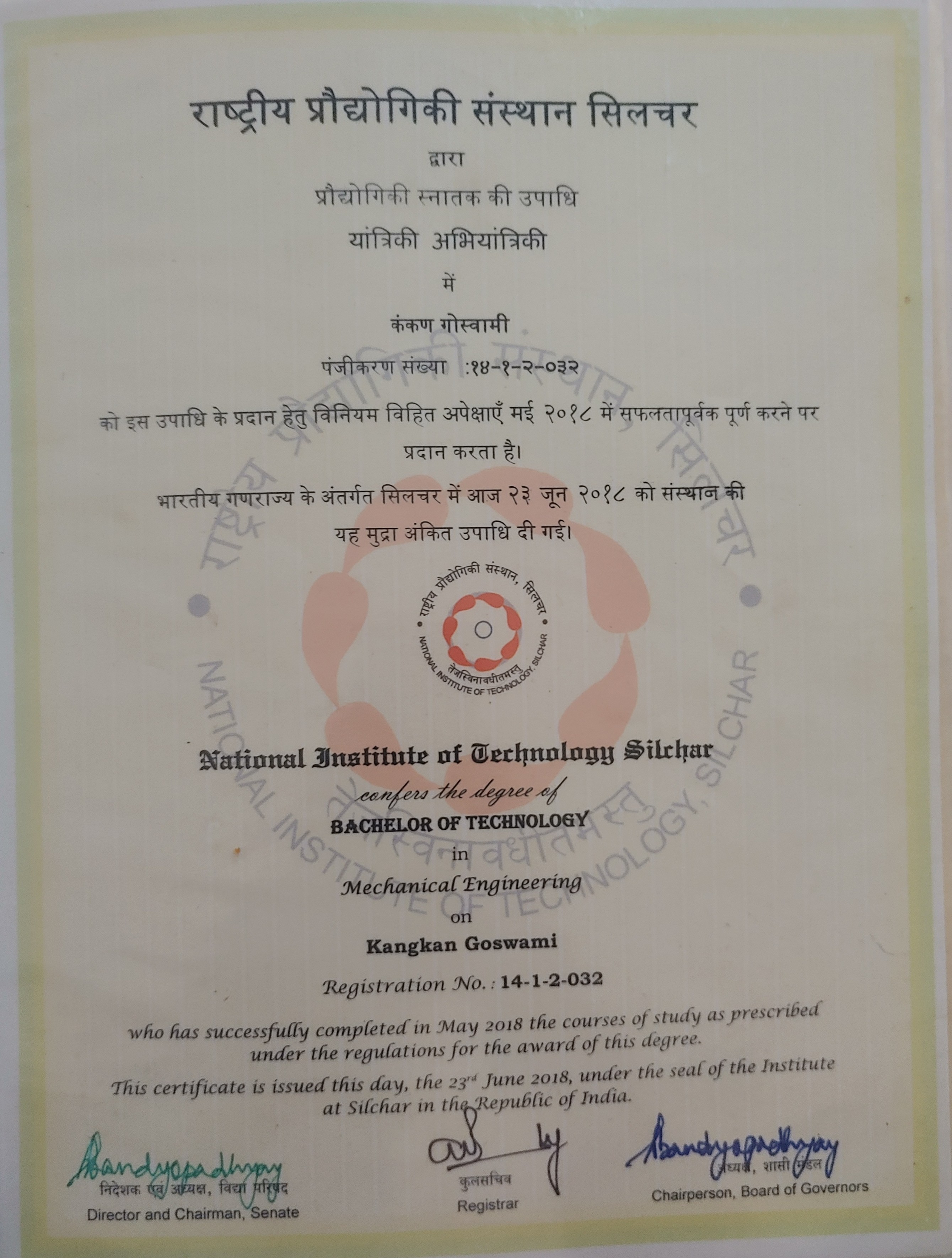
Earn a course completion certificate

Add this credential to your LinkedIn profile, resume, or CV. Share it on social media and in your performance review

Career opportunities

Course content

The course is readily available, allowing learners to start and complete it at their own pace.

Video info icon

Online Course on "A Full Overview of ASME B31.3 - Fundamentals & Application"

2 Lectures

467 min

  • Lesson icon

    ASME B31.3-Chapter II Design

    217 min

  • Lesson icon

    Chapter III, V & VI

    250 min

Course details

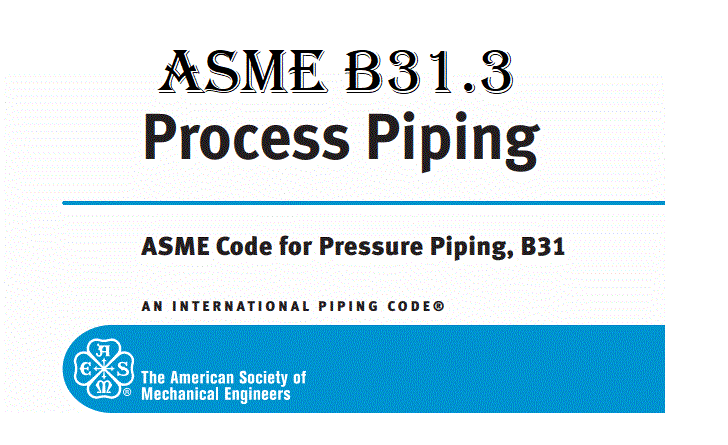
The online instructor-led course on A Full Overview of ASME B31.3 - Fundamentals & Application is designed to provide participants with a deep understanding of certain parts of the ASME B31.3 Code, which governs the design, materials, construction, and testing of piping systems in the chemical, petroleum, and process industries. This course will help participants comprehend the core principles of ASME B31.3 and apply them effectively in the design, installation, operation, and maintenance of process piping systems. By the end of the course, participants will be able to interpret the described ASME B31.3 requirements confidently and apply them to ensure the safety, reliability, and compliance of piping systems in their respective industries.

The course is aimed at equipping engineers involved in stress analysis of piping and pressure vessel systems with the necessary theoretical minimum required to understand the applications of solid mechanics in piping and pressure vessel codes and standards. The following professionals will benefit from the course:

  • Piping Engineers (Stress and Layout)

  • University students who want to take up a career in piping engineering and want to learn about the most widely used Industrial standard on process piping.

  • Experienced Piping engineers who want to understand the background of code rules and requirements of B31.3

  • Piping department managers.

  • Anyone who is interested in piping engineering in the light of ASME B31.3

  • Mechanical Engineers

  • Fabrication and Construction Engineers who want to learn ASME B31.3 jargon

  • Quality Assurance and Inspection Personnel

  • Project Managers in the chemical, petrochemical, and process industries

Course suitable for

  • Oil & Gas
  • Mechanical
  • Piping & Layout

Key topics covered

The key topics that this online pre-recorded course will cover are:

  • A brief overview of theoretical background-Primary, secondary and peak stresses.

  • Theoretical background-Membrane and Bending stresses

  • Technical basis behind equation 1d Chapter II

  • Peak stress- Further detail

  • Stress Linearization from ASME SEC VIII D2 Part 5

  • Basis behind 138 Mpa limitation

  • Design pressure and temperature

  • Allowable pressure –temperature variation

  • Basis for allowable stress

  • Terms related to Creep testing

  • Larson –Miller parameter –Term appearing in Appendix V- Allowable variations in elevated temperature service

  • A numerical example using Larson-Miller parameter.

  • Limitations of B31.3

  • Lame equation- Boardman approximation

  • B31.3 – straight pipe and elbow wall thickness

  • Weld joint strength reduction factor

  • Weld joint quality factor (longitudinal welds)

  • Mechanics of pipe bends .

  • Stress intensification factor for pipe bends

  • The basis behind 2yp limit to avoid ratchetting

  • Factor of safety on Markl approach

  • Underestimation of displacement-controlled stresses in B31.3

  • Research work by PRG

  • Issues with Markl SIFs

  • Non-cyclic , cyclic and severely cyclic limits

  • B31 Related Safety Factor vs. Cycles

  • Recommended corrections to existing equations by Hinnant and Paulin

  • Background to 1.23 factor

  • Bree diagram & Uncertainties in expansion stress evaluation criteria in piping codes-N.Jacimovic

  • Category D and Category M fluid service

  • Elevated temperature service and High purity service

  • Some cautions and limitations imposed in B31.3

  • Area Replacement at openings

  • Cautions on ASME B31.3 Chapter II on area replacement rule.

  • Basis for Sustained stress indices

  • Concepts of elastic-perfectly plastic model (limit state) and Twice –Elastic slope method

  • B31.3 sustained stress indices

  • Analysis of Seismic loads –Calculation of seismic inertial loading

  • The concept of ductility reduction factor

  • Current requirements in B31.3-Key highlights of upcoming B31E

  • Analysis for blast loading

  • Drag and Overpressure

  • Governing differential equation for blast loading

  • Allowable limits for stresses due to blast loading

  • Reasons for development of B31J

  • Key points from Appendix W of ASME B31.3

  • An overview of ASME SEC VIII D2 Part 5 Fatigue analysis

  • Welded joint curve approach

  • Probability distribution function & Weibull distribution

  • Probabilistic approach for wave loading

  • Final stage of derivation of a cumulative damage result from Appendix W for wave loading.

  • How do pipe stress analysis programmes operate?

  • An example of stiffness matrix for beam element with only lateral degrees of freedom

  • The issue with non-linearity and convergence problems.

  • Listed vs unlisted materials

  • Upper and lower temperature limits

  • Impact testing and B31.3

  • Roadmap for impact testing requirements in B31.3

  • Charpy Impact test-fundamentals

  • Requirements for low temperature toughness-B31.3

  • Impact test exemption curve

  • Background to the impact test exemption curve

  • The concept and application of stress ratio-31.3 2024

  • Fluid service limitations- B31.3 Chapter III

  • How to use the allowable stresses in Appendix A of the code

  • What informations CANNOT be found in B31.3?

  • Nelson Curve- Hydrogen partial pressure as function of Temperature

  • Initial service leak test

  • Can hydrostatic test and pneumatic test be avoided for fluids other than category D?

  • Sensitive leak test and special provisions for testing

  • Is retesting required after repairs or additions? –Preparation for leak test

  • Testing of pipe with vessels, externally pressurised piping and jacketed piping

  • Safe distance calculation in pneumatic testing

  • Stored energy calculation in pneumatic testing-ASME

  • Safe distance calculation -Hydrotest

  • Few words of caution on Hydroesting

  • B31.3- weld preparations

  • Why preheating and post weld heat treatment is required?

  • Preheat requirements as per B31.3 2024

  • Post-weld heat treatment requirements as per B31.3 2024

  • Why for P8 material PWHT is not mandated?

  • Why preheat depends on thickness?

Why people choose EveryEng

Industry-aligned courses, expert training, hands-on learning, recognized certifications, and job opportunities—all in a flexible and supportive environment.

Anindya Bhattacharya

Anindya Bhattacharya

Asset Engineer

Questions and Answers